Research Robots Humanoid Applications Industries Technology Contact
MagicBot Z1
MagicLab

MagicBot Z1

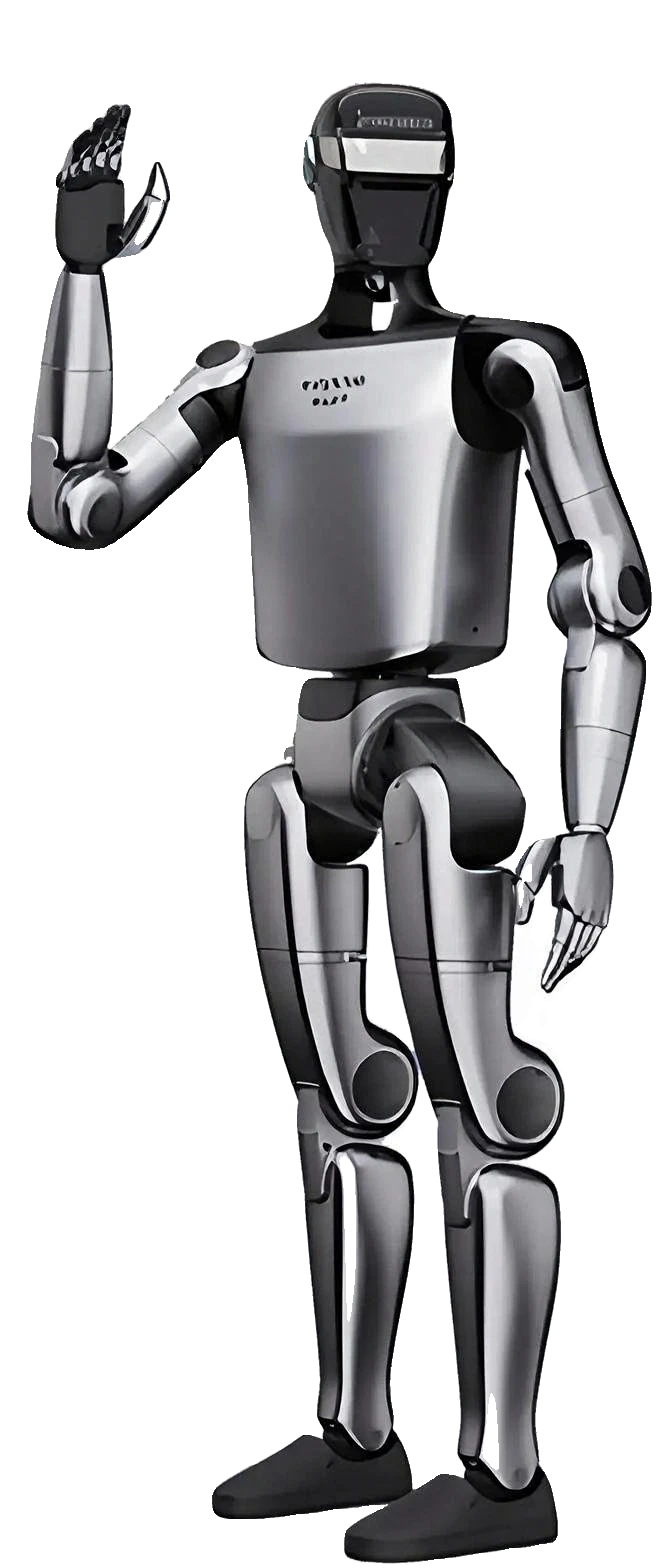
MagicBot Z1 is MagicLab’s agile 1.4‑metre bipedal humanoid that fuses 24‑to‑49 degrees of freedom with in‑house smart actuators, delivering sub‑10 km/h mobility and dexterous MagicHand end‑effectors for real‑world industrial, commercial and companion roles.

Description

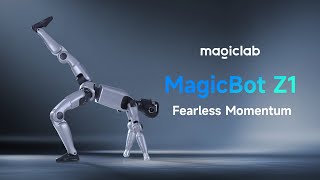
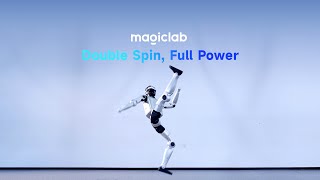
The MagicBot Z1, launched by MagicLab on July 8, 2025, is a high-dynamic bipedal humanoid robot designed as an 'Intelligent & Agile Mini Hero' for research, education, industrial, commercial, and companionship applications. Measuring 1369 x 422 x 200 mm when standing (folding to 730 x 422 x 395 mm) and weighing approximately 40 kg with battery, its compact child-like form enables seamless navigation in human environments. The architecture centers on 24 core degrees of freedom (expandable to 50 in the Development Version), comprising 6 DoF per leg, 1 head, 1 waist, and 5 per arm, with optional 2 wrist DoF and 11-DoF tactile dexterous MagicHand S01. Joints utilize low-inertia, high-speed, high-overload permanent magnet synchronous motors (25 kHz control frequency), dual encoders, and industrial-grade high-rigidity roller bearings (withstanding 8.7 kN impact). Maximum knee torque exceeds 130 N·m (100 N·m standard), supporting arm loads up to 3 kg and motion ranges up to 320° (e.g., hip pitch/yaw ±160°, lumbar Z ±160°, knee 0-152°). Constructed from high-strength aluminum alloy and engineering plastics via topology optimization, forward analysis, and thermal simulation, it endures tens of thousands of falls with intelligent air-cooled heat dissipation. Perception employs a 360° heterogeneous sensor suite: 3D LiDAR, depth camera, binocular fisheye cameras, and head tactile sensors, powering Vision-Language-Navigation (VLN) algorithms for autonomous path planning, obstacle avoidance, and all-terrain mobility (flat ground, grass, gravel, stairs) at speeds up to 9 km/h (2.5 m/s). Compute includes an 8-core high-performance CPU (optional high-compute module), WiFi 6, Bluetooth 5.2, microphone array, and 5W speaker. Power is supplied by a quick-release 10,000 mAh 15-cell smart battery (~2 hours runtime, varying by load), charged at 62V 5A. AI integration forms a 'Super Embodied AI Agent' leveraging an open ecosystem with Imitation Learning (IL) and Reinforcement Learning (RL) for human-like gaits and full-body motion mastery in 24 hours using MagicLab's multi-source database. Vision-Language-Action (VLA) models enable multimodal, generalized, interference-resistant dexterous grasping/manipulation. Vision-Language Models (VLM) drive natural, proactive interactions (e.g., voice, touch-responsive head turns/waves). Standardized controllers, open APIs, and OTA upgrades facilitate developer customization of skill libraries. Deployment history includes immediate market availability in Standard and Developer editions (est. $50,000), pilots in factories for multi-robot collaboration (e.g., 'Xiaomai' training), electronics assembly, public venues, and entertainment. Milestones: IFA 2025 debut, bronze in standing high jump at first World Humanoid Robot Games (Aug 2025), weekly mobility evolutions (Nov 2025) showcasing backflips, spin kicks, side-flips, arrow-dodging, and dance routines. This rapid iteration underscores Z1's transition from prototype to production-ready platform, redefining humanoid value through hardware-software synergy.

Key Features

Ultra-Wide Joint Rotation

Joint motion range up to 320°, surpassing human limits for acrobatics like backbends and high-amplitude actions.

Explosive Power and Torque

Maximum joint torque >130 N·m powers high-dynamic maneuvers, disturbance recovery, and continuous fall-and-rise.

360° All-Domain Perception

3D LiDAR, depth/binocular fisheye cameras, tactile sensors for complex env capture and VLN autonomous navigation.

Embodied AI Ecosystem

IL/RL for 24h motion learning, VLA dexterous manipulation, VLM natural interaction; open APIs for customization.

Rugged Durability

8.7 kN impact bearings, optimized materials/thermal design, air-cooling; survives extreme falls/collisions.

Dexterous Manipulation

Optional 11-DoF MagicHand S01 with tactile feedback; 3 kg/arm payload for precise grasping/assembly.

Specifications

AvailabilityPrototype
NationalityChina
Websitehttps://www.magiclab.top/
Degrees Of Freedom, Overall49
Height [Cm]140
Manipulation Performance2
Navigation Performance2
Strength [Kg]10
Weight [Kg]40
Camera Resolutioncarries stereo camera + depth + 3‑D LiDAR
Motor Techself‑developed high‑performance smart joint modules
Gear TechVariable‑ratio transmission
Main Structural MaterialHigh‑strength aluminium alloy + engineering plastics
Number Of Fingers10
Main Marketeducation, home companionship scenarios
VerifiedNot verified
Walking Speed [Km/H]9
ManufacturerMagicLab
Dimensions Standing1369 x 422 x 200 mm
Dimensions Folded730 x 422 x 395 mm
Weight~40 kg (with battery)
Dof Total24 (expandable to 50)
Dof Per Leg6
Dof Head1
Dof Waist1
Dof Per Arm5 (optional +2 wrist)
Dof Hand11 (optional MagicHand S01)
Max Knee Torque130 N·m
Max Arm Load3 kg
Joint Range ExamplesHead Z: ±40°, Lumbar Z: ±160°, Knee: 0-152°, Hip P: ±160° / R: -30° to +110° / Y: ±160°
Joint BearingsIndustrial-grade high-rigidity roller (8.7 kN impact)
MotorsLow-inertia high-speed high-overload PMSM (25 kHz control, dual encoders)
Cpu8-core high-performance (optional high-compute module)
Sensors3D LiDAR, Depth Camera, Binocular Fisheye Camera(s), Head Tactile Sensor
AudioMicrophone Array, 5W Speaker
ConnectivityWiFi 6, Bluetooth 5.2
Battery10,000 mAh 15-cell smart (quick-release), ~2 h runtime
Charger62V 5A
Thermal ManagementIntelligent air-cooled heat dissipation
MaterialsHigh-strength aluminum alloy + engineering plastics (topology optimized)
ControlHandheld remote, OTA upgrades
Max Speed~9 km/h (2.5 m/s)
Payload Strength10 kg total (est.), 3 kg/arm

Curated Videos

Video 1
Video 2
Video 3
Video 4

Frequently Asked Questions

What is the runtime and battery specs of MagicBot Z1?

Features a quick-release 10,000 mAh 15-cell lithium-ion smart battery providing ~2 hours of operation under lab conditions (varies by tasks). Charged via 62V 5A charger in 3-4 hours, with OTA monitoring for efficiency.

What sensors are integrated for perception?

360° coverage via 3D LiDAR for mapping, depth camera for proximity, binocular fisheye cameras for wide FOV, and head tactile sensors for interaction, enabling robust VLN navigation in dynamic/unstructured environments.

What AI models power its capabilities?

Employs Imitation/Reinforcement Learning for motion, VLA for multimodal dexterous grasping resistant to interference, and VLM for human-like voice/gesture responses; supports open ecosystem for custom LLMs.

Is secondary development supported?

Yes, Developer Version includes open-source frameworks, rich APIs, standardized controllers, multi-source databases for 20-min skill training, and OTA upgrades for rapid prototyping in research/industry.

What real-world deployments exist?

Piloted in factories for multi-robot collab (e.g., 'Xiaomai'), electronics assembly, public venues; demos at IFA 2025, World Humanoid Games medal; targets education, companionship, services with weekly agility updates.

How durable and safe is it around humans?

Built with high-strength alloys/plastics, 8.7 kN impact joints, fall-tested to thousands of cycles; tactile sensors and compliant control ensure safe interaction; designed for human environments like homes/industry.

×