Last-Mile Delivery
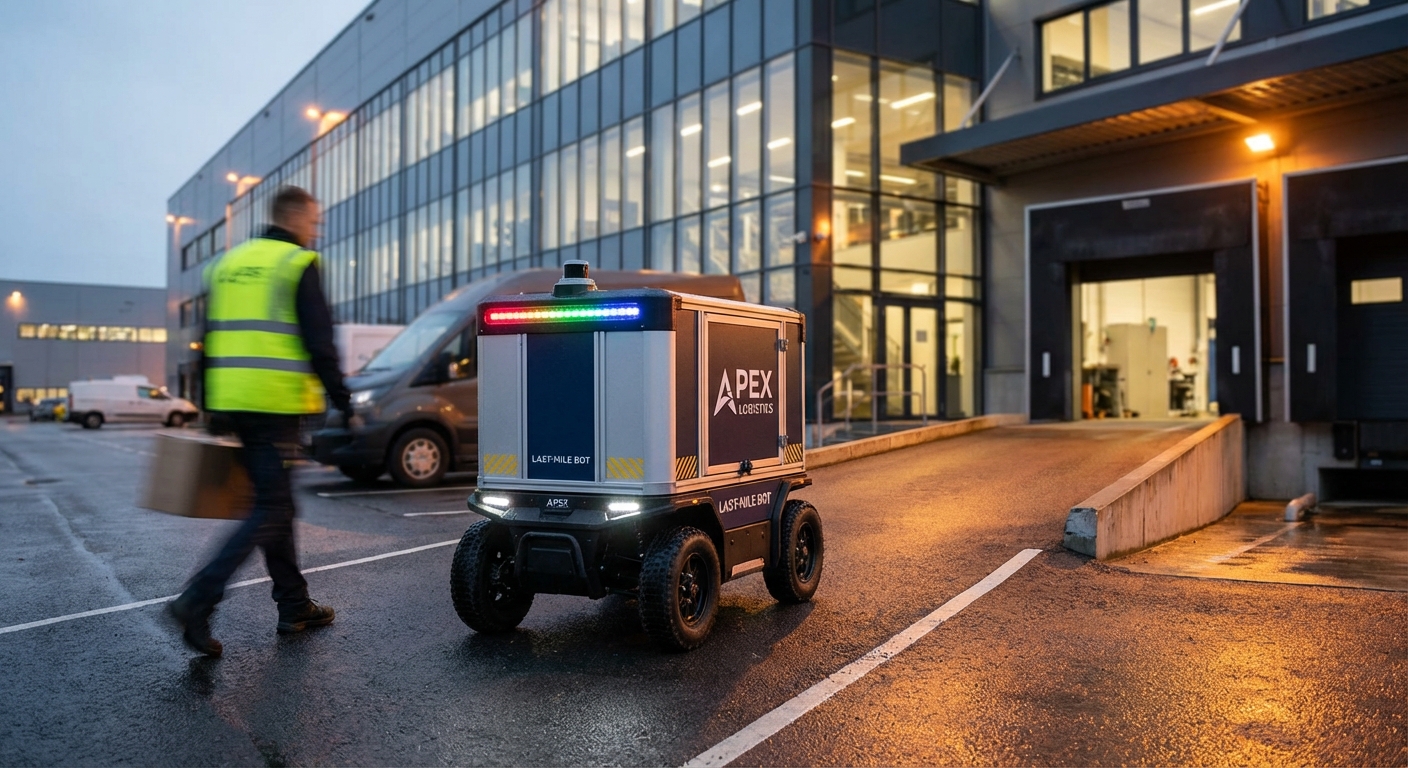
Revolutionize city deliveries with autonomous robots nailing that last-mile challenge. Slash costs, reduce emissions, and offer contactless service around the clock.
Why Automate Last-Mile Delivery?
Cost Efficiency
Slash delivery costs by 60%—no driver salaries, fuel, or vehicle maintenance required.
24/7 Availability
Robots never tire. They keep delivering non-stop through peak hours, late nights, or early mornings.
Contactless Safety
Enhance hygiene and safety by ditching doorstep handoffs—ideal for our world today.
Eco-Friendly
Fully electric with zero emissions. Build greener cities and smash your sustainability goals.
Real-Time Tracking
Delight customers with live app tracking for a smoother experience and way fewer 'where's my order?' calls.
Scalable Fleet
Scale your delivery fleet seamlessly with demand—no hiring or training headaches.
Seamless Autonomous Workflow
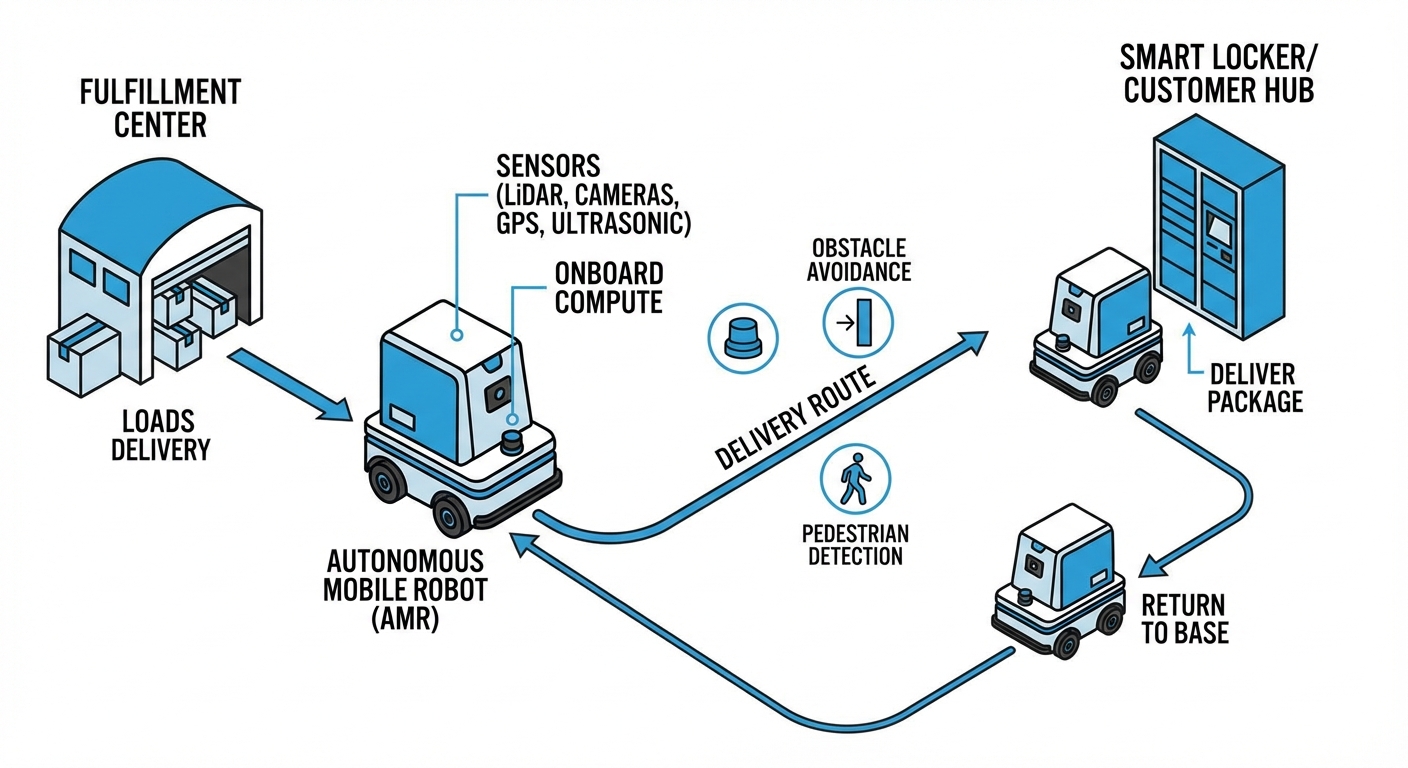
Order placed? Our fleet system grabs the nearest robot, which plots the smartest route using HD maps and clever navigation.
LiDAR, cameras, and ultrasonics help it weave around sidewalks, bikes, people, and traffic lights safely in real time.
On arrival, the app pings the customer to unlock the secure compartment. Item taken? Robot heads back home or to the next stop.
- Dynamic re-routing based on traffic density.
- Secure, tamper-proof cargo locking mechanisms.
- Remote tele-operation takeover for complex scenarios.
Where It's Used
Food & Beverage
Perfect for campuses or cozy neighborhoods—delivering hot meals within 3 miles while keeping them fresh.
Grocery & Retail
Simplify grocery hauls from local stores, swapping cars for short, efficient trips.
Medical & Pharma
Safely ferry meds from pharmacies or shuttle lab samples across hospital grounds.
Corporate Campuses
Tackle inter-office mail in business parks, even riding elevators to drop papers right at desks.
What You Need
| Category | Requirements |
|---|---|
| Sensor Stack | 3D LiDAR for SLAM, RGB-D cameras, ultrasonic sensors, GNSS/RTK GPS for pinpoint outdoor positioning. |
| Mobility & Chassis | 6-wheel rocker-bogie or rugged 4WD design. Conquers 15cm curbs. IP65 sealed for rain and snow. |
| Compute & Software | Potent edge AI with NVIDIA Jetson, ROS 2 nav stack, and fleet management for constant oversight. |
| Connectivity | 4G/5G for real-time data and remote control, WiFi for base station syncing. |
| Power | Li-ion battery for 8+ hours, plus optional auto-docking to recharge on the fly. |
Frequently Asked Questions
How do the robots navigate busy sidewalks? +
Real-time mapping with LiDAR, cameras, and vision AI—they always yield to pedestrians, spot hazards, and stop if blocked.
What happens if a robot gets stuck? +
Fleet system keeps a watchful eye 24/7. Get stuck? It alerts a remote operator for teleop help.
How is the cargo secured against theft? +
App-locked cargo door, backed by GPS, cameras, and tamper alarms if anyone fiddles with it.
Can they cross streets and traffic lights? +
Yes—they map crosswalks and read signals via cameras, crossing only when it's safe.
What is the maximum range and speed? +
Safe pedestrian speed of 3-4 mph (5-6 km/h), with 20-30 mile (30-50 km) range per charge.
Does weather affect performance? +
IP65 rating shrugs off rain and light snow, but heavy storms might need a quick break.
What is the payload capacity? +
20-30 lbs (9-13 kg) payload—think 3-4 grocery bags.
Are there legal regulations? +
Rules vary by location. Many places have PDD regulations covering sidewalk use, weights, and speeds.
How much does it cost compared to human delivery? +
At scale, robots outpace human couriers per mile—no tips, wait-time pay, or gas costs.
How hard is it to integrate with my ordering system? +
Our REST API and webhooks integrate effortlessly with e-commerce, POS, and delivery platforms.
Ready to implement Last-Mile Delivery?
Discover the hardware powering tomorrow's logistics—our city-tough autonomous mobile robots.
Explore Our Robots Catalog