Research Robots Applications Industries Technology About Contact
← Back to Applications
Robot Application

Inventory Management & Stocktaking

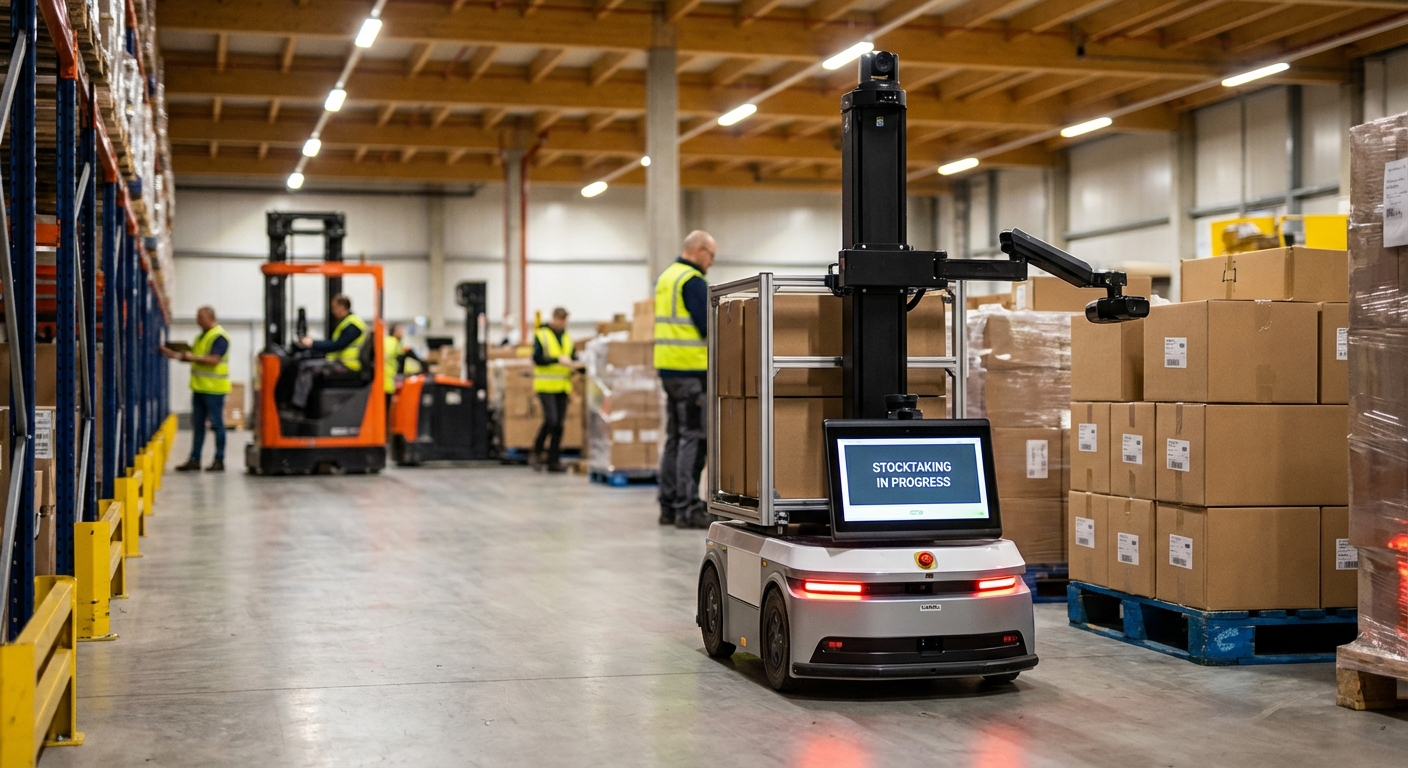
Revolutionize your warehouse accuracy with autonomous mobile robots designed for precise cycle counting and inventory reconciliation. Eliminate human error, gain real-time visibility into stock levels, and operate 24/7 without disrupting daily workflow.

Inventory Management & Stocktaking

Why Automate Inventory Management & Stocktaking?

99.9% Data Accuracy

Eliminate manual counting errors. Robots provide precise data via RFID and barcode scanning, ensuring your ERP matches reality.

Continuous Cycle Counting

Don't wait for annual audits. Run inventory checks nightly or between shifts to maintain constant stock visibility.

Reduced Labor Costs

Reallocate staff from tedious counting tasks to high-value fulfillment activities, optimizing workforce efficiency.

Scalable Integration

Seamlessly connects with WMS (Warehouse Management Systems) like SAP, Oracle, and Microsoft Dynamics via REST APIs.

High-Rack Reach

Robots equipped with telescopic masts or drones can scan inventory on high shelves without the need for scissor lifts.

Enhanced Safety

Reduce pedestrian traffic in aisles and eliminate the risks associated with manual counting at heights.

Autonomous Workflow Integration

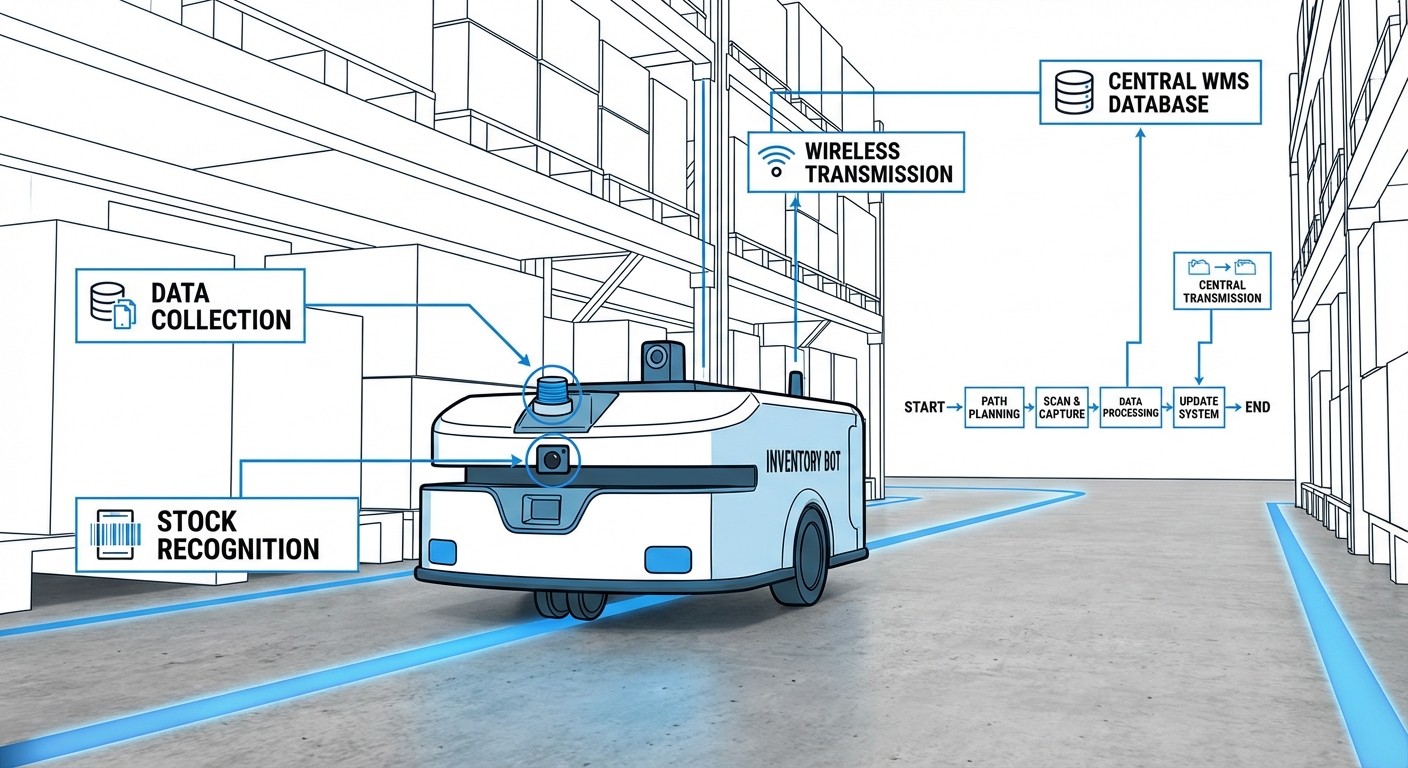
The robotic stocktaking process begins with the generation of a mission map. Using SLAM (Simultaneous Localization and Mapping), the robot navigates the warehouse aisles autonomously, avoiding obstacles and static infrastructure.

As the robot passes each rack location, it utilizes a multi-sensor array—combining RGB-D cameras, barcode scanners, and high-powered RFID readers—to capture inventory data. This data is processed on edge to identify SKUs, batch numbers, and stock quantities.

Discrepancies are flagged immediately. The data is synchronized in real-time or batch-uploaded to your central WMS upon mission completion, providing an instant reconciliation report that highlights missing items or misplaced stock.

Workflow

Where It's Used

3PL & Logistics Centers

Essential for high-velocity environments where stock turnover is rapid. Robots ensure that the physical inventory matches the digital ledger before shifts begin.

Retail Fulfillment

Omnichannel retailers use stocktaking robots to prevent "out of stock" cancellations, ensuring online availability matches warehouse reality.

Manufacturing

Used in raw material storage to verify component availability for production lines, preventing costly line stoppages due to missing parts.

Pharmaceutical Warehousing

Critical for tracking expiration dates and batch lots (FEFO management) to ensure compliance with strict industry regulations.

What You Need

Category Requirements
Sensors 2D/3D LIDAR for navigation; RGB cameras for visual tags; UHF RFID readers.
Robot Capabilities AMR base with SLAM navigation; telescoping mast for vertical reach (up to 12m).
Infrastructure Standardized rack labeling (QR/Barcode) or RFID tags on pallets/items; Flat flooring.
Software Stack Fleet Management System; WMS Integration Middleware (REST API/SOAP).
Connectivity Industrial Wi-Fi 6 or Private 5G network for real-time video/data transmission.

Frequently Asked Questions

Can the robots work alongside human workers?

Yes. The robots are equipped with safety-rated LIDAR and depth cameras to detect humans and obstacles, allowing them to stop or reroute instantly. They are ISO 3691-4 compliant.

How fast can the robot scan inventory?

Scanning speed depends on the density of tags and the method (RFID vs Visual). Typically, an RFID-equipped robot can scan over 10,000 items per hour, significantly faster than manual counting.

Does it require lights to be on?

RFID scanning requires no light. For visual barcode scanning, most robots are equipped with onboard LED illumination arrays, allowing "lights-out" operations to save energy.

How high can the robot reach?

Ground-based AMRs with telescopic masts can typically reach up to 10-12 meters. For higher racks or deep storage, drone-based solutions or hybrid systems are recommended.

Do I need to change my WMS?

No. These robots act as a data peripheral. They integrate with existing WMS platforms (SAP, Manhattan, Blue Yonder, etc.) via standard APIs to update stock levels without replacing your core system.

What happens if a barcode is damaged?

The system flags the specific location as an "exception." It sends an image and location data to a human operator for manual verification, ensuring the rest of the workflow continues uninterrupted.

Can it handle narrow aisles?

Most stocktaking robots are compact. However, a minimum clearance (usually roughly 1 meter) is required. Specific "Narrow Aisle" models are available for VNA (Very Narrow Aisle) warehouses.

How long does the battery last?

Typical runtime is 8-12 hours per charge. Robots support opportunistic charging (docking automatically when idle), allowing for near-continuous 24/7 operation.

What is the setup time?

Mapping a facility typically takes 1-2 days depending on size. Integration with WMS and testing may take 2-4 weeks. The system is designed for rapid deployment compared to heavy automation infrastructure.

Does it support double-deep racking?

Visual scanning is generally limited to the front pallet. RFID can penetrate to scan double-deep pallets, provided the tag placement and signal strength are optimized for the environment.

Ready to implement Inventory Management & Stocktaking?

Explore Our Robots Catalog