XTRON KUAVO-MY
Leju Robotics

XTRON KUAVO-MY

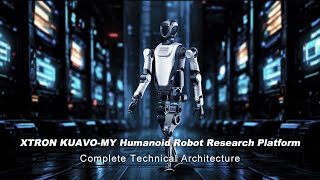
The XTRON KUAVO-MY Humanoid Robot is developed for research and practical applications. With advanced motion control, stereo vision, and robust terrain handling, it is ideal for both academic exploration and industrial deployment.

Description

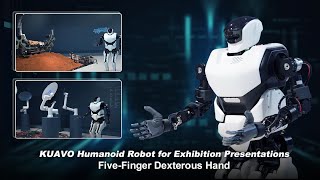
The XTRON KUAVO-MY, manufactured by Leju Robotics (Leju Shenzhen Robotics Co., Ltd.), represents a pinnacle in bipedal humanoid robot design tailored for research, education, industrial deployment, and service applications. This prototype-stage robot, standing at 166 cm tall and weighing 55 kg, boasts 30 degrees of freedom (DOF), enabling sophisticated full-body coordination. Its architecture features 7 DOF per leg for robust bipedal locomotion, 7 DOF per arm (14 DOF total for dual arms with arm span 1770-2148 mm), and optional dexterous hands with 6-11 DOF, including up to 113 mm gripper opening with force control. Propulsion is powered by Leju's self-developed high-torque joints delivering peak torque of 360 Nm and rated speeds of 150 rpm, facilitating model-based motion control, reinforcement learning, and high-frequency joint control for dynamic maneuvers such as omnidirectional walking at up to 5 km/h, continuous jumping exceeding 20 cm, and traversal over uneven terrains like sand, grass, and obstacles. Perception systems are multimodal, integrating a stereo depth camera for 3D environmental mapping and obstacle detection, a 6-microphone array for voice interaction and localization, and lidar-based radar for enhanced spatial awareness. This setup supports real-time navigation, manipulation performance rated at 2/5, and navigation at 2/5 per Humanoid.Guide metrics, with an overall H.G. skill score of 4/10. Software architecture runs on KaihongOS, an open-source platform based on OpenHarmony (Huawei's HarmonyOS), providing customizable APIs, open-source motion controllers for trajectory planning, feedback control, and state estimation. It excels in imitation learning for rapid task adaptation and behavior digitization, with seamless integration of embodied large language models (LLMs) like Huawei's Pangu model, debuted at HDC2024, enabling natural voice interaction, multi-language support, and end-to-end embodied intelligence. Real-world deployments highlight its versatility. KUAVO-MY variants have served as intelligent tour guides at AI and robotics exhibitions, China Mobile's Smart Home Operations Center, and public spaces, providing real-time Q&A and explanations. In smart home scenarios, collaborations with Haier demonstrate household tasks like laundry, flower watering, and clothes hanging. Industrial pilots with Hengtong and NIO explore material sorting, logistics, and high-value manufacturing. Educationally, it supports data collection, algorithm training, and STEM programs via open SDKs, simulation models, and demo libraries. Notably, the KUAVO series, including MY, achieved milestones like being the world's first 5G-A equipped humanoid torchbearer at China's 15th National Games in 2025. Leju's $200M+ funding and partnerships with universities (Soochow, Shandong) and Huawei underscore rapid industrialization. Challenges remain in battery runtime (N/A specified), specific CPU/GPU (embedded real-time compute), thermal management, and IP ratings, but its aviation-grade aluminum alloy frame ensures lightweight durability. Priced around $57,000 via distributors like Foxtech, XTRON KUAVO-MY bridges academic research and commercial viability, positioning Leju as a leader in China's humanoid surge toward 5 trillion USD global market by 2050.

Key Features

Advanced Bipedal Locomotion

Omnidirectional walking up to 5 km/h, 20+ cm jumps, uneven terrain adaptation (sand, grass) via 7 DOF legs and high-torque joints (360 Nm peak).

Multimodal Perception

Stereo depth camera for 3D mapping, 6-mic array for voice, lidar for awareness, enabling obstacle avoidance and environmental interaction.

Dexterous Manipulation

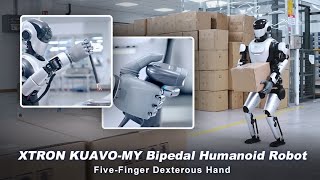
14 DOF dual arms, optional 6-11 DOF hands with force feedback, supporting precise grasping, sorting, and service tasks.

Embodied AI Integration

KaihongOS with Huawei Pangu LLM, imitation learning, open APIs for custom AI, voice Q&A, multi-language guide capabilities.

Modular Open-Source Platform

Full SDK, simulation models, demo library for research; supports secondary development in education, industry, home.

Specifications

AvailabilityPrototype
NationalityChina
Websitehttp://N/A
Degrees Of Freedom, Overall30
Height [Cm]166
Manipulation Performance2
Navigation Performance2
Max Speed (Km/H)
Strength [Kg]
Weight [Kg]55
H.G Skill Score4
VerifiedNot verified
ManufacturerLeju Robotics
Height Cm166 (variants: 147-166)
Weight Kg55 (variants: 45-55)
Dof Overall30 (arms: 14, legs: 12-14, hands: optional 6-11)
Walk Speed Kmh4.6-5
Jump Height Cm>=20
Joint Torque Nm360 peak
Joint Speed Rpm150 rated
OsKaihongOS (OpenHarmony-based)
SensorsStereo depth camera, 6-mic array, lidar radar
MaterialsAviation-grade aluminum alloy
ComputeEmbedded real-time platform (specific CPU/GPU N/A)
ConnectivityWiFi 2.4/5GHz, HDMI, USB 3.0
BatteryN/A (runtime unspecified)
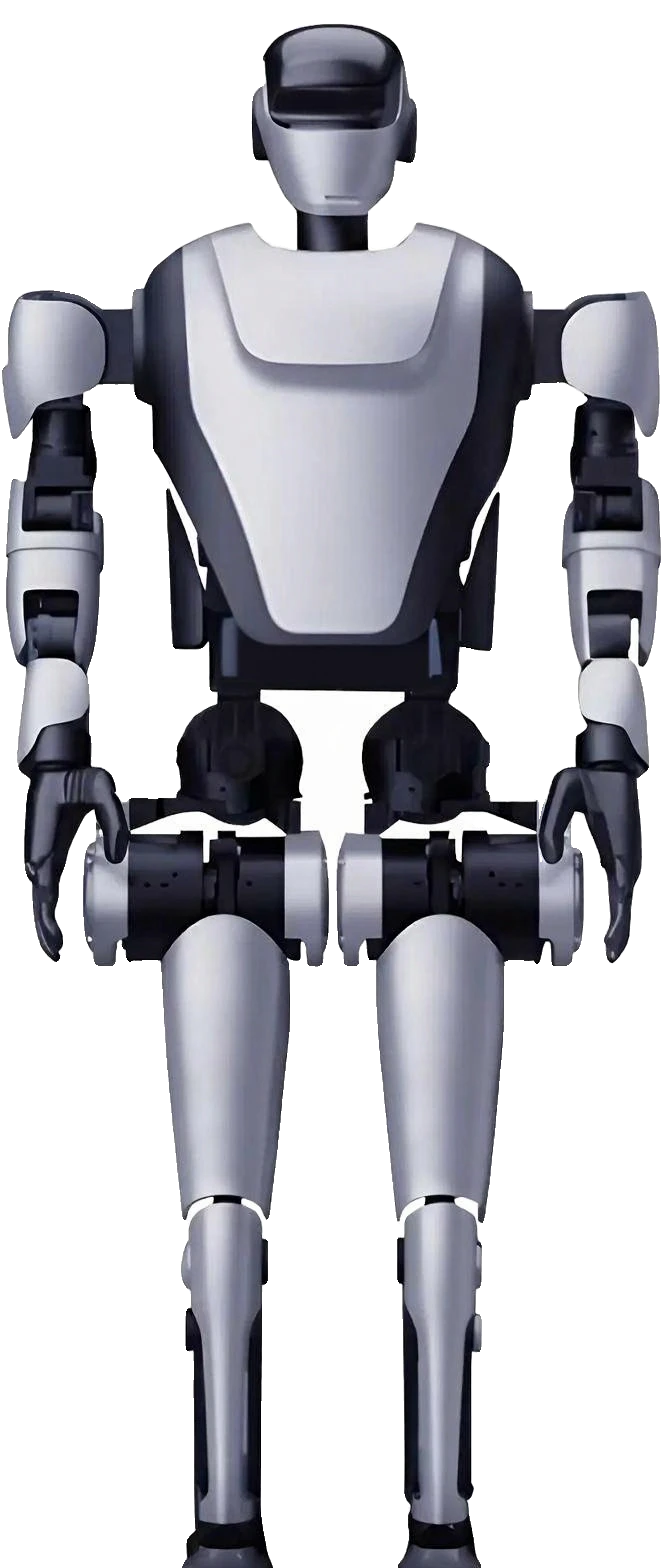
ColorSilver-black
Price Usd57000

Curated Videos

Video 1
Video 2
Video 3
Video 4

Frequently Asked Questions

What are the key physical specifications of XTRON KUAVO-MY?

Height: 166 cm (variants 147-166 cm), weight: 55 kg (45-55 kg variants), 30 DOF overall (26-30 reported), arm span 1770-2148 mm. Built with aviation-grade aluminum alloy for durability and lightweight performance.

What motion capabilities does it have?

Up to 5 km/h walking speed, 20+ cm jump height, omnidirectional bipedal gait, uneven terrain handling. Powered by 360 Nm peak torque joints at 150 rpm for dynamic, coordinated movements.

What sensors and perception systems are used?

Stereo depth camera for 3D vision, 6-microphone array for audio localization and interaction, lidar radar for mapping. Supports multi-modal fusion for navigation and obstacle avoidance in complex environments.

What software and AI features are integrated?

KaihongOS (OpenHarmony-based), open-source motion control, Huawei Pangu embodied LLM integration, imitation learning for task adaptation, customizable APIs for AI development and voice-guided interactions.

What are the main applications and deployments?

Research/education platforms, exhibition guides, smart home tasks (e.g., Haier collab), industrial logistics (Hengtong/NIO), public service like torchbearing. Versatile for data collection, HRI, and commercialization.

What is the price and availability?

Prototype stage, priced at approximately $57,000 via distributors like Foxtech. Available for research purchase with 6-month warranty, technical support, and customization options.

Is it open-source and developer-friendly?

Yes, features open-source motion controller, SDK for sensors/controls, simulation models, LLM interface, extensive demo library covering full academic disciplines for seamless R&D integration.

×