Walker S1
UBTECH Robotics

Walker S1

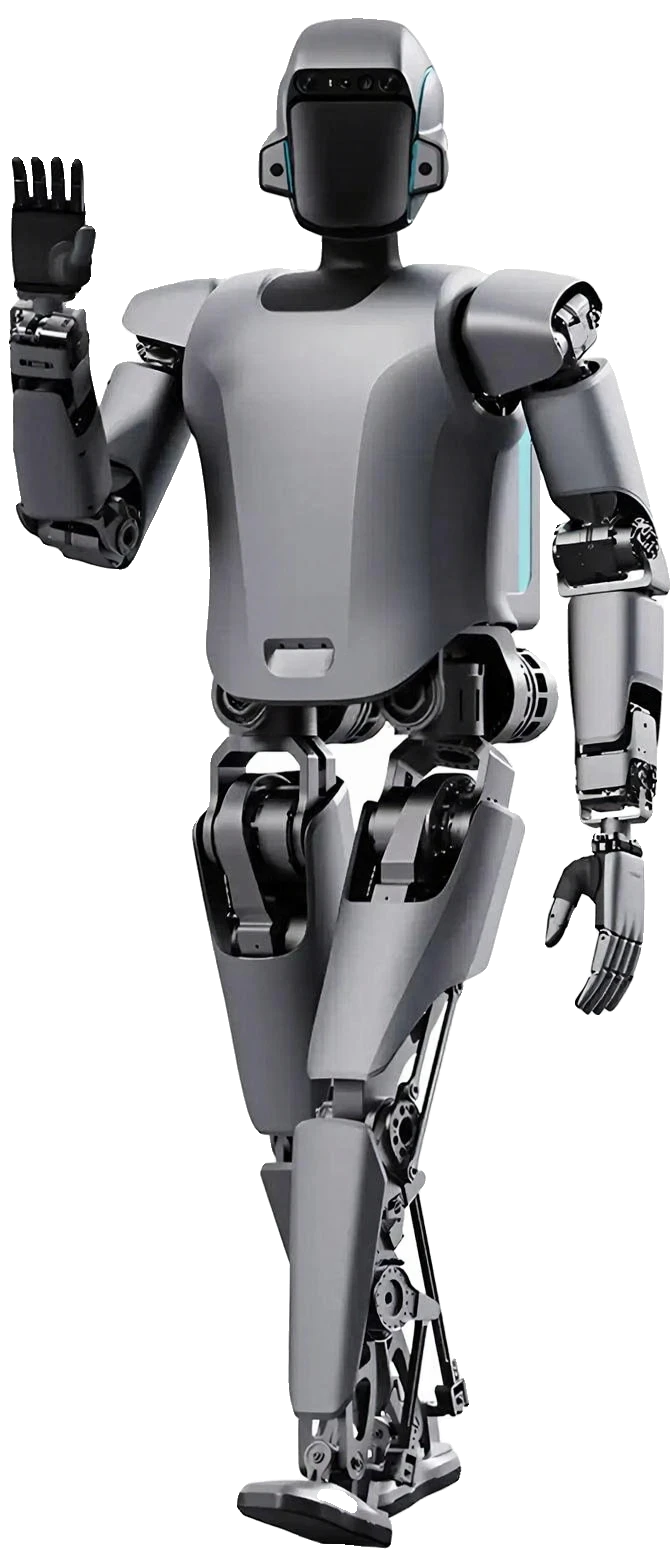
The UBTECH Walker S1 is an advanced humanoid robot designed to assist with tasks in both home and office environments. With its sophisticated navigation, movement, and interaction abilities, it can handle a wide range of activities, including walking, lifting, and responding to voice commands. Its sleek design and autonomous functions make it a versatile and intelligent companion.

Description

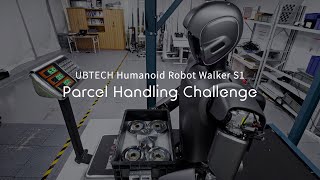
The UBTECH Walker S1 is an advanced industrial humanoid robot, standing at 172 cm tall and weighing 76 kg, designed to address generalization challenges in manufacturing environments. Released in 2024 as part of UBTECH's Walker S series, it represents a milestone in embodied intelligence, leveraging the company's full-stack humanoid robotics technologies. Architecturally, Walker S1 integrates a sophisticated AI stack featuring a Large Language Model (LLM) for general task planning, enabling superior intention understanding and autonomous task decomposition. This is complemented by a Transformer-based sub-brain for multi-robot coordination and cross-field perception, as demonstrated in swarm intelligence deployments. Navigation relies on Semantic VSLAM, a tightly coupled fusion of semantic perception and traditional Visual Simultaneous Localization and Mapping (VSLAM), facilitating robust spatial understanding in dynamic, variably lit industrial settings through a two-stage process. Motion control employs an end-to-end learning-based whole-body framework that unifies perception and actuation, delivering dexterous manipulation and stable bipedal locomotion. With 41 degrees of freedom (DOF), including self-developed 3rd-generation dexterous hands with 6 active DOF per hand equipped with array tactile pressure sensors, the robot excels in high-load, non-structured tasks. It supports payloads up to 16.3 kg in dynamic conditions, as shown in treadmill parcel-handling demos, and achieves walking speeds of 3-5 km/h. The system addresses key industrial pain points: visual positioning under varying lighting, motion stability under dynamic loads, and joint thermal management for prolonged high-load operations. Real-world deployments underscore its maturity. In October 2024, Walker S1 entered BYD's factory, pioneering the world's first one-stop autonomous logistics application for humanoid robots, handling parcel tote operations in coordination with AMRs/AGVs and smart manufacturing systems. By early 2025, it expanded to Zeekr (Geely Auto) EV factory, utilizing BrainNet technology for swarm intelligence—multiple S1 units collaboratively sorting, inspecting, and assembling via shared learning. Further trials at FAW-Volkswagen, NIO, Dongfeng Liuzhou, and reportedly Audi plants involved quality inspections, screw tightening, part assembly, fluid filling, emblem application, and glass adhesive dispensing, achieving >99% accuracy in visual inspections. In April 2025, People's Daily reported multi-robot, multi-task, multi-scenario collaborations, reducing repetitive labor and injury risks. By late 2025, UBTECH reported mass training across automotive lines, positioning S1 as a precursor to broader commercialization. Runtime per charge is approximately 2 hours under continuous operation, with ongoing enhancements in battery and thermal systems paving the way for 24/7 deployment. Walker S1's architecture emphasizes scalability, with simulation platforms aiding rapid iteration, marking UBTECH's leadership in industrial humanoid adoption.

Key Features

Large Language Model Task Planning

Utilizes advanced LLM technology for intention understanding, task decomposition, and planning, enabling autonomous execution of complex industrial workflows with high generalization.

Semantic VSLAM Navigation

Two-stage semantic navigation fuses perception data with VSLAM for precise positioning and mapping in dynamic, poorly lit factory environments.

End-to-End Whole-Body Motion Control

Integrated perception-control framework with learning-based control delivers dexterous manipulation, stable walking, and handling of non-structured tasks under high loads.

Dexterous Hands with Tactile Sensing

3rd-gen hands feature 6 DOF per hand with array tactile pressure sensors for delicate gripping, sorting, and assembly.

Swarm Intelligence via BrainNet

Transformer sub-brain enables multi-robot collaboration, shared learning, and cross-field perception for efficient factory operations.

Multi-Task Industrial Applications

Supports parcel handling, quality inspection, screw tightening, part assembly, and logistics in collaboration with AMRs/AGVs.

Specifications

AvailabilityPrototype
NationalityChina
Websitehttps://www.commercial.ubtrobot.com/
Degrees Of Freedom, Overall41
Height [Cm]172
Manipulation Performance3
Navigation Performance3
Max Speed (Km/H)5
Strength [Kg]3
Weight [Kg]76
Runtime Pr Charge (Hours)2
Ingress ProtectionIP67 (reported)
ConnectivitySupports multi-robot swarm via BrainNet
Motor TechHigh-performance servo joints (36+)
H.G Skill Score4
VerifiedNot verified
Walking Speed [Km/H]3
ManufacturerUBTECH Robotics
Height172 cm
Weight76 kg
Degrees Of Freedom (Overall)41
Degrees Of Freedom (Hands)6 per hand (3rd-gen dexterous)
Max Walking Speed3-5 km/h
Payload Capacity16.3 kg dynamic (15-25 kg per arm)
Runtime Per Charge2 hours continuous
SensorsRGBD visual sensors, array tactile pressure sensors on hands, position/speed/torque sensors
ProcessorIntel i7 (reported)
Ai/SoftwareLLM for planning, Transformer sub-brain (BrainNet), Semantic VSLAM, end-to-end motion control
HandsSelf-developed 3rd-gen with tactile arrays
Battery48V lithium (series), capacity ~3-5 kWh estimated
MaterialsSleek silver alloy exterior (primary structural N/A)
Thermal ManagementJoint cooling for high-load prolonged operation

Curated Videos

Video 1
Video 2
Video 3
Video 4
Video 5

Frequently Asked Questions

What is the primary application of Walker S1?

Walker S1 is optimized for industrial manufacturing, particularly automotive factories, performing tasks like parcel handling, quality inspection, assembly, and logistics. It has been deployed at BYD, Zeekr, and others, achieving the world's first humanoid-led autonomous logistics.

What AI models power Walker S1?

It integrates a Large Language Model for task planning and intention recognition, a Transformer-based sub-brain for swarm coordination, and end-to-end learning for motion control, enabling generalized task execution in unstructured environments.

What is the payload capacity of Walker S1?

Walker S1 can handle payloads up to 16.3 kg dynamically, as demonstrated in treadmill tests, with arm capacities of 15-25 kg without balance loss, suitable for industrial lifting and manipulation.

How does Walker S1 navigate factories?

Using Semantic VSLAM, it fuses semantic perception with traditional VSLAM in a two-stage process, ensuring stable positioning under varying lighting and dynamic obstacles common in workshops.

What is the battery life and charging?

Offers approximately 2 hours of continuous operation per charge. While specific kWh is not public, it supports industrial uptime, with series models featuring 48V lithium batteries; future versions aim for autonomous swapping.

Has Walker S1 been deployed commercially?

Yes, since 2024 at BYD for logistics, expanding to Zeekr, NIO, FAW-Volkswagen for multi-task operations. By 2025, multiple units operate in production lines, marking pioneering factory integrations.

What are the degrees of freedom?

41 DOF overall, including 6 active DOF per dexterous hand, enabling human-like manipulation, walking, and whole-body coordination for complex tasks.

×