T800
EngineAI

T800

The T800 is a durable humanoid robot from EngineAI built for strong mobility, reliable operation, and practical industrial use. It offers balanced movement, high stability, and a modular platform for diverse applications.

Description

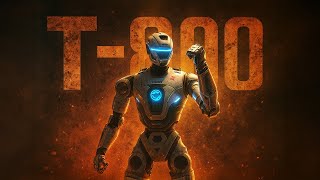
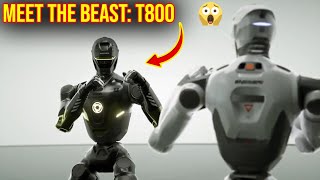
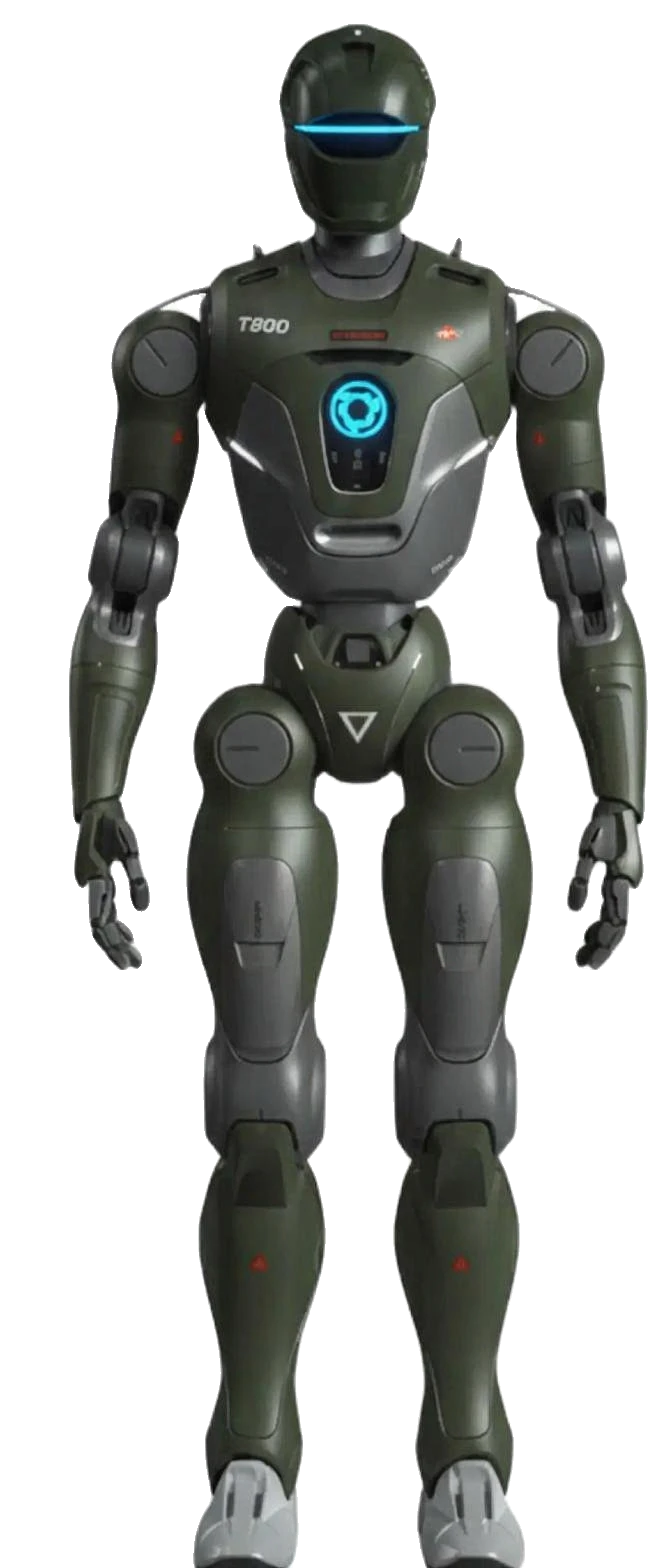
The EngineAI T800 is a groundbreaking full-size general-purpose humanoid robot, launched in December 2025 by Shenzhen-based EngineAI (also known as Zhongqing Robotics), marking a significant leap in high-dynamic humanoid technology. Designed as a 'hardcore evolution' for industrial automation, manipulation, inspection, logistics, and research, the T800 emphasizes extreme mobility, strength, and modularity. Its architecture is fully in-house developed, featuring a robust aluminum alloy and high-strength shell with streamlined aesthetics and continuous high-performance thermal management systems to sustain peak operations under heavy loads. The core mechanical structure boasts up to 46 degrees of freedom (DOF) in the Max edition (32 body + 14 for dexterous hands), with planetary gear joints delivering a maximum torque of 450 N·m, absolute dual encoders for precision, and linear force control in Pro and Max variants for compliant interactions. Lower limbs support hardware-limited speeds of ≥3 m/s (10.8 km/h), enabling agile gaits, martial arts kicks, vertical jumps, and stable navigation on uneven terrain. The 173 cm tall frame weighs 75-85 kg, with 91 cm leg span and 60 cm arms, optimized for human-scale tasks. Perception is powered by a proprietary multi-dimensional system integrating stereoscopic vision and LiDAR (open interface compatible with Intel RealSense in higher editions), supplemented by dual Intel depth cameras in the Basic model. This enables omni-directional environmental awareness, obstacle avoidance, and real-time mapping. Computing architecture is dual-tiered: an Intel-based Robot PC (optional Rockchip RK3588) for core operations and a high-performance NVIDIA Jetson AGX Orin 64G AI PC (upgradable to Thor in top editions, with Orin NX 16G in Basic) for motion planning, perception fusion, and AI inference. The Linux-based robotics OS supports secondary development via SDK/API, open-source options in select editions, and external LLM integration through cloud APIs, though no proprietary AI models like specific transformers are disclosed—focus is on low-latency (150-250 ms glass-to-action) edge computing for dynamic responses. Power comes from modular quick-release smart batteries: standard ternary lithium at 71.4V/20Ah (2.5h charge) or optional solid-state at 74.8V/40Ah (3h charge), yielding 4-5 hours runtime. Connectivity includes Wi-Fi, Bluetooth, Ethernet, USB, 5G, microphone, speakers, and handheld remote. Ingress protection is IP20, prioritizing industrial durability. Real-world deployment is nascent but promising; post-launch demos showcased superhuman feats like flying kicks, door-smashing, and CEO Zhao Tongyang taking a full-force kick to debunk CGI rumors. By late December 2025, T800 units were spotted patrolling with Shenzhen special police at Window of the World tourist site, hinting at security trials. EngineAI announced mass production entry, backed by nearly CNY 1 billion in funding, with partnerships like Duolun Tech for 2,000+ humanoid deployments (likely scaling to T800) and JD.com for retail experiences. Aimed at heavy-duty industrial roles, its 10-15 kg per arm payload, high stability, and scalability position it as a competitor to Tesla Optimus and Figure 03, though still in early commercialization with ongoing refinements.

Key Features

Extreme Torque and Strength

Maximum joint torque of 450 N·m with planetary gears and linear force control in Pro/Max editions, enabling heavy lifting (10-15 kg per arm) and dynamic feats like martial arts kicks.

High-Speed Mobility

Hardware-supported speed ≥3 m/s, agile walking gaits, jumping, and obstacle navigation via advanced lower-body DOF (6 per leg).

Advanced Perception Suite

Proprietary stereoscopic vision + LiDAR for 360° awareness, compatible with Intel RealSense; supports real-time depth mapping and environment fusion.

NVIDIA-Powered AI Computing

AGX Orin 64G AI PC for edge inference, customizable upgrades to Thor; paired with Intel Robot PC for low-latency motion control.

Modular Power and Design

Quick-release ternary Li or solid-state batteries (up to 40Ah); fully hollow internal wiring, open development interfaces.

Dexterous Hands

7 DOF per hand (14 total) in Pro/Max, with multi-dimensional sensing for precise manipulation.

Specifications

AvailabilityPrototype
NationalityUS
Websitehttps://www.engineai.com.cn/
Degrees Of Freedom, Overall29-DOF (excluding dexterous hands)
Degrees Of Freedom, Hands12
Height [Cm]173
Manipulation Performance2
Navigation Performance3
Max Speed (Km/H)6
Strength [Kg]10–15 kg per arm
Weight [Kg]60
Runtime Pr Charge (Hours)2
Safe With HumansYes
Cpu/GpuIndustrial embedded computer, NVIDIA Orin-class (assumed)
Ingress ProtectionIP20
Camera ResolutionDual 1080p depth + RGB
ConnectivityEthernet, Wi-Fi, Bluetooth, 5G
Operating SystemLinux-based robotics OS
Llm IntegrationSupported via external cloud APIs
Latency Glass To Action150–250 ms
Motor TechElectric servo motors
Gear TechHarmonic Drive
Main Structural MaterialAluminum alloy + reinforced plastics
Number Of Fingers5 per hand
Main MarketIndustrial automation, Industrial inspection, manipulation, reality-capture & logistics, Industrial R&D, research labs
VerifiedNot verified
Walking Speed [Km/H]4
Shipping Size190 × 70 × 55 cm
ColorWhite/grey (prototype)
ManufacturerEngineAI
Height Cm173
Weight Kg75-85
Dof Total25 (Basic) to 46 (Max incl. hands)
Dof Hands0 (Basic/Open) to 7 per hand (Pro/Max)
Max Speed Mps>=3
Max Torque Nm450
Joint TypePlanetary gears (linear force control in Pro/Max)
EncodersAbsolute dual encoders
ProcessorsNVIDIA Jetson AGX Orin 64G (AI PC, upgradable to Thor); Intel module / RK3588 (Robot PC)
SensorsProprietary stereoscopic vision + LiDAR (open interface, Intel-compatible); Intel depth cameras (Basic)
BatteryTernary Li: 71.4V / 20Ah (2.5h charge); Solid-state opt.: 74.8V / 40Ah (3h charge); 4-5h runtime
ConnectivityWi-Fi, Bluetooth, Ethernet, USB, 5G
MaterialsHigh-strength alloy shell, aluminum alloy + reinforced plastics
Thermal ManagementContinuous high-performance cooling system
OsLinux-based robotics OS
PeripheralMicrophone, loudspeaker, handheld remote, LED lighting (head/chest/knee)
Ip RatingIP20

Curated Videos

Video 1
Video 2
Video 3
Video 4
Video 5

Frequently Asked Questions

What are the different editions and prices of the T800?

The T800 comes in Basic ($40,500 USD, 25 DOF), Open Source ($54,000 USD, developer-friendly), Pro ($63,000 USD, 43 DOF with hands), and Max ($80,800 USD, 46 DOF). Prices in RMB: 180k-360k. Higher editions add perception upgrades, force control, and secondary development support.

Is the T800 real or CGI in demo videos?

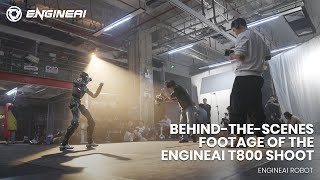
Fully real; EngineAI released behind-the-scenes footage and a video of CEO Zhao Tongyang being kicked by the robot to prove authenticity amid skepticism. Multiple public sightings, like with Shenzhen police, confirm operational hardware.

What is the battery life and charging time?

4-5 hours runtime per charge. Ternary lithium (71.4V/20Ah) charges in 2.5 hours; optional solid-state (74.8V/40Ah) in 3 hours. Modular quick-release design supports hot-swapping for continuous operation.

What computing hardware does it use?

Dual setup: Intel module (opt. RK3588) for Robot PC basics; NVIDIA Jetson AGX Orin 64G (Orin NX 16G in Basic) for AI tasks, upgradable. Enables edge AI for motion, perception, and planning with Linux OS.

What sensors are integrated?

Basic: Intel depth cameras. Higher editions: Proprietary stereoscopic vision + LiDAR system with open interfaces. Provides depth, RGB, and 360° environmental sensing for navigation and manipulation.

Is it ready for industrial deployment?

Entering mass production as of Dec 2025, with funding and partnerships (e.g., Duolun Tech for 2,000+ units). Demos show industrial feats; modular design suits automation, logistics, and R&D, though early-stage refinements ongoing.

What is the maximum speed and strength?

≥3 m/s (10.8 km/h) hardware-limited speed; 450 N·m peak torque per joint. Supports superhuman dynamics like jumps, kicks, and 10-15 kg arm payloads for heavy-duty tasks.

×