Robotera L7
Robot Era

Robotera L7

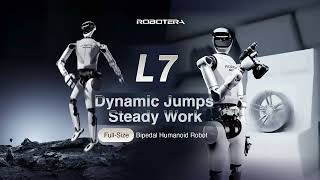
RobotEra L7is a 171 cm‑tall, 65 kg Chinese humanoid that reaches 4 m/s and wields 12‑DoF dexterous hands, aiming to blend flashy agility with factory‑grade manipulation for logistics and service deployments.

Description

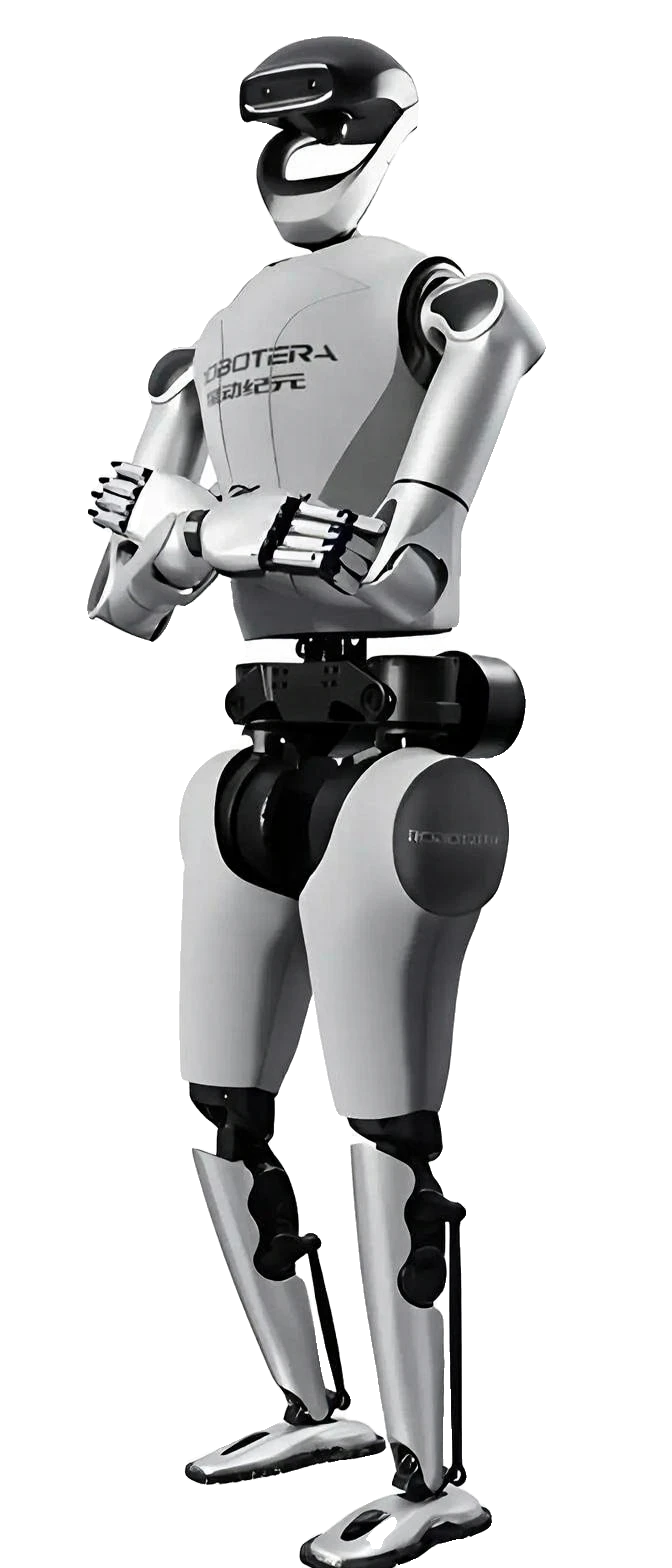
The Robotera L7, developed by Robotera (also known as Robot Era), a Tsinghua University spin-off founded in 2023, represents a significant advancement in full-size bipedal humanoid robotics. Standing at 171 cm tall and weighing 65 kg (without dexterous hands), the L7 features 55 degrees of freedom (DoF) across its body, including 7-DoF arms, a 3-DoF waist, and proprietary 12-DoF direct-drive XHAND1 dexterous hands with five fingers. Its architecture emphasizes a 'body plus brain' unified design, powered by self-developed high-torque joint modules delivering up to 400 N·m peak torque at the knees (25 rad/s peak speed) and an impressive 4 m/s (14.4 km/h) top running speed, making it the fastest full-sized bipedal humanoid to date. The frame utilizes aerospace-grade aluminum alloy and carbon fiber composites for lightweight strength, with polymer shells for outer protection. At the core of the L7's intelligence is the ERA-42, China's first Vision-Language-Action (VLA) large multimodal model, an end-to-end embodied AI system trained on vast video datasets including unlabeled videos, human activities, and teleoperation data. ERA-42 integrates vision, language, touch, and proprioception into a single neural network, enabling causal understanding of actions and outcomes for robust generalization. It controls the full 55 DoF for tasks from agile locomotion (360° rotational jumps, breakdancing, hip-hop) to precise manipulation (10 clicks/second e-sports speed, tool use like drilling or screwing). Compute is handled by an on-board ERA-42 computer: 80 TOPS x86 + 275 TOPS NVIDIA Jetson Orin, supporting low-latency inference. Perception relies on a multi-sensor head with binocular stereo RGB-D cameras, 3D LiDAR for 360° field-of-view spatial awareness, microphone array, and speakers for voice interaction. A swappable 60V 15 Ah battery ensures continuous operation, with estimated 6-8 hours runtime under mixed loads (unverified). The 2.1 m arm span and 20 kg dual-arm payload enable a 2.1 m spherical workspace. Real-world deployment history began post-July 2025 unveiling, with pre-orders and pilots in logistics (e.g., SF Express parcel sorting/scanning), manufacturing (Geely, Renault component picking/assembly), commercial services (Haier retail), and R&D (ByteDance, Skild AI). By late 2025, Robotera reported shipping 200+ humanoids, RMB 500M+ orders from nine of the top ten global tech firms, and overseas revenue (North America, Europe, Japan, Korea) at 50%. Modular configs (full-body L7, upper-body M7) support scalable 'group intelligence' fleets without external servers. Demos showcase industrial tasks like intelligent sorting, handling, assembly, scanning, bartending, alongside athletic feats, positioning L7 for factory automation, warehousing, and service labs. Challenges remain in formal safety ratings and verified endurance, but its native embodied AI bridges sim-to-real gaps effectively.

Key Features

Record-Breaking Mobility

Achieves 4 m/s running speed with 360° rotational jumps and dynamic balance, powered by high-torque direct-drive joints.

Dexterous Manipulation

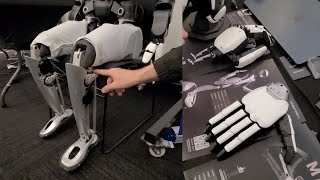
12-DoF XHAND1 hands enable e-sports-level 10 clicks/sec, tool compatibility, and precise tasks like sorting or assembly.

ERA-42 VLA AI

End-to-end model integrates vision-language-action for autonomous task execution across diverse environments.

Full-Domain Perception

Binocular RGB-D cameras, 3D LiDAR, and mic array provide 360° awareness for complex navigation and interaction.

Heavy Payload Capacity

20 kg dual-arm lift with 2.1 m span supports industrial handling in logistics and manufacturing.

Modular Configurability

Selectable full-body or upper-body (M7) setups for research, pilots, or production scaling.

Specifications

AvailabilityPrototype
NationalityChina
Websitehttps://www.robotera.com/
Degrees Of Freedom, Overall55
Degrees Of Freedom, Hands12
Height [Cm]171
Manipulation Performance2
Navigation Performance2
Max Speed (Km/H)14.4
Strength [Kg]20
Weight [Kg]65
Safe With HumansNo formal safety rating
Cpu/Gpu“ERA‑42” on‑board embodied‑AI computer
Ingress ProtectionNot disclosed
Camera ResolutionMulti‑sensor head (stereo RGB‑D + LiDAR)
Llm IntegrationERA‑42 large multimodal model for vision & language
Motor TechDirect‑drive, high‑torque servo modules
Main Structural Materialphotos suggest alloy frame + polymer shells
Number Of Fingers10
Main Marketfactory automation, Industrial automation, service & research labs
VerifiedNot verified
ManufacturerRobot Era
Height171 cm
Weight65 kg (without dexterous hands)
Dof Total55 (including 12-DoF hands)
Dof Hands12 per hand (XHAND1, direct-drive)
Max Speed4 m/s (14.4 km/h)
Payload20 kg dual-arm
Arm Span2.1 m
Knee Torque400 N·m peak
Knee Speed25 rad/s peak
Compute80 TOPS x86 + 275 TOPS NVIDIA Jetson Orin
Battery60 V, 15 Ah (swappable, ~6-8 hours estimated)
SensorsBinocular stereo RGB-D cameras, 3D LiDAR, microphone array, speakers
ActuatorsSelf-developed high-torque servo modules, direct-drive hands
MaterialsAerospace-grade aluminum alloy, carbon fiber composites, polymer shells
Perception360° field-of-view multi-sensor fusion
AiERA-42 VLA end-to-end multimodal model
Thermal ManagementNot disclosed

Curated Videos

Video 1
Video 2
Video 3
Video 4

Frequently Asked Questions

What is the maximum speed of the Robotera L7?

The L7 reaches a top running speed of 4 m/s (14.4 km/h), achieved through high-torque knee joints (400 N·m, 25 rad/s) and advanced balance control, outperforming prior humanoids like its predecessor STAR1.

What AI powers the L7?

ERA-42, Robotera's proprietary VLA model, enables end-to-end control of 55 DoF by fusing vision, language, touch, and posture data, trained on video datasets for generalization to new tasks with minimal retraining.

What are the manipulation capabilities?

Equipped with 12-DoF direct-drive XHAND1 hands, it performs dexterous feats like 10 clicks/sec, tool use (drilling, screwing), sorting, and delicate handling (ripping towels), with a 20 kg dual-arm payload.

What is the battery life?

Features a swappable 60V 15 Ah battery; runtime estimated at 6-8 hours for mixed operations, supporting uninterrupted deployment via quick swaps in industrial settings.

What sensors does it use?

Multi-sensor fusion includes binocular stereo RGB-D cameras, 3D LiDAR for 360° perception, microphone array for voice commands, and speakers, enabling robust environmental adaptation.

Is the L7 deployed commercially?

Yes, pilots in logistics (SF Express sorting), manufacturing (Geely assembly), and retail (Haier); over 200 units shipped in 2025 with RMB 500M+ orders from top firms.

What materials are used in construction?

Aerospace-grade aluminum alloy frame, carbon fiber composites for strength-to-weight ratio, and polymer shells; weighs 65 kg without hands for agility.

×