Robbyant R1
Robbyant (Ant Lingbo Technology), part of Ant Group (China)

Robbyant R1

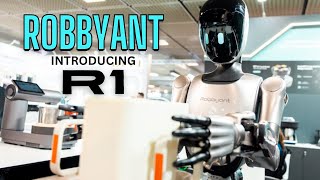
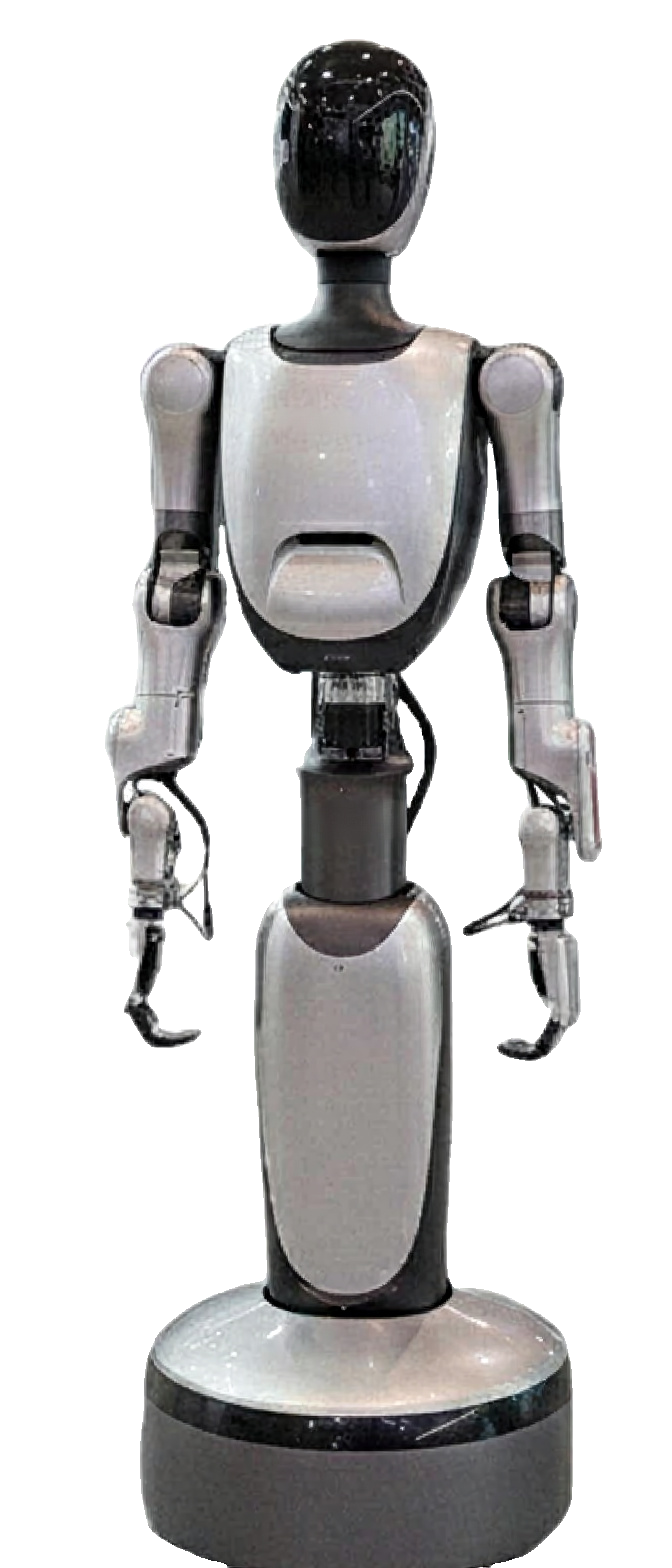
Robbyant R1 is a wheeled humanoid robot developed by Ant Group’s robotics arm, designed to bring embodied AI into real-world settings — from kitchens and museums to hospitality, medical support, and public services.

Description

The Robbyant R1 is a pioneering wheeled humanoid robot developed by Ant Lingbo Technology (Robbyant), a robotics subsidiary of Ant Group, the Chinese fintech giant behind Alipay. Unveiled in September 2025 at major events like IFA 2025 in Berlin and the INCLUSION Conference in Shanghai, the R1 represents Ant Group's ambitious entry into embodied AI and humanoid robotics, aiming to bridge digital AI services with physical world applications. Unlike bipedal robots focused on mobility feats, the R1 prioritizes practical service tasks through a wheeled base for stable navigation, upper-body humanoid form with two arms for manipulation, and advanced AI integration. Architecturally, the R1 stands between 160-175 cm tall, weighs 110 kg, and features 34 degrees of freedom (DOF) primarily in its arms for dexterous tasks. It achieves a maximum speed of 5.4 km/h (under 1.5 m/s), powered by 48V DC geared motors with encoders for precise control. The robot employs multimodal perception cameras for vision, enabling object recognition, spatial mapping, and environmental understanding. Connectivity includes Bluetooth and Wi-Fi for cloud integration, allowing real-time AI processing and updates. The core intelligence stems from Ant Group's AI ecosystem, initially linked to the Bailing LLM but evolving with the Ling series of large language models, including trillion-parameter-scale systems for multimodal reasoning, planning, and interaction. The embodied AI architecture decomposes complex tasks into perception, planning, and execution layers. Spatial perception AI identifies ingredients, utensils, and appliances, while a large embodied-AI model handles process planning, recipe learning, and adaptation to varied kitchen layouts or equipment brands. During live demos, the R1 autonomously cooked garlic shrimp: selecting ingredients, operating a wok, stirring, and serving—demonstrating end-to-end autonomy from perception to cleanup. This 'scenario-based' approach bundles the robot with customized software solutions for specific environments like commercial kitchens. Real-world deployment history began with pilots shortly after launch. By late 2025, R1 units were tested in restaurants, community centers, and institutions such as the Shanghai History Museum for tour guiding. Healthcare pilots include medicine sorting and basic consultations via voice interaction. Hospitality applications target labor-shortage areas, with the robot acting as a caregiver assistant or public service aide. Ant Group reports mass production of the first-generation R1, with second-gen in development, emphasizing bundled 'scenario solutions' over standalone sales. Priced around $55,000 per humanoid.guide estimates, it's targeted at institutional use. The R1's software-centric design leverages Ant's AI expertise—derived from fintech-scale data processing—for continuous learning. It connects to cloud-based 'super smart brain' for task optimization, reducing latency in glass-to-action pipelines. Challenges include slow manipulation speeds observed in demos and reliance on structured environments, but its focus on service sectors positions it competitively against Unitree or Tesla Optimus in commercial viability. As of December 2025, partnerships in Europe are explored, signaling global expansion. The R1 exemplifies China's push in humanoid robotics, integrating vast AI resources with practical hardware for scalable, AI-driven service robots.

Key Features

Autonomous Cooking

Handles full kitchen workflows including ingredient selection, cooking (e.g., stir-frying shrimp), stirring, and cleanup using embodied AI for recipe learning and adaptation to different appliances.

Multimodal Perception

Equipped with advanced cameras for object recognition, spatial mapping, and environmental navigation, enabling safe operation in dynamic settings like kitchens or museums.

Embodied AI Planning

Powered by Ant Group's Ling series LLMs and embodied models for task decomposition, real-time decision-making, and continuous learning from interactions.

Versatile Service Roles

Supports tour guiding, medicine sorting, health consultations, and hospitality assistance, with scenario-customizable behaviors.

Wheeled Mobility

Stable wheeled base achieves 5.4 km/h speeds, prioritizing reliable navigation over bipedal walking for service efficiency.

Specifications

AvailabilityIn production
NationalityChina
Websitehttps://www.antgroup.com/en
Degrees Of Freedom, Overall34
Height [Cm]160
Manipulation Performance2
Navigation Performance3
Max Speed (Km/H)5.4
Weight [Kg]110
Camera ResolutionUses multimodal perception camera
ConnectivityBluetooth, Wi‑Fi
Llm IntegrationBailing LLM
Motor Tech48 V DC geared motors with encoders
Main MarketHospitality, kitchens, service, hospitality, tourism (museum tours), healthcare / medical assistance, public services, institutional deployments (not consumer).
VerifiedNot verified
Walking Speed [Km/H]5.4
ColorWhite, Silver
ManufacturerRobbyant (Ant Lingbo Technology), part of Ant Group (China)
Height Cm160-175
Weight Kg110
Dof Overall34
Max Speed Kmh5.4
Motors48 V DC geared motors with encoders
PerceptionMultimodal perception cameras (specific models unspecified)
ConnectivityBluetooth, Wi-Fi
Ai LlmBailing LLM, Ling series (trillion-parameter multimodal models)
BatteryN/A (runtime unspecified)
Cpu GpuN/A (cloud-assisted processing)
NavigationWheeled base, performance rated 3/5
ManipulationTwo arms, performance rated 2/5

Curated Videos

Video 1
Video 2
Video 4

Frequently Asked Questions

What is the Robbyant R1 robot?

The Robbyant R1 is a wheeled humanoid service robot by Ant Lingbo Technology (Robbyant), part of Ant Group. Standing 160-175 cm tall with 34 DOF, it integrates embodied AI for tasks like cooking, guiding tours, and medical assistance, debuted in 2025 for commercial pilots in hospitality and healthcare.

What AI models power the R1?

It uses Ant Group's Bailing LLM for integration, augmented by the advanced Ling series large models (trillion-parameter scale) for multimodal perception, planning, and interaction, enabling adaptive learning of recipes and environments via cloud-connected embodied AI.

What are the main specifications of the R1?

Key specs include 110 kg weight, 5.4 km/h max speed, 34 DOF, 48V DC geared motors, multimodal cameras, Wi-Fi/Bluetooth connectivity. Designed for indoor service, it's in mass production with pilots ongoing, focusing on manipulation and navigation rated at 2/3 on humanoid.guide scales.

In which real-world scenarios is the R1 deployed?

Pilots include commercial kitchens for cooking, museums like Shanghai History for tours, community centers, and healthcare for medicine sorting/consults. Bundled as scenario solutions for institutional use, with European partnerships in exploration as of late 2025.

How does the R1 handle complex tasks like cooking?

Through spatial perception for object localization, embodied AI for workflow planning, and arm manipulation for precise actions. Demos show full autonomy in shrimp cooking, with continuous learning to adapt to new recipes or kitchen variations without reprogramming.

Is the R1 available for purchase?

Currently in production and pilots, not for direct consumer sale. Offered as part of customized 'scenario solutions' for businesses, estimated at $55,000 per unit, targeting hospitality, medical, and public services rather than home use.

×