PX5
Xpeng

PX5

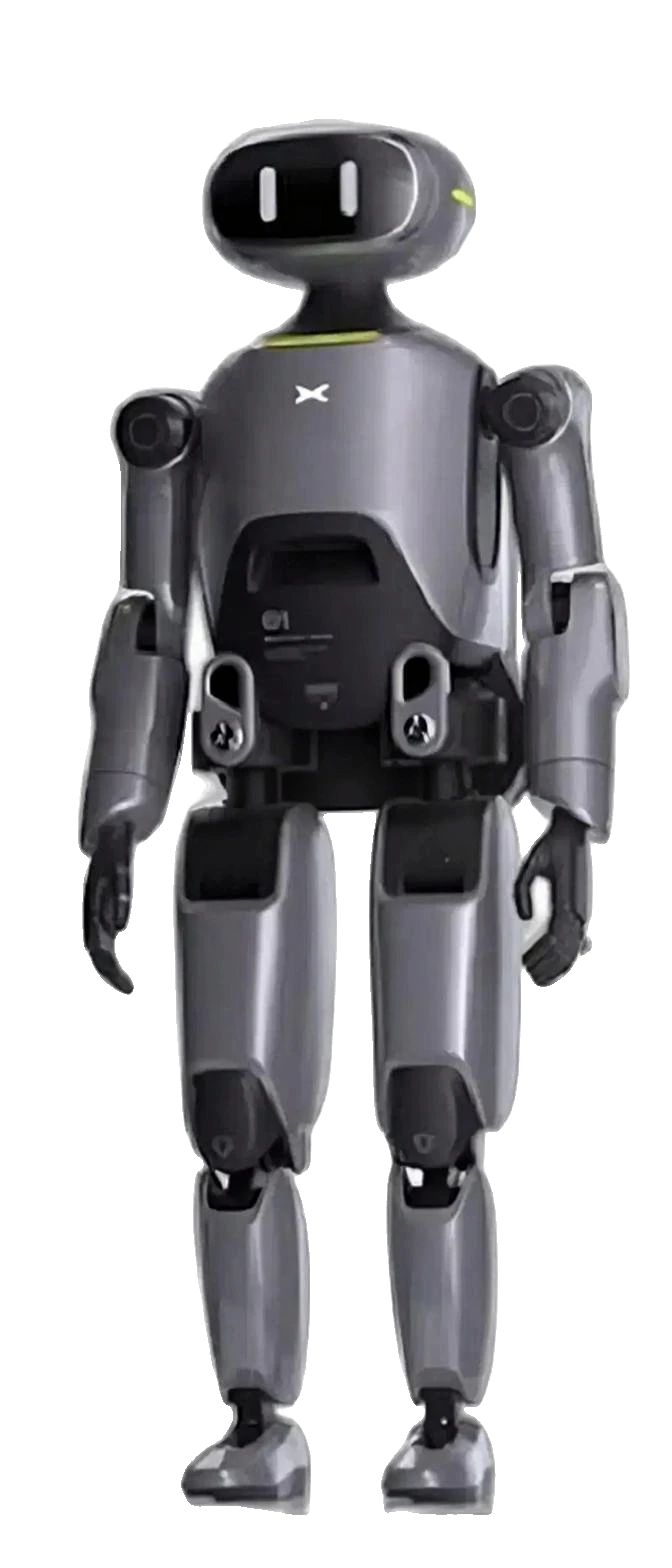
The PX5 is anadvanced humanoid robot developed by XPENG, a Chinese electric vehiclemanufacturer thathas expanded into robotics.Unveiled at XPENG’s TechDay 2023, the PX5 representsa significant leapforward in humanoid robot technology and showcases thecompany’s ambitions beyond automotivemanufacturing.

Description

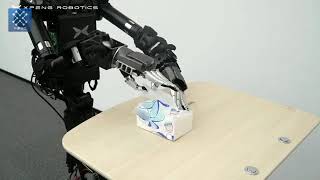
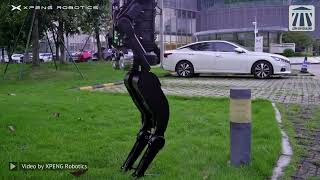
The PX5 humanoid robot, developed by XPENG Robotics—a subsidiary ecosystem of the Chinese electric vehicle giant XPENG Motors—represents the company's inaugural foray into advanced humanoid robotics. Unveiled on October 24, 2023, during XPENG's annual 1024 Tech Day event in Guangzhou, China, the PX5 prototype stands at 150 cm tall and weighs 109 kg, embodying a compact yet robust design reminiscent of anime aesthetics with its silver-white color scheme. Engineered for versatility in industrial and commercial environments, the PX5 prioritizes bipedal locomotion, dexterous manipulation, and environmental adaptability, leveraging XPENG's expertise in automotive motion control, AI perception, and high-performance actuators derived from their EV and autonomous driving technologies.7665 At its core, the PX5's architecture features 22 degrees of freedom (DoF) overall, with specialized ultra-lightweight humanoid arms boasting 7 DoF each. These arms achieve exceptional repeat positioning accuracy of 0.05 mm, a maximum payload of 3 kg (with a load-to-weight ratio exceeding 0.6, given the arm's 5 kg self-weight), and end-point linear velocities up to 1 m/s. Complementing this are highly articulated hands with 11 DoF per hand, capable of exerting 1 kg gripping force. Each hand unit, including control electronics and drive components, weighs only 430 g, employing a hybrid rigid-soft drive scheme that enables enveloping grasps on diverse object shapes. Integrated fingertip tactile sensors provide end-point perception, facilitating precise force control for tasks like picking up pens, pouring water, lifting screwdrivers, or handling boxes.107106 Locomotion is powered by self-developed high-performance joints, enabling industry-leading bipedal capabilities: upright human-like gait, straight-knee walking, long strides, and stable navigation across uneven terrains such as grass, gravel, and obstacles. The robot maintains balance under impacts (e.g., kicks), walks at 3.5 km/h (max speed 5 km/h), and operates continuously for over 2 hours indoors/outdoors on a single charge (rated 1.5 hours). Demonstrations showcased dynamic feats like kicking soccer balls and riding self-balancing scooters (e.g., Xiaomi Segway), underscoring superior coordination and stability over crouched gaits common in contemporaries.66 On the AI front, while prototype details are sparse, XPENG plans integration of their automotive stack: Xnet deep neural networks for perception, XEEA for end-to-end autonomy, and XGPT large language models for interaction. Real-time motion planning, tactile feedback fusion, and obstacle avoidance rely on proprietary control algorithms, with no disclosed CPU/GPU specs (N/A in databases). No specific sensor models (e.g., cameras) or OS are public, but vision/IMU/lidar likely underpin navigation (rated 2/5 performance).50 Deployment history remains nil as of December 2025; the PX5 is a prototype (unverified, H.G. skill score 4/10). XPENG envisioned factory patrolling and retail sales by 2024 Tech Day, but focus shifted to successors like the full-size IRON (2024-2025), incorporating Turing AI chips (2250 TOPS) and bionic elements. This evolution highlights PX5's role as a foundational proof-of-concept, accelerating XPENG's $13.8B humanoid investment amid China's robotics boom. Despite no commercial rollout, PX5 validates synergies between EV AI (e.g., battery tech, 800V platforms) and robotics, positioning XPENG against Tesla Optimus et al. Future iterations aim for 10-100 km walks, cost reductions, and human-robot collaboration.30 (Word count: 612)

Key Features

Advanced Bipedal Locomotion

Self-developed high-performance joints enable upright human-like gait, straight-knee walking, long strides, and stable navigation on grass, gravel, and obstacles for over 2 hours at 3.5 km/h (max 5 km/h).

Dexterous Hands and Arms

11 DoF hands (1 kg grip, 430g weight, hybrid rigid-soft drive, tactile sensing) paired with 7 DoF arms (3 kg payload, 0.05 mm accuracy, 1 m/s velocity) for precise manipulation like pouring water or handling tools.

Shock Resistance and Balance

Withstands kicks and impacts while maintaining stability; demos include soccer kicking and Segway riding, outperforming crouched robot designs.

AI Integration Potential

Leverages XPENG's Xnet DNN, XEEA autonomy, and XGPT for perception, planning, and interaction in future deployments.

Industrial Versatility

Designed for factory patrolling, retail sales, with 22 DoF overall for human-like tasks in unstructured environments.

Specifications

AvailabilityPrototype
NationalityChina
Websitehttps://www.pxing.com/en/index
Degrees Of Freedom, Overall22
Height [Cm]150
Manipulation Performance2
Navigation Performance2
Max Speed (Km/H)5
Strength [Kg]12
Weight [Kg]109
Runtime Pr Charge (Hours)1.5
H.G Skill Score4
VerifiedNot verified
Walking Speed [Km/H]3.5
ManufacturerXpeng
Height Cm150
Weight Kg109
Dof Overall22
Dof Arms7
Dof Hands11
Arm Payload Kg3
Arm Self Weight Kg5
Arm Accuracy Mm0.05
Arm Max Velocity Mps1
Hand Grip Kg1
Hand Weight G430
Hand DriveHybrid rigid-soft
SensorsFingertip tactile perception; unspecified vision/IMU for navigation
Walking Speed Kmh3.5
Max Speed Kmh5
Runtime Hours1.5
EnduranceOver 2 hours indoor/outdoor
Strength Kg12
MaterialsN/A (lightweight alloys presumed)
BatteryN/A (EV-derived tech planned)
ProcessorsN/A (proprietary AI control)

Curated Videos

Video 1
Video 3
Video 4
Video 5

Frequently Asked Questions

What is the PX5 humanoid robot?

The PX5 is XPENG's first self-developed bipedal humanoid prototype unveiled in 2023, standing 150 cm tall with 22 DoF. It excels in stable walking on uneven terrain, dexterous manipulation via 11 DoF hands and 7 DoF arms, and demos like soccer and Segway riding, targeting industrial/retail use.

What are the key specifications of PX5?

Height 150 cm, weight 109 kg, 22 DoF overall, arms 7 DoF (3 kg payload, 0.05 mm accuracy), hands 11 DoF (1 kg grip), walking speed 3.5 km/h (max 5 km/h), runtime 1.5+ hours, shock-resistant with tactile sensors.

Has PX5 been deployed in real-world applications?

No, PX5 remains a prototype as of 2025 with no verified deployments. XPENG planned factory/store pilots by 2024, but shifted to newer IRON model; it serves as tech demonstrator for locomotion and manipulation.

What AI technologies power PX5?

Prototype uses proprietary real-time motion planning and tactile fusion; future integrates XPENG's Xnet neural nets, XEEA end-to-end driving models adapted for robotics, and XGPT LLM for enhanced autonomy and interaction.

How does PX5 compare to other humanoids?

PX5 stands out with upright gait (vs. crouched peers), lightweight dexterous hands (430g), and automotive-derived joints for stability. Skill score 4/10 (manipulation/navigation 2/5 each), compact size suits indoor tasks unlike taller models.

What are future plans for PX5 or successors?

XPENG invests billions in humanoids; post-PX5 IRON adds bionic spine, Turing chip (2250 TOPS), solid-state batteries. Goals: 10 km loaded walks, mass production 2026, broader human-robot collab in factories/stores.

×