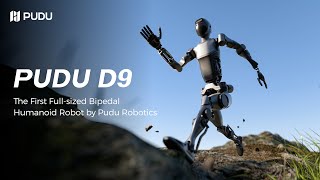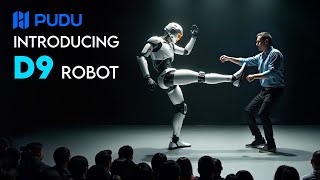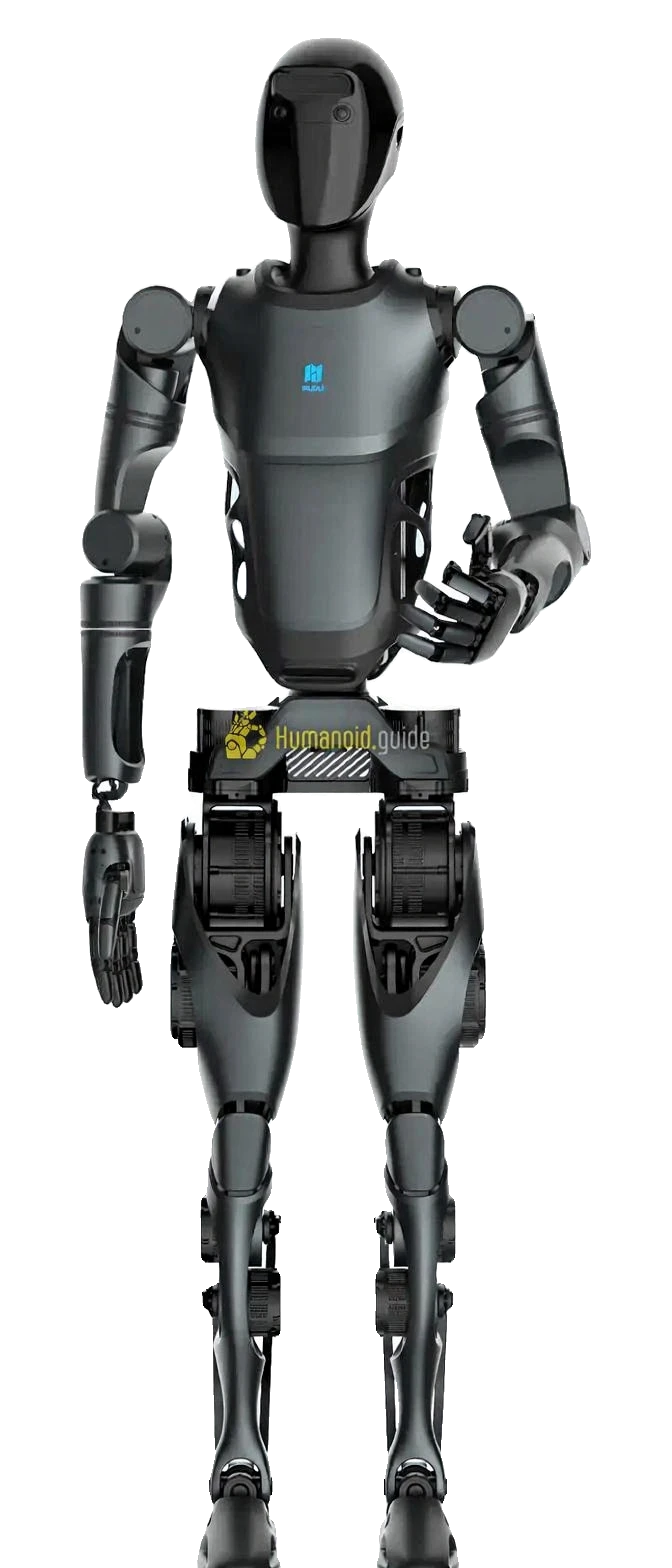
Pudu D9
Pudu Robotics

Pudu D9

the PUDU D9 is a versatile humanoid robot designed to emulate human capabilities, offering dynamic mobility, precise manipulation, and adaptability across various applications. Its advanced features position it as a promising solution for industries seeking to integrate robotic assistance into their operations.

Description

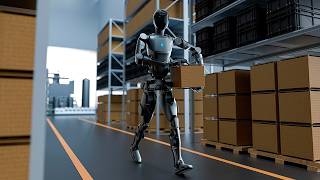
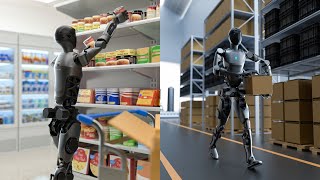
The PUDU D9, developed by Pudu Robotics' X-Lab and unveiled on December 19, 2024, represents a significant advancement in full-sized bipedal humanoid robotics, standing at 170 cm tall with adult-like proportions and weighing 65 kg. Its architecture is engineered for human-centric applications under the 'Born to Serve' philosophy, featuring 42 degrees of freedom (DOF): 6 DOF per leg for dynamic bipedal locomotion, 7 DOF per arm for versatile manipulation, and integration with the PUDU DH11 dexterous hand offering 11 DOF (6 active motor-driven, 5 passive) per hand. The robot's skeletal structure includes thigh lengths of 325 mm, calf 383 mm, arm 580 mm, and hand 220 mm, enabling human-like reach and gait. Maximum joint torque reaches 352 Nm, supporting payloads up to 20 kg total (10 kg per arm), with walking speeds up to 2 m/s (7.2 km/h) on flat surfaces. Mobility is enhanced by lightweight gait control algorithms that reduce noise, allowing navigation of stairs, slopes, and urban terrains while recovering from perturbations like kicks. At its core, the PUDU D9 leverages 275 TOPS of computing power for embodied intelligence, powered by a 0.72 kWh (15 Ah) battery providing approximately 1.5 hours of runtime per charge. Perception is multimodal, incorporating RGB and RGBD cameras for visual semantic navigation—enabling real-time 3D semantic mapping, autonomous route planning, precise localization, and obstacle avoidance. Tactile sensors (12 regions, 1018 pixels per DH11 hand), IMU for balance, force/torque sensing, and auditory inputs via stereo speakers facilitate natural human-robot interactions. High-precision end-effectors like the DH11 hand deliver palm-finger grips up to 30 N, lifting up to 40 kg, with bend speeds of 150°/s (palm fingers) and 191°/s (thumb). AI architecture emphasizes end-to-end task execution via proprietary reinforcement learning (RL) algorithms trained on vast datasets, allowing rapid adaptation to manipulation tasks from heavy lifting to delicate handling. Visual-semantic processing supports complex environments, while multimodal fusion (vision, touch, sound) enables human-level responsiveness in service scenarios. No specific LLM integration or OS is disclosed, but the open platform hints at extensibility. As a prototype (not yet verified for commercial shipping), real-world deployments are nascent, focused on pre-sale trials. Demonstrated applications include warehouse box carrying, retail shelf stocking, restaurant serving/clearing, industrial sorting, ground cleaning with PUDU SH1 integration, elevator operation, and exhibition demos. Pudu Robotics, with over 80,000 units shipped globally, positions the D9 as a bridge to viable embodied AI, iterating continuously toward industries like logistics, hospitality, healthcare, and cleaning. Challenges remain in battery life, full autonomy latency, and IP ratings (undisclosed), but its high torque, dexterity, and navigation position it competitively against peers like Unitree G1 or Tesla Optimus.

Key Features

Full-Scale Bipedal Mobility

Human-like walking at 2 m/s, stair/slope navigation, real-time 3D semantic mapping, and perturbation recovery for dynamic environments.

Dexterous Manipulation

PUDU DH11 hands with 11 DOF, 1018 tactile pixels, 40 kg lift capacity, enabling precise gripping and heavy payload handling up to 20 kg.

Multimodal Perception

RGB/RGBD cameras, IMU, tactile/force sensors for visual navigation, balance, and natural interaction.

High Computing Power

275 TOPS enables RL-based task learning and end-to-end planning for adaptive operations.

Human-Centric Design

Stereo audio, lightweight gait for low noise, aimed at service applications like retail and hospitality.

Specifications

AvailabilityPrototype
NationalityChina
Websitehttps://www.pudurobotics.com/
Degrees Of Freedom, Overall42
Height [Cm]170
Manipulation Performance3
Navigation Performance3
Max Speed (Km/H)7.2
Strength [Kg]20
Weight [Kg]55
Runtime Pr Charge (Hours)1.5
H.G Skill Score4
VerifiedNot verified
ManufacturerPudu Robotics
Height Cm170
Weight Kg65
Dof Total42
Dof Leg6
Dof Arm7
Dof Hand11
Max Joint Torque Nm352
Payload Kg20 total (10 per arm)
Max Speed Mps2
Computing Tops275
Battery Capacity15 Ah / 0.72 kWh
Runtime Hours1.5
Sensorsvision: RGB, RGBD cameras, tactile: 12 regions, 1018 pixels (DH11 hand), imu: Yes, force_torque: Integrated, audio: Stereo speaker
Hand Dh11weight_g: 500, grip_force_N: 30, lift_capacity_kg: 40, bend_speed_degs: 150 (palm fingers), 191 (thumb)
Dimensions Mmthigh: 325, calf: 383, arm: 580, hand: 220
MaterialsN/A (lightweight alloys implied)
Cpu GpuN/A (275 TOPS total)

Curated Videos

Video 1
Video 2
Video 3
Video 4
Video 5

Frequently Asked Questions

What is the battery life and capacity of the Pudu D9?

The Pudu D9 features a 15 Ah (0.72 kWh) battery, providing approximately 1.5 hours of continuous operation per charge under standard testing conditions. Runtime varies with task intensity, mobility demands, and computing load; recharging is efficient via standard docking, supporting multiple shifts with swaps.

What sensors does the Pudu D9 use for navigation and manipulation?

It integrates RGB and RGBD cameras for visual semantic mapping, IMU for balance/orientation, 12 tactile sensing regions (1018 pixels per hand) on DH11 grippers, and force/torque sensors. This multimodal setup enables real-time 3D environment understanding, obstacle avoidance, and precise dexterous tasks.

Can the Pudu D9 handle heavy payloads and delicate objects?

Yes, with 20 kg total payload (10 kg per arm) and 352 Nm joint torque, it lifts heavy items like warehouse boxes. The DH11 hands offer fine control: 30 N grip force, 40 kg single-hand lift, high bend speeds, allowing seamless transitions from robust transport to intricate handling like shelf stocking.

What applications is the Pudu D9 designed for?

Targeted at commercial service sectors including warehouse logistics (carrying/sorting), retail (shelf stocking), hospitality (serving/clearing), cleaning (with SH1 integration), and industrial tasks. Its bipedal form suits human environments like elevators and urban settings.

Is the Pudu D9 commercially available yet?

Currently in prototype stage with pre-sale options via the official site. Pudu Robotics is iterating toward full commercial viability, with shipped versions potentially differing from demos; contact sales for demos and contracts.

×