Pudu D7
Pudu Robotics

Pudu D7

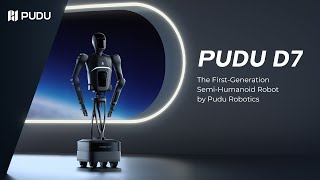
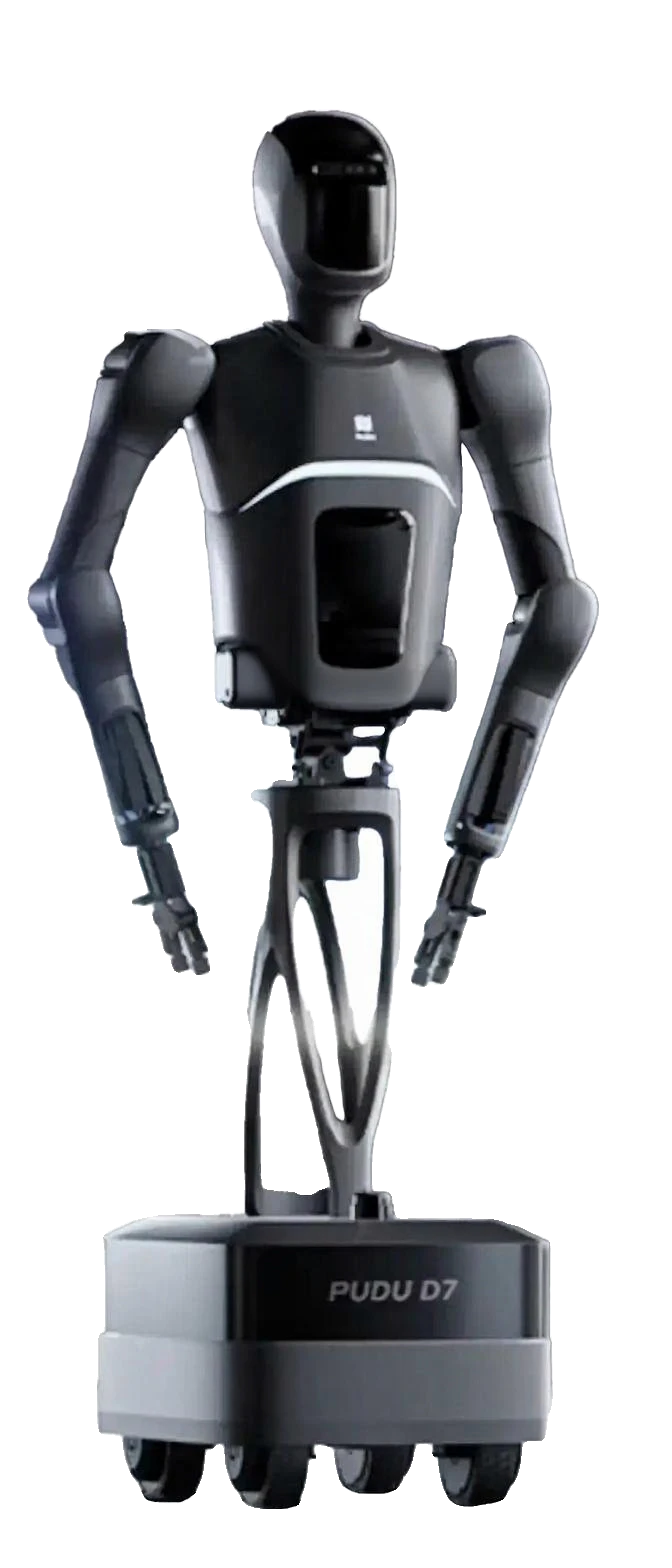
Pudu Robotics proudly presents the PUDU D7, a cutting-edge semi-humanoid robot that embodies the future of service automation. Designed with advanced mobility, dexterity, and artificial intelligence, the D7 is engineered to tackle a wide array of tasks across various industries. With its human-like upper body, bionic arms, and innovative omnidirectional chassis, the PUDU D7 not only enhances operational efficiency but also facilitates intuitive human-robot interactions.

Description

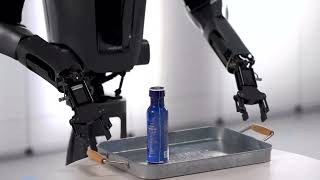
The PUDU D7, developed by Pudu Robotics' X-Lab, represents a pioneering semi-humanoid robot unveiled in September 2024, marking the company's entry into embodied intelligent robotics. Standing at 165 cm tall and weighing 45 kg, it features a human-like upper body paired with bionic arms and an advanced omnidirectional wheeled chassis, optimizing for service and industrial applications. This design bridges specialized robots and full humanoids, emphasizing practicality with wheels for superior mobility over legged systems. Architecturally, the D7 integrates a high-performance computing platform delivering 200 TOPS, enabling multimodal perception and generalized learning operations. Its core is the PUDU Embodied Intelligence Technology stack, comprising Pudu OS, Pudu AI Studio, Pudu Sim for simulation, and Pudu Cloud for scalable AI tools. The control system employs a hierarchical architecture: a high-level planner decodes tasks and strategizes, while a low-level controller executes precise actions like grasping, placing, and navigating. This supports end-to-end task autonomy, with continuous improvement via teleoperation, embodied, video, simulation, and synthetic data training, reducing costs and enhancing adaptability. The bionic arms offer 65 cm reach, 10 kg payload per arm (20 kg total), and 0.1 mm endpoint repeatability, with 5 rotational + 2 linear joints per arm (30 DOF overall, expandable to 50 with 11-DOF 5-fingered dexterous hand featuring 1,018 tactile sensor pixels across 12 areas and 30 N grip force). The chassis supports 360° omnidirectional movement at 2 m/s max speed (7.2 km/h), 2 m/s² acceleration, 50 mm obstacle climbing, 10° slope handling, and 100 kg load capacity. Power comes from a >1 kWh battery yielding 8+ hours runtime. Demonstrated tasks include retail sorting/shelving, industrial component handling, restaurant serving/clearing, and autonomous elevator operation—pressing buttons, selecting floors, and navigating indoors. As a prototype, real-world deployments are limited to demos as of late 2025, with commercialization targeted for 2025 across hospitality, retail, F&B, healthcare, education, offices, and industry. No customer installations reported; focus remains on validation and scaling. Pudu's patent portfolio (~1,000) underpins innovations, positioning D7 as a versatile platform for human-robot collaboration, though specific AI models (e.g., no LLM named) and sensor details (e.g., camera resolutions) are undisclosed. Future integrations like DH11 hand enhance dexterity for delicate tasks.

Key Features

Omnidirectional Chassis

360° movement, 2 m/s speed, 50 mm obstacle climb, 10° slopes, 100 kg load for superior navigation in dynamic environments.

Bionic Arms

65 cm reach, 10 kg/arm payload, 0.1 mm precision, 30 DOF (expandable to 50) for versatile manipulation.

Embodied Intelligence

Hierarchical AI with high/low-level planning, multimodal perception, continuous learning from diverse data sources.

Dexterous Hand Option

11 DOF, 5 fingers, 1,018 tactile pixels, 30 N grip for fine tasks like sorting and handling.

Extended Runtime

>1 kWh battery for 8+ hours continuous operation, ideal for shift-based deployments.

High Computing Power

200 TOPS platform supporting complex AI-driven tasks and real-time control.

Specifications

AvailabilityPrototype
NationalityChina
Websitehttp://N/A
Degrees Of Freedom, Overall30
Height [Cm]165
Manipulation Performance2
Navigation Performance2
Max Speed (Km/H)7.2
Strength [Kg]20
Weight [Kg]45
Runtime Pr Charge (Hours)8
H.G Skill Score4
VerifiedNot verified
Walking Speed [Km/H]7.2
ManufacturerPudu Robotics
Height Cm165
Weight Kg45
Dof Overall30
Dof Expandable50
Computing Tops200
Arm Reach Cm65
Arm Payload Kg10
Endpoint Precision Mm0.1
Arm Dof Per Arm5 rotational + 2 linear
Hand Dof11
Hand Tactile Pixels1018
Hand Grip N30
Max Speed Mps2
Max Accel Mps22
Obstacle Climb Mm50
Max Slope Deg10
Chassis Load Kg100
Battery Kwh>1
Runtime Hours>8
OsPudu OS
Ai PlatformPudu AI Studio, Sim, Cloud

Curated Videos

Video 1
Video 2
Video 3
Video 4
Video 5

Frequently Asked Questions

What is the PUDU D7's primary design focus?

The D7 emphasizes service automation with a semi-humanoid form, combining wheeled mobility for efficiency and upper-body dexterity for human-like interactions in retail, hospitality, and industry, prioritizing practicality over full bipedalism.

How long does the battery last and what is its capacity?

Equipped with a battery exceeding 1 kWh, the PUDU D7 operates continuously for over 8 hours per charge, suitable for full work shifts without frequent recharging, enhancing deployment reliability.

What are the manipulation capabilities of the arms?

Bionic arms extend 65 cm, lift 10 kg each with 0.1 mm endpoint precision; base 30 DOF expands to 50 with dexterous hand, enabling precise tasks like sorting, grasping, and elevator button pressing.

What AI architecture powers the robot?

PUDU Embodied Intelligence uses high-level task planning and low-level execution controllers, supported by Pudu OS, AI Studio, Sim, and Cloud, leveraging multimodal data for adaptive learning and complex scenario handling.

Is the PUDU D7 deployed in real-world settings?

Currently a prototype with demonstrated capabilities in simulated retail, industrial, restaurant, and office scenarios; full commercialization planned for 2025, no widespread customer deployments as of December 2025.

What is the top speed and mobility range?

Reaches 2 m/s (7.2 km/h) with 360° omnidirectionality, 2 m/s² acceleration, 50 mm obstacle clearance, and 10° slope stability, excelling in indoor navigation.

Can it integrate advanced hands?

Yes, compatible with PUDU DH11 11-DOF dexterous hand (500 g, 12 tactile areas, 30 N grip), boosting fine manipulation for healthcare and logistics tasks.

×