Phantom MK1
Foundation

Phantom MK1

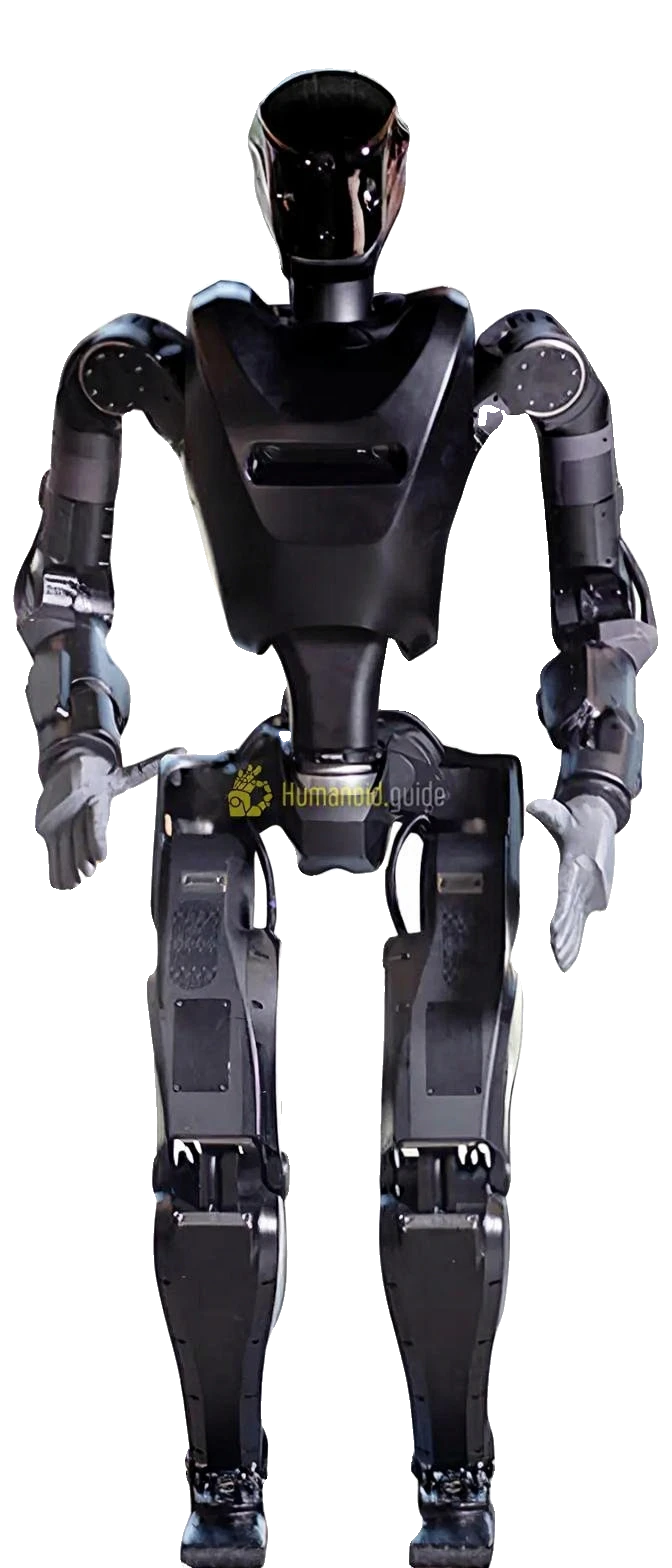
Phantom MK1 is a camera‑first humanoid from Foundation built to work in human spaces. Standing 175 cm and ~80 kg, it targets industrial and defense use cases with up to 20 kg payload, 1.7 m/s top speed, cycloidal actuators, and an LLM‑driven task‑to‑motion stack.

Description

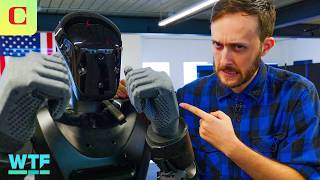
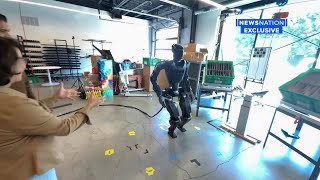
The Phantom MK1 is a pioneering camera-first humanoid robot developed by Foundation Robotics, a San Francisco-based startup founded in 2024 by CEO Sankaet Pathak, co-founder Mike LeBlanc (former US Marine), and others. Following the acquisition of Boardwalk Robotics in December 2024, Foundation accelerated development, building the Phantom MK1 from concept to first shipment in just 13 months, with the prototype publicly debuting in February 2025 at San Francisco's Temple Nightclub where it performed as a DJ with preprogrammed motions. By December 2025, over 40 units had been built and delivered, with initial customer pilots starting in April 2025 and scaling plans for 10,000 units in 2026. Architecturally, the Phantom MK1 stands 175 cm (5'9") tall and weighs approximately 80 kg (176 lbs), constructed from steel and plastic for durability in rugged environments. It features 19 degrees of freedom in the upper body, powered by advanced cycloidal actuators delivering up to 160 Newton-meters of peak torque while maintaining back-drivability below 1 Newton-meter, ensuring safe interaction with humans. The anthropomorphic hands have 10 fingers for precise manipulation. Mobility includes a top walking speed of 1.7 m/s (6.1 km/h), enabling navigation in human-built spaces without modifications. Perception relies on a camera-first approach with eight high-resolution cameras in the head for vision-based AI, supporting tasks like obstacle avoidance, grasping, and tool use. The AI stack is LLM-driven, combining large language models for high-level task reasoning with proprietary physics-action models that translate natural language instructions into precise whole-body motions. This task-to-motion architecture allows decomposition of complex missions into sequences, with low latency from perception to action. A key innovation is fleet coherence via a shared world graph, where multiple robots share real-time environmental data, task status, and optimizations to prevent duplication, reallocate resources dynamically, and enhance collective intelligence—akin to GPU cluster coordination. Training leverages real-world deployment data in a human-in-the-loop feedback loop, improving autonomy over time and reducing teleoperation needs. Real-world deployments began with industrial pilots in automotive manufacturing (e.g., Atlanta automaker handling bumpers), consumer goods, beverage, and glass sectors, operating 24/7 in unstructured factories to address high worker attrition. Approximately 10 units are currently deployed, generating data for AI refinement under a Robotics-as-a-Service (RaaS) model. Defense applications, enabled by $10M in government contracts inherited from Boardwalk, include logistics, aircraft maintenance, barrier breaching, casualty evacuation, and reconnaissance. Foundation is in advanced talks with US Army, Air Force, Marines, and DHS, embracing dual-use potential including weapon proficiency training (e.g., C-4 placement, gunfire) to counter adversaries like China's Unitree robots. CEO Pathak envisions deployments on battlefields, borders, and eventually Mars/Antarctica bases, with MK2 slated for 2026 featuring enhanced actuators and 30% payload increase. Priced at ~$150k in small volumes, scaling promises cost halving. Challenges include battery life (2-3 hours estimated), reliability (demo falls noted), and ethical concerns, but experts see near-term viability in hazardous tasks. Foundation's bold master plan prioritizes humanoids for labor shortages amid declining birthrates, funding extraterrestrial expansion.

Key Features

Cycloidal Actuators

Proprietary backdrivable cycloidal drives provide 160 Nm peak torque for powerful, precise movements while ensuring human safety with low friction below 1 Nm.

Camera-First Perception

Eight head-mounted cameras enable vision-based AI for real-time environmental understanding, grasping, and navigation in unstructured human spaces.

LLM-Driven Task Stack

Integrates large language models for reasoning with physics-action models to convert high-level instructions into fluid, whole-body motions.

Fleet Coherence

Shared world graph allows multi-robot coordination, real-time task sharing, and optimization for scalable deployments in factories or battlefields.

Dual-Use Design

Optimized for industrial automation and defense, supporting payloads up to 20 kg continuous, tool use, and rugged operations without facility changes.

Teleoperation Support

VR headset with hand-tracking enables seamless human oversight, bridging autonomy gaps during complex or novel tasks.

Specifications

AvailabilityPrototype
NationalityUS
Websitehttp://www.foundation.bot
Degrees Of Freedom, Overall19, Upper body
Height [Cm]175
Manipulation Performance2
Navigation Performance2
Max Speed (Km/H)6.1
Strength [Kg]20
Weight [Kg]80
Safe With Humansbackdrivable cycloid‑aktuatorer
Llm IntegrationYes
Motor Techcycloidal actuators
Gear TechCycloidal
Number Of Fingers10
Main Marketdefence, Industries
VerifiedNot verified
Walking Speed [Km/H]6
ManufacturerFoundation
Height175 cm (5'9")
Weight80 kg (176 lbs)
Payload Continuous20 kg (44 lbs)
Payload Max36 kg (80 lbs)
Max Speed1.7 m/s (6.1 km/h)
Dof Upper Body19
Dof HandsNot specified (10 fingers)
ActuatorsCycloidal, 160 Nm peak torque, backdrivable <1 Nm
Sensors8 cameras (head-mounted)
MaterialsSteel and plastic
ProcessorsNot specified (upper torso housed)
BatteryNot specified (2-3 hours estimated runtime)
Cost Small Volume$150,000
Motor TechCycloidal gears
PerceptionCamera-first vision AI
ControlLLM reasoning + proprietary action models
Fleet FeaturesShared world graph for coherence

Curated Videos

Video 1
Video 2
Video 3
Video 4
Video 5

Frequently Asked Questions

What are the main specifications of the Phantom MK1?

The robot measures 175 cm in height, weighs 80 kg, supports a 20 kg continuous payload (up to 36 kg max), achieves 1.7 m/s walking speed, and has 19 upper body DoF with cycloidal actuators. It features 8 cameras and is built from steel/plastic for durability.

What AI technologies power the Phantom MK1?

It uses an LLM-driven stack where large language models handle reasoning, proprietary physics-action models generate motions, and a shared world graph enables fleet coordination. Real-world data refines models via human-in-the-loop training.

Is the Phantom MK1 deployed in real-world scenarios?

Yes, initial pilots are in automotive, consumer goods, beverage, and glass manufacturing with ~10 units operating 24/7. Defense talks ongoing with US military branches, leveraging $10M contracts for logistics and hazardous tasks.

Can the Phantom MK1 be used for military purposes?

Designed as dual-use, it supports defense applications like maintenance, breaching, and evacuation. Foundation trains it for weapon use if needed, collaborating with DoD to maintain US superiority against global competitors.

What is the battery life and runtime?

Specific kWh not disclosed, but estimated 2-3 hours per charge currently, with focus on full-shift (24/7 fleet) performance in upcoming updates via improved energy management and data optimization.

How safe is the Phantom MK1 around humans?

Backdrivable actuators (<1 Nm resistance) allow compliant interaction, preventing injury. Camera-first perception aids obstacle avoidance, and teleop fallback ensures oversight in shared spaces.

What are future plans for the Phantom series?

MK2 in 2026 with redesigned actuators, 30% payload boost, and mass production. Scale to 10,000 units/year, $1B ARR, then extraterrestrial bases funded by profits.

×