Orca
Cyan Robotics

Orca

Orca is a versatile humanoid robot by Cyan Robotics that offers stable locomotion, reliable perception, and flexible manipulation for research, training, and early industrial applications.

Description

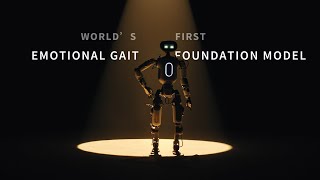
Orca I, developed by Shanghai Cyan Robotics (also known as Cyanborg Robotics Co., Ltd., founded in 2023), represents a cutting-edge prototype humanoid robot designed for versatile applications in research, education, exhibitions, eldercare, home assistance, and early industrial tasks. Measuring 151 cm in height, 52 cm wide, and 28 cm deep when standing, with a weight of approximately 45 kg and 28 degrees of freedom (DoF), Orca I features a compact, anthropomorphic aluminum and polymer structure optimized for stability and human-like interaction. Its single-arm reach extends to 66 cm, enabling precise dual-arm manipulation comparable to human capabilities. The robot's architecture integrates advanced hardware with proprietary AI models for end-to-end control. Locomotion is powered by electric servo motors paired with harmonic and planetary gear reducers, achieving a maximum speed of 3 km/h (walking at 2.5 km/h) and robust navigation across uneven terrain, stairs, uphill slopes, and under perturbations like strong kicks. A standout feature is the world's first Emotional Gait Foundation Model, a large-scale multimodal AI trained on psychological gait-emotion correlations (e.g., bouncy steps for happiness, slumped strides for sadness, stiff forceful steps for anger). This model enhances social interaction, making Orca more relatable for eldercare and companionship. Perception relies on 1080p binocular cameras with depth sensing, IMUs, force/torque sensors in limbs, and microphone arrays for voice interaction. Compute is handled by an industrial ARM CPU and onboard GPU module running a ROS2-based Linux OS, supporting external cloud LLM integration for natural language processing with sub-200ms glass-to-action latency. Manipulation excels in dexterous tasks like brewing coffee, mixing cocktails, handing out objects, and dynamic balancing (e.g., splits, spins). The head features an expressive OLED screen for emotions, notifications, and info display. Real-world deployments highlight Orca's maturity: featured on Shanghai Television demonstrating walking, backward motion, and bartending; 4+ hour Valentine's Day cinema event distributing 100+ roses; appearances at WAIC, ChinaJoy, AWE exhibitions with cosplay and interactions; met NBA star Yao Ming; landmark display at Shanghai Baiyulan giant screen; participated in the world's first humanoid half-marathon after weight optimizations for endurance. Research validations include arXiv papers on whole-body control for heavy-head humanoids, confirming stability in complex scenarios. Orca I prioritizes safety (human-safe design, IP20 ingress), 2-hour runtime per charge, Bluetooth/Ethernet/USB/Wi-Fi connectivity, and scalability via open ecosystems. Priced around $34k-$50k, it targets R&D labs, universities, and emerging commercial uses, bridging prototype to production amid China's humanoid push.

Key Features

Emotional Gait Foundation Model

Proprietary large-scale AI enables expression of human-like emotions (happy, sad, angry, confident) through natural gait variations, enhancing social HRI based on psychological studies.

Adaptive Bipedal Locomotion

Stable walking on diverse terrains including uphill, uneven surfaces, stairs; resilient to kicks and perturbations with advanced whole-body controllers.

Dexterous Dual-Arm Manipulation

Human-equivalent arm skills for tasks like coffee brewing, cocktail mixing, object handling; 3 kg single-arm payload, up to 9 kg dual-arm.

Expressive Multimodal Interaction

OLED head screen for emotions/notifications, natural language via cloud LLM, low-latency voice response, microphone arrays.

Real-Time Perception and Control

1080p binocular + depth cameras, IMUs, force/torque sensors; ROS2 Linux with ARM CPU/GPU for <200ms end-to-end latency.

Specifications

AvailabilityPrototype
NationalityChina
Degrees Of Freedom, Overall40
Degrees Of Freedom, Hands10
Height [Cm]160
Manipulation Performance3
Navigation Performance3
Max Speed (Km/H)3
Strength [Kg]3 kg single-arm load, up to ~9 kg dual-arm
Weight [Kg]50
Runtime Pr Charge (Hours)2
Safe With HumansYes
Cpu/GpuIndustrial ARM CPU + onboard GPU module
Ingress ProtectionIP20
Camera Resolution1080p binocular + depth
ConnectivityBluetooth, Ethernet, USB, Wi‑Fi
Operating SystemLinux (ROS2-based)
Llm IntegrationExternal cloud connection possible; not native
Latency Glass To Action<200ms (End-to-End)
Motor TechElectric servo motors
Gear TechHarmonic/planetary mixed reducers
Main Structural MaterialAluminum + polymer shell
Number Of Fingers5 per hand
Main Marketautomation R&D, education, exhibitions, research labs, universities
VerifiedNot verified
Walking Speed [Km/H]2.5
Shipping Size170 × 60 × 50 cm
ColorWhite
ManufacturerCyan Robotics
Height151 cm
Weight45 kg
Dof Overall28
Dof HandsNot specified (5 fingers per hand)
Payload Single Arm3 kg
Payload Dual Arm~9 kg
Max Speed3 km/h (walking 2.5 km/h)
Battery Runtime2 hours
Cpu GpuIndustrial ARM CPU + onboard GPU module
OsLinux (ROS2-based)
Sensors1080p binocular cameras + depth, IMUs, force/torque sensors, microphone arrays, OLED expressive display
MotorsElectric servo motors
GearsHarmonic/planetary mixed reducers
MaterialsAluminum frame + polymer shell
ConnectivityBluetooth, Ethernet, USB, Wi-Fi
Ip RatingIP20
Latency<200ms end-to-end
Dimensions Standing1510 x 520 x 280 mm
Arm Reach66 cm single arm

Curated Videos

Video 1
Video 2
Video 3

Frequently Asked Questions

What is the primary innovation of Orca?

Orca's Emotional Gait Foundation Model, the world's first, allows the robot to convey emotions like happiness or anger through walking style, improving human engagement in care and service roles via body language.

What are Orca's key specifications?

Height 151 cm, weight 45 kg, 28 DoF, dimensions 1510x520x280 mm standing, 66 cm arm reach, 3 km/h max speed, 2-hour runtime, 3 kg arm payload, ROS2-based Linux OS.

Is Orca safe for human interaction?

Yes, designed with safety in mind: rounded polymer shell, force/torque sensing, obstacle avoidance, stable balance controllers, and IP20 protection for indoor use near humans.

What AI models does Orca use?

Proprietary foundation models for emotional gait, locomotion, manipulation; supports external cloud LLMs for NLP; real-time perception and control with sub-200ms latency on onboard ARM CPU/GPU.

What are real-world demonstrations of Orca?

Featured on Shanghai TV bartending, 4+ hr cinema event, met Yao Ming, exhibitions at WAIC/ChinaJoy/AWE, Shanghai landmark display, humanoid half-marathon; excels in dynamic tasks.

What markets is Orca targeted for?

Primarily R&D automation, universities, labs, education, exhibitions; expanding to eldercare, home assistance, commercial services with emotional interaction strengths.

×