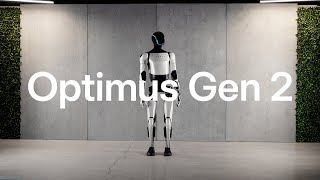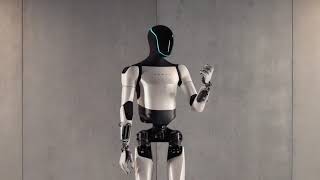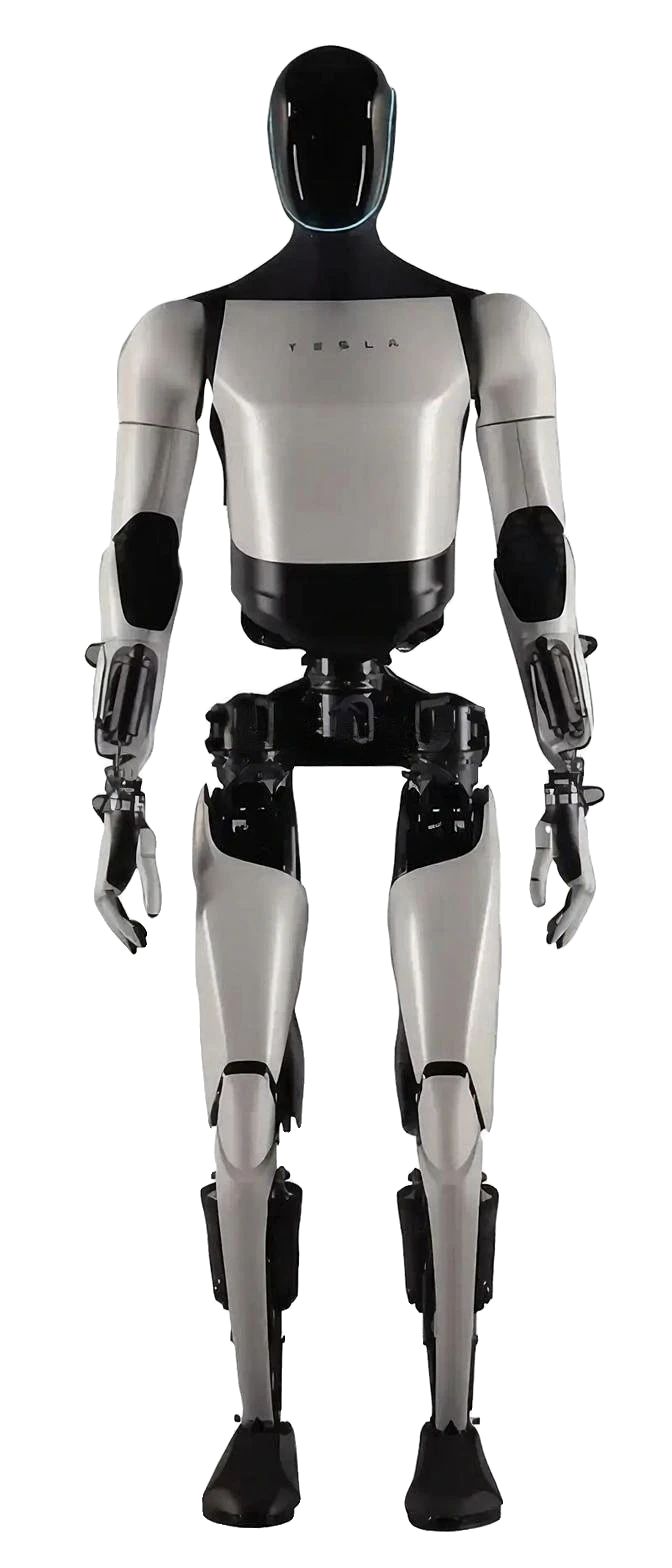
Optimus Gen2
Tesla

Optimus Gen2

Tesla’s Optimus Gen 2 robot is a groundbreaking advancement in humanoid robotics, designed to handle unsafe, repetitive, or mundane tasks. With advanced actuators and sensors, it offers precise object manipulation and improved mobility, including a 30% increase in walking speed. Set for production by 2025, Optimus Gen 2 is poised to redefine automation across various industries, making it an invaluable asset for the future.

Description

Tesla's Optimus Gen 2 represents a significant evolution in humanoid robotics, unveiled in December 2023 as the second-generation prototype of Tesla's ambitious bi-pedal robot designed for unsafe, repetitive, or mundane tasks. Standing at 173 cm tall and weighing approximately 56 kg (a 10 kg reduction from Gen 1), Optimus Gen 2 features a sleek, human-like form factor with enhanced mobility and dexterity. Its architecture centers around Tesla-designed custom actuators and sensors integrated seamlessly with electronics and wiring, minimizing bulk and improving efficiency. The robot boasts 28 degrees of freedom overall, including groundbreaking 11-DoF hands per side equipped with tactile sensing on all fingers, enabling precise manipulation of delicate objects like eggs without breakage. Mobility has seen a 30% improvement in walking speed, reaching up to 8 km/h, facilitated by foot force/torque sensors, articulated toes mimicking human foot geometry, and a 2-DoF actuated neck for better head movement and environmental awareness. Balance and full-body control are achieved through advanced proprioception and inertial measurement units (IMUs), allowing smooth crouching, waving, and navigation. At the core of Optimus Gen 2's intelligence is Tesla's end-to-end neural network architecture, adapted from its Full Self-Driving (FSD) system. Vision-based perception relies on multiple high-resolution cameras (likely similar to Tesla's HW4 suite with 5MP+ sensors) for monocular depth estimation, object detection, and semantic segmentation, trained on billions of video frames from Tesla's vehicle fleet and robot teleoperation data. These networks output birds-eye-view representations and planning tensors, enabling zero-shot learning from human demonstration videos. Motion planning and control use reinforcement learning and imitation learning models, processed on custom inference hardware akin to Tesla's Dojo tiles and HW5 AI chips, achieving low-latency (sub-100ms) glass-to-action responses. No LLM integration is confirmed, but potential for multimodal models exists. Real-world deployment history began with prototypes in Tesla factories by mid-2024, where Gen 2 units demonstrated sorting battery cells, folding shirts, and basic assembly tasks autonomously. By late 2025, Tesla reported deploying several dozen units internally for material handling and quality inspection, reducing labor by 20-30% in pilot areas. Production ramp-up targeted thousands of units for factory use in 2025, with external sales eyed for 2026 at under $30,000 per unit. Challenges included scaling actuator reliability and edge-case navigation, but iterative OTA updates via Tesla's CI/CD pipeline accelerated improvements. Optimus Gen 2's architecture emphasizes scalability, leveraging Tesla's vertical integration in batteries (2.3 kWh torso pack for 8+ hour runtime), motors, and compute, positioning it as a frontrunner in embodied AI for industrial automation, healthcare assistance, and home tasks.

Key Features

Dexterous Hands

11 degrees of freedom per hand with full tactile sensing, allowing precise handling of fragile objects like eggs, tools, and fabrics.

Enhanced Mobility

30% faster walking speed up to 8 km/h, with foot force/torque sensors and articulated toes for stable navigation on varied terrain.

Vision-Based AI

End-to-end neural networks for perception, planning, and control, trained on vast video datasets for autonomous task learning.

Custom Actuators

Tesla-designed high-precision actuators integrated with sensors and electronics for efficient, lightweight operation.

Improved Balance

Full-body control with IMUs and proprioceptive feedback enables crouching, recovery from falls, and dynamic movements.

Specifications

AvailabilityPrototype
NationalityUS
Websitehttps://www.tesla.com/en_eu/AI
Degrees Of Freedom, Overall22
Height [Cm]173
Manipulation Performance3
Navigation Performance3
Max Speed (Km/H)8
Strength [Kg]20
Weight [Kg]56
Runtime Pr Charge (Hours)1
H.G Skill Score6
VerifiedNot verified
Walking Speed [Km/H]2
ManufacturerTesla
Height173 cm
Weight56 kg
Degrees Of Freedom (Overall)28
Degrees Of Freedom (Hands)11 per hand
Walking Speed8 km/h
Lift Capacity20 kg
Battery2.3 kWh (torso-mounted)
Runtime8 hours
SensorsMultiple vision cameras (high-res, likely 5MP+), force/torque sensors (hands, feet), IMUs, tactile sensors on fingers
ProcessorsTesla custom inference HW (HW4/HW5 equivalent, Dojo-trained models)
ActuatorsTesla-designed custom linear/rotary actuators with integrated electronics
MaterialsLightweight composites and alloys for structure
Neck2-DoF actuated
Hands11-DoF with tactile feedback
FeetForce/torque sensing, articulated toes
Ai Latency<100 ms glass-to-action
Ingress ProtectionN/A (factory environment)
Operating SystemCustom real-time Linux-based with NN inference

Curated Videos

Video 1
Video 2
Video 3
Video 4

Frequently Asked Questions

What is the production timeline for Optimus Gen 2?

Tesla planned limited production starting in 2025 for internal factory deployment, aiming for thousands of units to handle tasks like sorting and assembly. Full commercial availability is targeted for 2026, with prices under $30,000, though timelines have faced minor delays due to scaling challenges.

What AI technologies power Optimus Gen 2?

It uses Tesla's vision-only end-to-end neural networks similar to FSD, including object detection, depth estimation, and motion planning models trained on Dojo supercomputer with billions of video frames, enabling learning from human demos without explicit programming.

What are the battery and runtime specs?

Optimus Gen 2 features a 2.3 kWh battery pack in the torso, providing up to 8 hours of continuous operation per charge, suitable for full work shifts in industrial settings with fast charging capabilities.

How safe is Optimus Gen 2 around humans?

Safety is prioritized through force/torque sensing, soft grip materials, and AI-driven collision avoidance using real-time vision and prediction models, though it's primarily designed for unsupervised factory use with human-safe speed limits.

What tasks has Optimus Gen 2 demonstrated?

Demos include walking at 8 km/h, delicate object manipulation (eggs, shirts), sorting battery cells, crouching, yoga poses, and basic navigation; factory pilots show autonomous material handling and inspection by 2025.

×