NAVAI-I3
Zhejiang Humanoid Robot Innovation Center

NAVAI-I3

The Navai-I3 is a Chinese humanoid robot built for stability, mixed-terrain mobility, and research-focused applications. It offers balanced movement, adaptable locomotion, and a versatile platform for future development.

Description

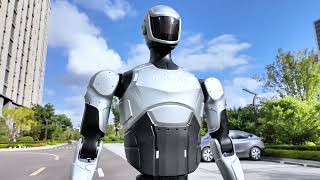
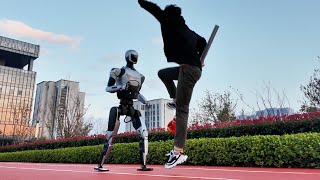
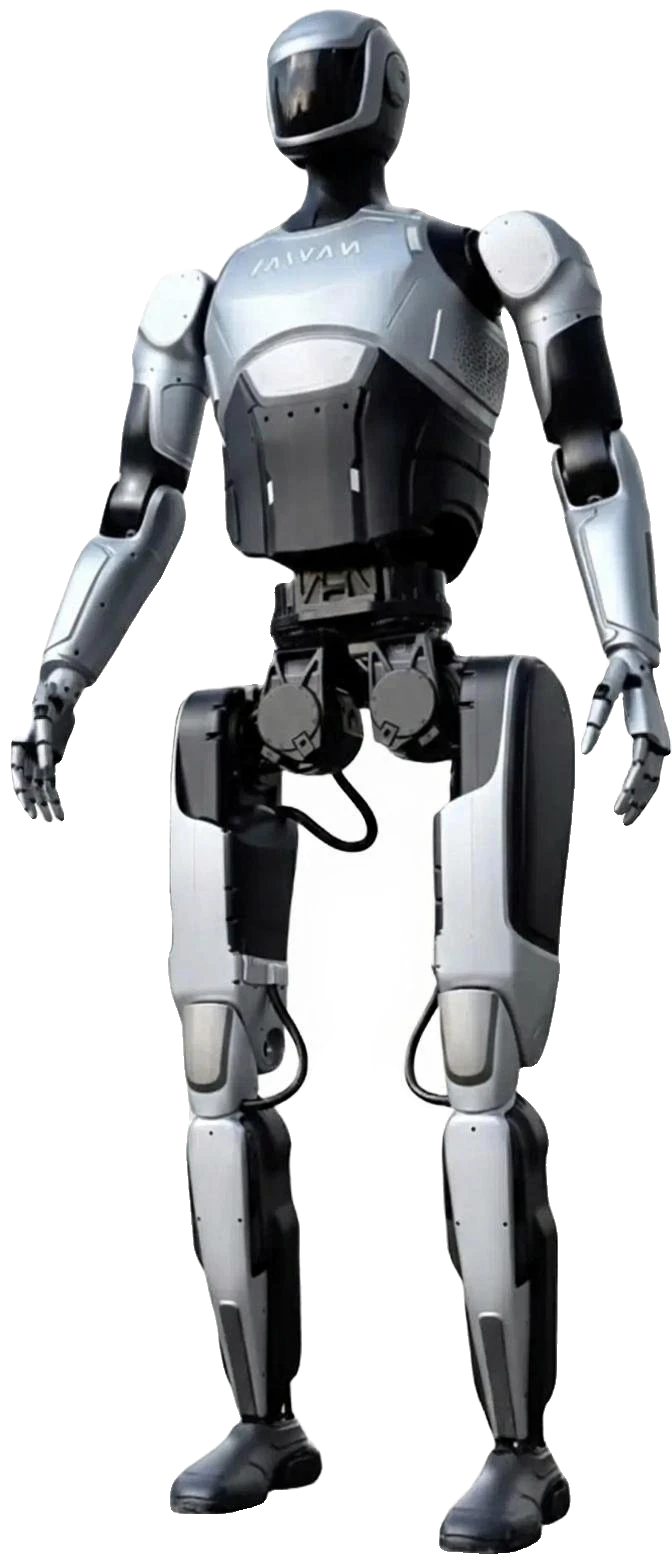
The NAVAI-I3 humanoid robot, unveiled by the Zhejiang Humanoid Robot Innovation Center in Ningbo, China, in November 2025, marks a significant evolution in the NAVIAI series, emphasizing robustness, multi-terrain agility, and practical deployment in security applications. Established in 2023 on the foundation of Zhejiang University's Wukong 4.0 platform, the center has rapidly progressed from prototypes to near-commercial products, aligning with China's national goal for humanoid mass production by 2025. Architecturally, the NAVAI-I3 adopts a full humanoid bipedal design with approximately 44 degrees of freedom overall, including 14 in each hand for dexterous manipulation. Standing at 180 cm tall and weighing 80 kg, it features an aluminum frame reinforced with composite panels for durability and lightweight performance. Propulsion relies on high-torque electric servo motors paired with harmonic drives, delivering peak joint torques up to 83 Nm/kg (inferred from i2 specs). The lower limbs are the standout upgrade, boasting enhanced torque for large strides, straight-knee walking, natural arm swing, and speeds up to 9 km/h in running mode. This enables stable locomotion on challenging terrains like gravel roads, slopes, and uneven surfaces, with demonstrated anti-disturbance capabilities—recovering from pushes and maintaining balance during squatting or bending. The sensory architecture includes multiple 1080p RGB cameras augmented by depth sensors for vision fusion control, achieving sub-millimeter precision in end-effector tasks as seen in prior generations. Ingress protection is IP20, suitable for indoor/outdoor research but not harsh environments. Connectivity options encompass Ethernet, Wi-Fi, Bluetooth, and 5G for teleoperation and data streaming. At its core is a high-performance compute stack: an ARM-based CPU paired with embedded GPUs delivering 275 TOPS of AI inference power, enabling low-latency (150-250 ms) glass-to-action responses. The OS is Linux-based with a custom real-time control stack, employing a dual-core architecture to isolate real-time motion control (4 kHz communication frequency) from higher-level tasks. AI paradigms focus on anthropomorphic whole-body imitation learning, allowing motion capture and replay of human gaits and interactions without extensive programming. Embodied intelligent navigation handles dynamic obstacle avoidance, while vision-guided manipulation supports tool use and precision operations. No specific LLM integration is confirmed, but the compute capacity positions it for future multimodal models like vision-language-action frameworks. Real-world deployment history underscores its maturity. The center operates a full-scale simulation facility replicating factories, homes, retail, and streets for training. The NAVAI-I3 has been showcased patrolling Ningbo streets as a 'mechanical guardian,' greeting humans, inspecting areas, and demonstrating basketball-like agility. Potential security clients have expressed interest, prompting overtime production scaling. Early pilots highlight resilience to impacts and versatility for inspections, logistics, and public safety, transitioning from lab prototypes to field trials amid China's aggressive robotics ecosystem push.

Key Features

Multi-Terrain Mobility

Superior balance and stability on gravel, slopes, and uneven surfaces, with recovery from external disturbances.

High-Speed Dynamic Locomotion

Up to 9 km/h running speed with large strides, straight-knee walking, and natural arm swinging.

Powerful Lower Limb Performance

Enhanced torque for stronger load-bearing, bigger steps, and agile movements like bending and squatting.

Security and Patrol Optimization

Designed as a 'mechanical guardian' for autonomous patrols, human interaction, and inspection tasks.

Advanced AI Compute

275 TOPS processing for real-time imitation learning, navigation, and vision fusion control.

Precision Manipulation

Sub-millimeter accuracy via vision-guided control, inheriting high-dexterity from prior models.

Specifications

AvailabilityPrototype
NationalityChina
Websitehttps://www.zj-humanoid.com/
Degrees Of Freedom, Overall44
Degrees Of Freedom, Hands14
Height [Cm]180
Manipulation Performance2
Navigation Performance4
Max Speed (Km/H)9
Strength [Kg]5–10 kg per arm
Weight [Kg]70
Runtime Pr Charge (Hours)2
Safe With HumansYes
Cpu/GpuARM + embedded GPU
Ingress ProtectionIP20
Camera Resolution1080p RGB + depth camera
ConnectivityEthernet, Wi-Fi, Bluetooth, 5G
Operating SystemLikely Linux + custom robot control stack
Latency Glass To Action150–250 ms
Motor TechElectric servo motors
Gear TechLikely harmonic drives for precision
Main Structural MaterialAluminum frame + composite panels
Number Of Fingers5 per hand
Main MarketResearch institutions, robotics labs, AI development, demonstrations
VerifiedNot verified
Walking Speed [Km/H]4
Shipping Size200 × 80 × 60 cm
ColorWhite/grey (prototype)
ManufacturerZhejiang Humanoid Robot Innovation Center
Height180 cm
Weight80 kg
Dof Overall44
Dof Hands14 (5 fingers per hand)
Max Speed Walking4 km/h
Max Speed Running9 km/h
Payload Per Arm5-10 kg
Ai Compute275 TOPS
Cpu GpuARM CPU + embedded GPU
OsLinux + custom real-time stack
Latency150-250 ms
CamerasMultiple 1080p RGB + depth cameras
ConnectivityEthernet, Wi-Fi, Bluetooth, 5G
MotorsElectric servo motors
GearsHarmonic drives
MaterialsAluminum alloy frame + composite panels
Ip RatingIP20
Battery1+ kWh, >2 hours runtime, hot-swappable
Control Frequency4 kHz
PrecisionSub-mm end-effector (vision fusion)
ColorWhite/grey

Curated Videos

Video 2
Video 5

Frequently Asked Questions

What are the physical dimensions and weight of the NAVAI-I3?

Measuring 180 cm in height and 80 kg in weight, the NAVAI-I3 offers a full-sized humanoid form ideal for security presence, with optimized mass distribution for enhanced lower-limb torque and overall stability during high-speed movements.

What is the top speed and mobility capability?

The robot achieves a maximum speed of 9 km/h, supporting transitions from walking to running across diverse terrains like slopes and gravel, thanks to powerful actuators and advanced balance algorithms for reliable patrol coverage.

What AI and compute features does it have?

Powered by a 275 TOPS 'wisdom brain,' it enables anthropomorphic imitation learning, embodied navigation, and low-latency decisions. The dual-core system ensures real-time control at 4 kHz frequency for seamless operation.

What are its primary applications?

Targeted for security patrols, inspections, and protective roles, with demos showing street walking, human greetings, and resilience to disturbances, positioning it for rapid commercialization in public safety.

How does it compare to previous models?

Building on i2's 0.1 mm precision and 41 DOF, the I3 upgrades to taller stature, heavier build, higher torque limbs, and 275 TOPS compute, focusing on rugged mobility over lab precision for field deployments.

What is its battery life and charging?

Runtime exceeds 2 hours per charge with swappable batteries for extended operations. Specific capacity is around 1 kWh, supporting continuous patrols with quick recharge capabilities in operational settings.

×