Moby
Under Control Robotics

Moby

Moby is a lightweight humanoid robot designed for safe interaction, autonomous navigation, and AI-powered assistance in indoor environments. Built for research, service, and educational use, it offers stable mobility and developer-friendly customization.

Description

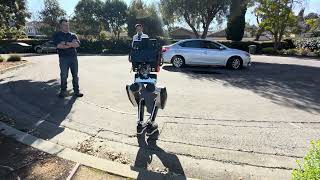
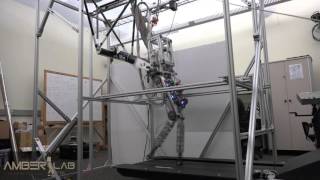
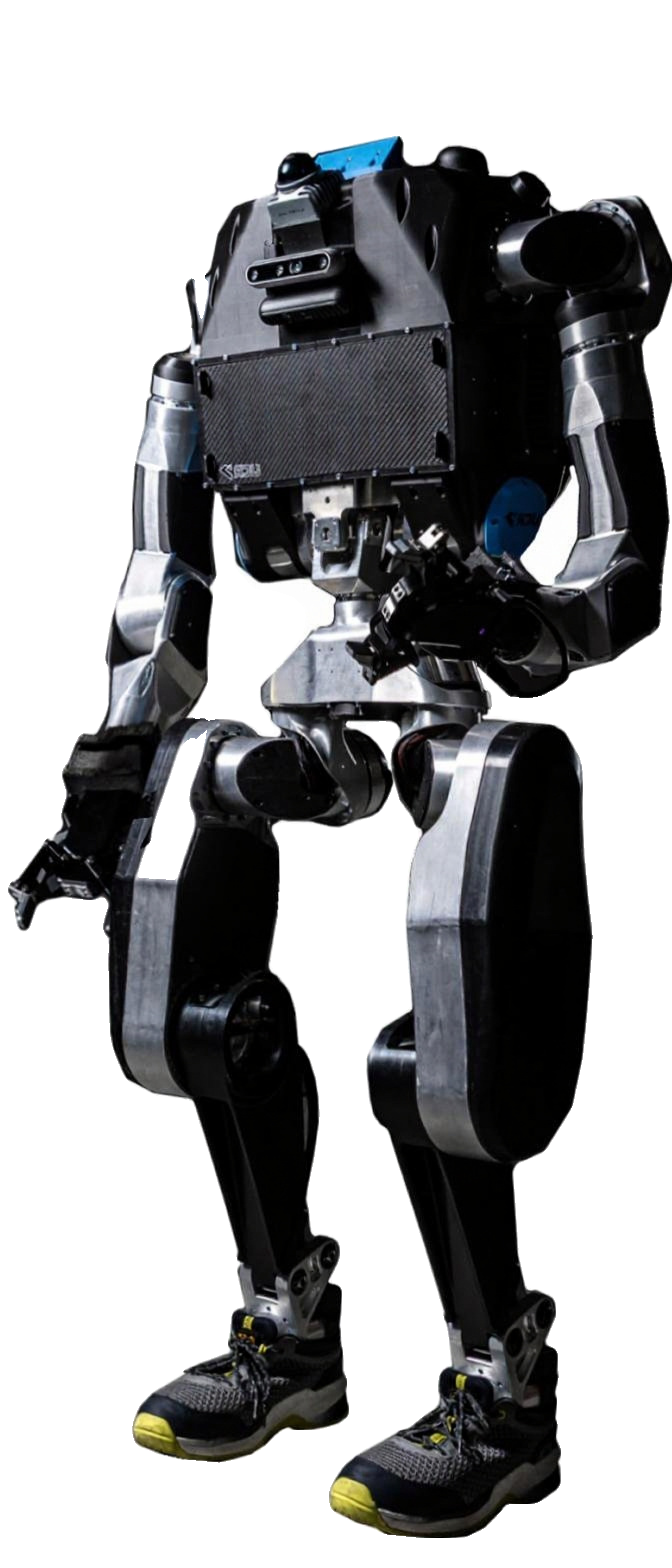
Moby is a pioneering lightweight humanoid robot developed by Under Control Robotics (UCR), a Silicon Valley startup founded in April 2024 by a team of robotics experts with backgrounds from NASA, Apple, Caltech, and SpaceX. The initial prototype was remarkably built from concept to functional walking robot in just four months by a team of four, marking a significant achievement in rapid prototyping for humanoid robotics. Designed primarily for hazardous industrial environments such as construction sites, mining operations, offshore oil rigs, and energy facilities, Moby addresses critical needs where human workers face high risks from toxic fumes, unstable terrain, falls, and costly downtime. Unlike high-end specialized robots, Moby emphasizes affordability, ruggedness, mass-producibility, and adaptability without relying on heavy supercomputers or exotic hardware. Architecturally, Moby features a bipedal humanoid form factor standing at 170 cm tall and weighing 45 kg, constructed from composite polymers and an aluminum frame for lightweight durability (IP20 ingress protection). It boasts 34 degrees of freedom overall, including 10 in each hand with 10 fingers for dexterous manipulation. Propulsion comes from brushless motors paired with harmonic or planetary gears, enabling a top walking speed of 3 km/h and runtime of up to 5 hours per charge. Early versions relied on low-cost smartphone-grade IMU sensors for balance and orientation, eschewing arms for initial bipedal locomotion tests. Subsequent iterations, including Moby V2 demonstrated publicly in March 2025, integrated dual arms capable of handling up to 60 lbs (27 kg) payload—far exceeding initial single-arm 3 kg / dual 9 kg specs—while maintaining stability across diverse terrains. Moby's AI architecture is a standout, powered by a unified lightweight AI model optimized for edge computing on NVIDIA Jetson Orin platforms with Arm Cortex-A78 CPUs and STM32 motor controllers. This model, trained extensively in simulation using NVIDIA's Isaac Sim, Isaac Lab, GR00T foundation models, and X-Mobility policy (a vision-based end-to-end imitation learning system with residual RL), achieves seamless sim-to-real transfer with 95% success rates. The pipeline includes real2sim for actuator dynamics, sim2sim cross-simulator consistency, sim2real domain randomization, and real2real fine-tuning with memory-driven adaptation. Vision integration in later versions enables real-time perception, obstacle avoidance, and adaptive navigation. The system supports ROS on Ubuntu Linux, Wi-Fi/Bluetooth connectivity, and LLM integration for enhanced decision-making. Demonstrations showcase Moby's robust mobility: omnidirectional walking, rough terrain handling (grass, debris), stair climbing, ramp ascent/descent (including backwards), side-stepping, and resilience to kicks or shoves without cameras in early tests. Manipulation capabilities focus on rugged tasks like material handling in harsh conditions. As of late 2025, Moby remains in prototype stage with V2 advancements, no full commercial deployments reported, but field trips and lab demos validate its potential for immediate industrial use—deployable without PPE or oxygen, reducing million-dollar-per-hour downtime. UCR's lean approach positions Moby as the most inexpensive full humanoid in America, targeting research, education, hospitality, and heavy industry markets with developer-friendly customization.

Key Features

AI-Enabled Generalizable Mobility

Unified AI model navigates flat ground, unstable surfaces, stairs, inclines, tight spaces, and outdoors using NVIDIA Isaac stack and X-Mobility for zero-shot sim-to-real deployment.

Rugged Manipulation

Dual arms handle complex tasks up to 60 lbs payload in harsh industrial environments, with 10 DoF hands for dexterous gripping.

Lightweight Edge AI Compute

NVIDIA Jetson Orin with Arm CPUs runs efficient models without heavy GPUs, using IMU and vision for balance and perception.

Rapid Prototyping & Mass-Producibility

Built in 4 months; low-cost hardware design for scalable production targeting hazardous jobs.

Developer-Friendly Platform

ROS/Ubuntu OS, LLM integration, modular hardware/software for custom AI, sensors, and behaviors.

Specifications

AvailabilityPrototype
NationalityUS
Websitehttps://www.undercontrol.ai/
Degrees Of Freedom, Overall34
Degrees Of Freedom, Hands10
Height [Cm]170
Manipulation Performance2
Navigation Performance3
Max Speed (Km/H)3
Strength [Kg]3 kg single-arm load, up to ~9 kg dual-arm
Weight [Kg]45
Runtime Pr Charge (Hours)5
Safe With HumansYes
Ingress ProtectionIP20
ConnectivityBluetooth, Wi‑Fi
Operating SystemLinux, Ubuntu, ROS
Llm IntegrationYes
Motor TechBrushless Motor
Gear TechHarmonic or planetary gears
Main Structural MaterialComposite polymer + aluminum frame
Number Of Fingers10
Main MarketHospitality, Research & education, service & research labs
VerifiedNot verified
Walking Speed [Km/H]3
ColorBlack
ManufacturerUnder Control Robotics
Height Cm170
Weight Kg45
Dof Overall34
Dof Hands10
Max Speed Kmh3
Payload3 kg single-arm (early), up to 60 lbs (~27 kg) dual-arm (V2)
Runtime Hours5
Cpu GpuNVIDIA Jetson Orin (Arm Cortex-A78), STM32 motor controllers
OsLinux, Ubuntu, ROS
SensorsIMU (smartphone-grade), vision cameras (later versions)
MotorsBrushless motors
GearsHarmonic or planetary
MaterialsComposite polymer + aluminum frame
ConnectivityBluetooth, Wi-Fi
Ip RatingIP20
ColorBlack
Llm IntegrationYes

Curated Videos

Video 1
Video 3

Frequently Asked Questions

What environments is Moby designed for?

Moby excels in hazardous industrial settings like construction, mining, and energy sites with rough terrain, stairs, ramps, and toxic conditions. Its bipedal mobility and rugged build allow navigation where wheeled robots fail, reducing human risk and downtime costs.

What AI technologies power Moby?

A lightweight unified AI model trained on NVIDIA Isaac GR00T, Isaac Lab/Sim, and X-Mobility policy enables sim-to-real mobility with 95% success. Edge-optimized on Jetson Orin for real-time perception, control, and adaptation without onboard supercomputers.

What are Moby's hardware specs?

170 cm height, 45 kg weight, 34 DoF (10 per hand), brushless motors with harmonic/planetary gears, up to 60 lbs payload, 3 km/h speed, 5-hour battery, IP20 protection, composite/aluminum frame, IMU/vision sensors.

Is Moby commercially available?

Currently in prototype stage (V2 demo March 2025), targeted for research/education and industrial markets. Pricing around $75k estimated; contact UCR for partnerships or custom deployments as production scales.

How does Moby achieve balance without arms?

Early prototypes use smartphone-grade IMU sensors and optimized AI control models trained in simulation. Arm Cortex-A78 enables fast computations for dynamic stability, proven in kick tests and uneven terrain walks.

×