MagicBot Z1
MagicLab

MagicBot Z1

MagicBot Z1 is MagicLab’s agile 1.4‑metre bipedal humanoid that fuses 24‑to‑49 degrees of freedom with in‑house smart actuators, delivering sub‑10 km/h mobility and dexterous MagicHand end‑effectors for real‑world industrial, commercial and companion roles.

Description

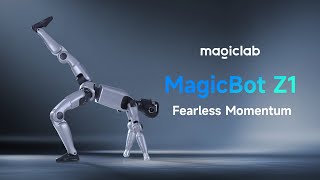
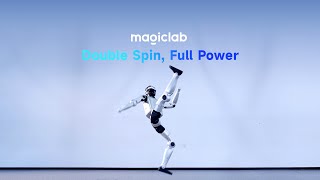
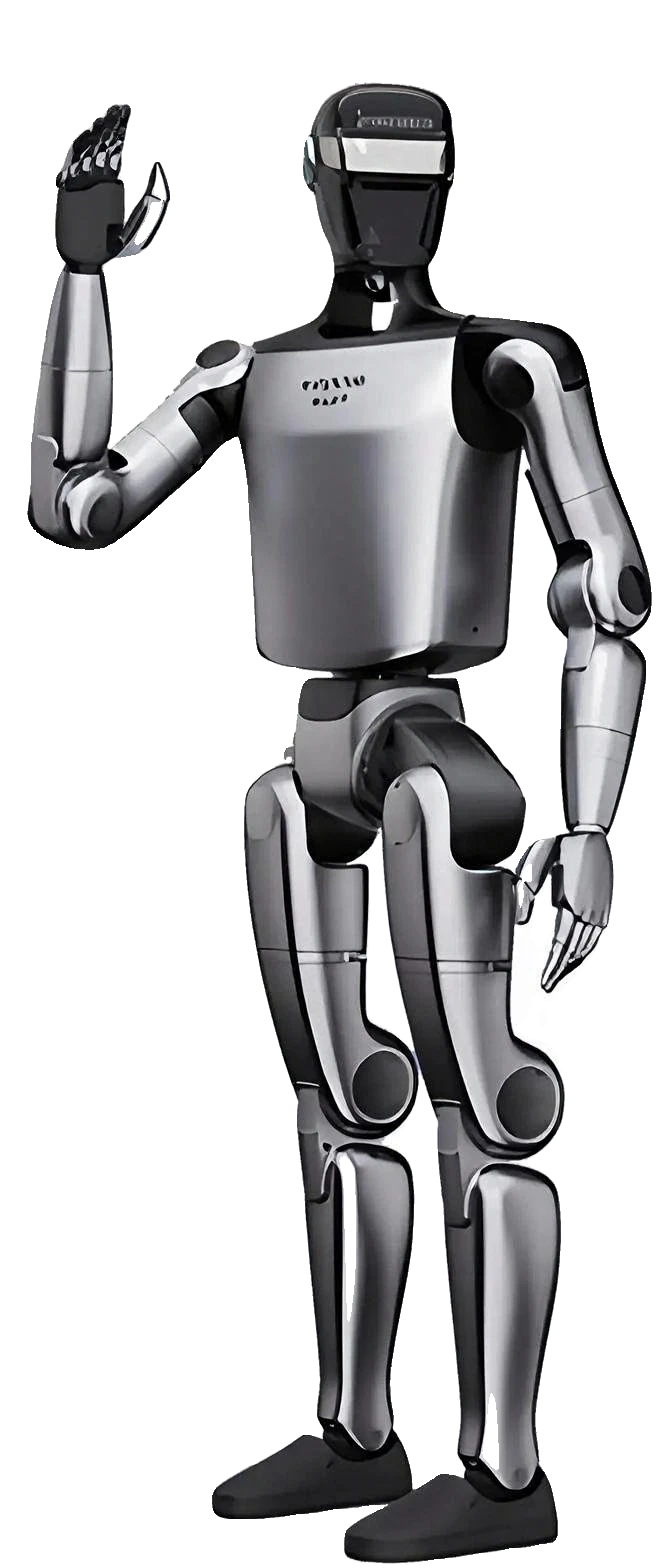
The MagicBot Z1, launched by MagicLab on July 8, 2025, is a high-dynamic bipedal humanoid robot designed as an 'Intelligent & Agile Mini Hero' for research, education, industrial, commercial, and companionship applications. Measuring 1369 x 422 x 200 mm when standing (folding to 730 x 422 x 395 mm) and weighing approximately 40 kg with battery, its compact child-like form enables seamless navigation in human environments. The architecture centers on 24 core degrees of freedom (expandable to 50 in the Development Version), comprising 6 DoF per leg, 1 head, 1 waist, and 5 per arm, with optional 2 wrist DoF and 11-DoF tactile dexterous MagicHand S01. Joints utilize low-inertia, high-speed, high-overload permanent magnet synchronous motors (25 kHz control frequency), dual encoders, and industrial-grade high-rigidity roller bearings (withstanding 8.7 kN impact). Maximum knee torque exceeds 130 N·m (100 N·m standard), supporting arm loads up to 3 kg and motion ranges up to 320° (e.g., hip pitch/yaw ±160°, lumbar Z ±160°, knee 0-152°). Constructed from high-strength aluminum alloy and engineering plastics via topology optimization, forward analysis, and thermal simulation, it endures tens of thousands of falls with intelligent air-cooled heat dissipation. Perception employs a 360° heterogeneous sensor suite: 3D LiDAR, depth camera, binocular fisheye cameras, and head tactile sensors, powering Vision-Language-Navigation (VLN) algorithms for autonomous path planning, obstacle avoidance, and all-terrain mobility (flat ground, grass, gravel, stairs) at speeds up to 9 km/h (2.5 m/s). Compute includes an 8-core high-performance CPU (optional high-compute module), WiFi 6, Bluetooth 5.2, microphone array, and 5W speaker. Power is supplied by a quick-release 10,000 mAh 15-cell smart battery (~2 hours runtime, varying by load), charged at 62V 5A. AI integration forms a 'Super Embodied AI Agent' leveraging an open ecosystem with Imitation Learning (IL) and Reinforcement Learning (RL) for human-like gaits and full-body motion mastery in 24 hours using MagicLab's multi-source database. Vision-Language-Action (VLA) models enable multimodal, generalized, interference-resistant dexterous grasping/manipulation. Vision-Language Models (VLM) drive natural, proactive interactions (e.g., voice, touch-responsive head turns/waves). Standardized controllers, open APIs, and OTA upgrades facilitate developer customization of skill libraries. Deployment history includes immediate market availability in Standard and Developer editions (est. $50,000), pilots in factories for multi-robot collaboration (e.g., 'Xiaomai' training), electronics assembly, public venues, and entertainment. Milestones: IFA 2025 debut, bronze in standing high jump at first World Humanoid Robot Games (Aug 2025), weekly mobility evolutions (Nov 2025) showcasing backflips, spin kicks, side-flips, arrow-dodging, and dance routines. This rapid iteration underscores Z1's transition from prototype to production-ready platform, redefining humanoid value through hardware-software synergy.

Key Features

Ultra-Wide Joint Rotation

Joint motion range up to 320°, surpassing human limits for acrobatics like backbends and high-amplitude actions.

Explosive Power and Torque

Maximum joint torque >130 N·m powers high-dynamic maneuvers, disturbance recovery, and continuous fall-and-rise.

360° All-Domain Perception

3D LiDAR, depth/binocular fisheye cameras, tactile sensors for complex env capture and VLN autonomous navigation.

Embodied AI Ecosystem

IL/RL for 24h motion learning, VLA dexterous manipulation, VLM natural interaction; open APIs for customization.

Rugged Durability

8.7 kN impact bearings, optimized materials/thermal design, air-cooling; survives extreme falls/collisions.

Dexterous Manipulation

Optional 11-DoF MagicHand S01 with tactile feedback; 3 kg/arm payload for precise grasping/assembly.

Specifications

AvailabilityPrototype
NationalityChina
Websitehttps://www.magiclab.top/
Degrees Of Freedom, Overall49
Height [Cm]140
Manipulation Performance2
Navigation Performance2
Strength [Kg]10
Weight [Kg]40
Camera Resolutioncarries stereo camera + depth + 3‑D LiDAR
Motor Techself‑developed high‑performance smart joint modules
Gear TechVariable‑ratio transmission
Main Structural MaterialHigh‑strength aluminium alloy + engineering plastics
Number Of Fingers10
Main Marketeducation, home companionship scenarios
VerifiedNot verified
Walking Speed [Km/H]9
ManufacturerMagicLab
Dimensions Standing1369 x 422 x 200 mm
Dimensions Folded730 x 422 x 395 mm
Weight~40 kg (with battery)
Dof Total24 (expandable to 50)
Dof Per Leg6
Dof Head1
Dof Waist1
Dof Per Arm5 (optional +2 wrist)
Dof Hand11 (optional MagicHand S01)
Max Knee Torque130 N·m
Max Arm Load3 kg
Joint Range ExamplesHead Z: ±40°, Lumbar Z: ±160°, Knee: 0-152°, Hip P: ±160° / R: -30° to +110° / Y: ±160°
Joint BearingsIndustrial-grade high-rigidity roller (8.7 kN impact)
MotorsLow-inertia high-speed high-overload PMSM (25 kHz control, dual encoders)
Cpu8-core high-performance (optional high-compute module)
Sensors3D LiDAR, Depth Camera, Binocular Fisheye Camera(s), Head Tactile Sensor
AudioMicrophone Array, 5W Speaker
ConnectivityWiFi 6, Bluetooth 5.2
Battery10,000 mAh 15-cell smart (quick-release), ~2 h runtime
Charger62V 5A
Thermal ManagementIntelligent air-cooled heat dissipation
MaterialsHigh-strength aluminum alloy + engineering plastics (topology optimized)
ControlHandheld remote, OTA upgrades
Max Speed~9 km/h (2.5 m/s)
Payload Strength10 kg total (est.), 3 kg/arm

Curated Videos

Video 1
Video 2
Video 3
Video 4

Frequently Asked Questions

What is the runtime and battery specs of MagicBot Z1?

Features a quick-release 10,000 mAh 15-cell lithium-ion smart battery providing ~2 hours of operation under lab conditions (varies by tasks). Charged via 62V 5A charger in 3-4 hours, with OTA monitoring for efficiency.

What sensors are integrated for perception?

360° coverage via 3D LiDAR for mapping, depth camera for proximity, binocular fisheye cameras for wide FOV, and head tactile sensors for interaction, enabling robust VLN navigation in dynamic/unstructured environments.

What AI models power its capabilities?

Employs Imitation/Reinforcement Learning for motion, VLA for multimodal dexterous grasping resistant to interference, and VLM for human-like voice/gesture responses; supports open ecosystem for custom LLMs.

Is secondary development supported?

Yes, Developer Version includes open-source frameworks, rich APIs, standardized controllers, multi-source databases for 20-min skill training, and OTA upgrades for rapid prototyping in research/industry.

What real-world deployments exist?

Piloted in factories for multi-robot collab (e.g., 'Xiaomai'), electronics assembly, public venues; demos at IFA 2025, World Humanoid Games medal; targets education, companionship, services with weekly agility updates.

How durable and safe is it around humans?

Built with high-strength alloys/plastics, 8.7 kN impact joints, fall-tested to thousands of cycles; tactile sensors and compliant control ensure safe interaction; designed for human environments like homes/industry.

×