MagicBot
MagicLab

MagicBot

MagicBot is a humanoid robot designed for entertainment and interaction. It is capable of performing various tasks with expressive gestures and movements. This robot is equipped with advanced voice and motion control, allowing it to engage in interactive performances. MagicBot has gained attention for its playful capabilities, making it ideal for events and public demonstrations. It blends technology with art, offering a unique experience in humanoid robotics.

Description

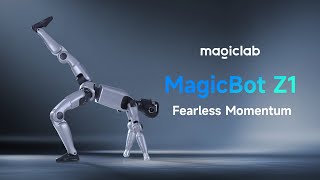
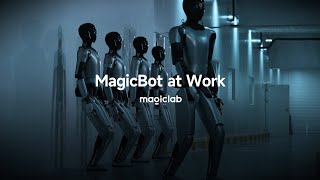
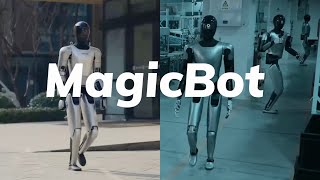
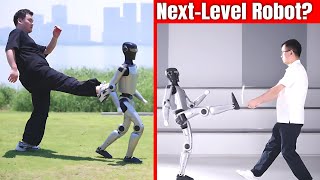
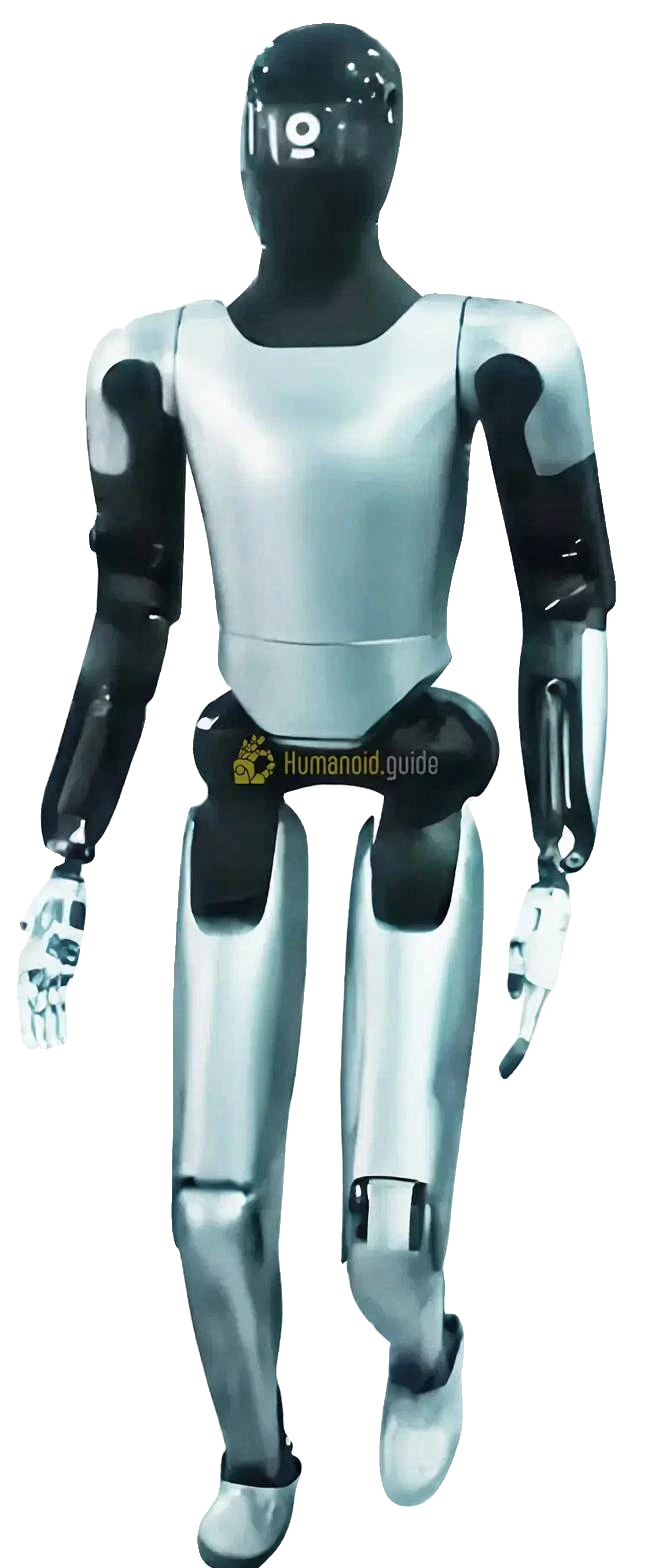
MagicBot, developed by MagicLab, a leading Chinese robotics company founded in 2024, represents a breakthrough in general-purpose humanoid robotics, evolving from its prototype stage focused on entertainment to advanced industrial and research applications. The flagship MagicBot Gen1 is a full-size humanoid standing at 174 cm tall, weighing approximately 70 kg, with 42 active degrees of freedom (DOF) distributed as: neck (2 DOF), arms (7 DOF each), hands (11 DOF each with 6 active and 5 passive), waist (2 DOF), and legs (6 DOF each). This configuration enables human-like straight-knee walking, one-take running, and robust dynamic locomotion on complex terrains. Architecturally, it employs a high-performance drive system using harmonic and planetary reducers, delivering maximum joint torque of ≥350 N·m and motion speeds up to ≥2 m/s. The main structure is aluminum alloy with PC+ABS plastic exteriors for durability. Perception is all-scenario capable via 3D LiDAR, dual RGB-D depth cameras, and three fisheye cameras on head and waist, supporting precise environmental mapping and autonomous navigation with in-house algorithms. Manipulation leverages 6D visual servoing and full-body imitation learning on a floating-base design for high-precision tasks. Computing power stems from an 8-core CPU paired with a 100 TOPS AI processor, facilitating edge inference for perception, policy control, and secondary development via open SDKs. AI integration includes voice interaction (omnidirectional mic array, speakers, chatbot, intelligent guidance), face recognition, and support for OTA upgrades. Battery is 25 Ah (1.35 kWh), offering 4-5 hours runtime, with WiFi 6, 4G/5G, and BT 5.2 connectivity enabling MagicNet for multi-robot collaboration—shared maps, task scheduling, and fault tolerance. Complementing Gen1 is the compact MagicBot Z1 (137 cm, 40 kg, 24-50 DOF), optimized for agility with up to 320° joint range, 130 N·m torque, RL/IL for 24-hour motion learning, VLA/VLM models for dexterous grasping and natural interaction, and VLN for navigation. Real-world deployments began in late 2024, with fleets of MagicBots entering Chinese factories for product inspection, material handling, component selection, and precision assembly. By December 2024, multi-robot swarms demonstrated collaborative efficiency in high-precision production lines, marking China's first such humanoid implementation. Further advancements in 2025 included Z1 launch (July), showcasing acrobatics like backflips and kicks, positioning MagicBot as a versatile platform blending embodied AI with industrial scalability. MagicLab's RMB 150M funding supports mass production, emphasizing open ecosystems for research, education, and services.

Key Features

Multi-Robot Collaboration via MagicNet

Enables fleet coordination for shared mapping, task allocation, and fault-tolerant operations in industrial settings like factories.

Advanced Perception and Navigation

360° sensors including 3D LiDAR, RGB-D, fisheye cameras support autonomous obstacle avoidance, terrain adaptation, and manual mapping.

Precision Manipulation

6D visual servoing and imitation learning allow accurate grasping, handling up to 20 kg per arm (40 kg total), suitable for assembly and inspection.

Dynamic Locomotion

Human-like running, straight-knee gait, disturbance resistance for smooth movement on uneven surfaces at speeds up to 2 m/s.

Embodied AI Integration

100 TOPS processor with VLM/VLA models for voice interaction, face recognition, and dexterous tasks; open SDKs for custom development.

Robust Hardware Design

High-torque joints (350+ N·m), impact-resistant structure, 4-5 hour battery life with quick charging.

Specifications

AvailabilityPrototype
NationalityChina
Websitehttp://N/A
Degrees Of Freedom, Overall42
Height [Cm]138
Manipulation Performance2
Navigation Performance2
Max Speed (Km/H)5
Strength [Kg]20
Weight [Kg]54
H.G Skill Score4
VerifiedNot verified
ManufacturerMagicLab
Height Cm174
Weight Kg70
Dof Overall42
Dof Hands11 (6 active, 5 passive)
Payload Dual Arm Kg20
Payload Total Kg40
Max Speed M S2
Max Joint Torque Nm>=350
Cpu8-core high-performance CPU
Npu100 TOPS AI processor
Sensors3D LiDAR, 2x RGB-D depth cameras, 3x fisheye cameras, omnidirectional mic array
Battery25 Ah (1.35 kWh), 4-5 hours runtime
Charging Time Hours3
ConnectivityWiFi 6, 4G/5G, Bluetooth 5.2
ReducersHarmonic / Planetary
MaterialsAluminum alloy (main), PC+ABS (exterior)
AudioSpeakers, microphone array
OtherFace recognition, OTA upgrades, secondary development support, MagicNet multi-robot

Curated Videos

Video 1
Video 2
Video 3
Video 4
Video 5

Frequently Asked Questions

What are the main differences between MagicBot Gen1 and Z1?

Gen1 is a full-size (174 cm, 70 kg, 42 DOF) industrial robot for heavy payloads (20 kg/arm) and factory deployments, while Z1 is compact (137 cm, 40 kg, 24-50 DOF) focused on agility, research, with acrobatic capabilities and optional dexterous hands for education.

How does MagicBot handle multi-robot operations?

Through MagicNet, robots share environmental maps, coordinate tasks, schedule jobs, and integrate with MES systems, enabling efficient swarm operations as demonstrated in Chinese factories for inspection and handling.

What AI models power MagicBot's capabilities?

Features in-house navigation algorithms, 6D visual servoing, full-body imitation learning, VLA for manipulation, VLM for interaction, and RL/IL for rapid motion learning, running on 100 TOPS NPU with 8-core CPU.

Is MagicBot suitable for real-world industrial use?

Yes, deployed since Dec 2024 in factories for product detection, material transport, and precision picking; supports all-terrain navigation, 20 kg payloads, and continuous operation with 4-5 hour runtime.

What development tools are available?

Open SDKs (MagicBot-Gen1_SDK, Z1_SDK) provide low/high-level control for joints, sensors, voice; ROS2 integration, OTA updates, and app control via Android/iOS for secondary development.

What is the battery life and charging?

Gen1: 25 Ah (1.35 kWh) battery lasts 4-5 hours, charges in 3 hours. Z1: 10000 mAh quick-release battery ~2 hours; actual varies by usage, lab-tested.

Where has MagicBot been deployed?

Primarily in Chinese high-precision factories since late 2024 for collaborative tasks; also pilots in research, education, museums for guidance; expanding via 2025 mass production.

×