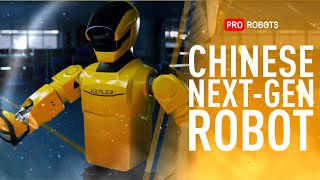
Kepler K2
Kepler Exploration Robot Co., Ltd.

Kepler K2

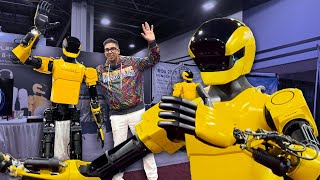
The Kepler Forerunner K2 is a humanoid robot built for commercial and industrial use by Kepler Robotics. Standing at 178 cm and weighing 85 kg, it has 52 degrees of freedom for precise movement. Featuring advanced actuators, it performs well in dynamic settings like manufacturing and hazardous areas. Its cloud-based AI supports autonomous learning and task planning, while Kepler OS enables customization for research, education, and emergency response.

Description

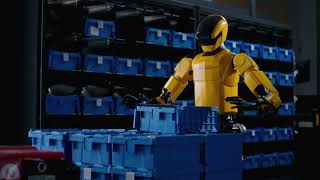
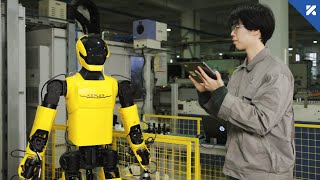
The Kepler Forerunner K2, affectionately dubbed 'Bumblebee,' represents a pinnacle in Chinese humanoid robotics engineering by Shanghai Kepler Exploration Robot Co., Ltd., launched in October 2024 at GITEX Global and entering mass production in 2025. This fifth-generation platform stands 175-178 cm tall, weighs 75-85 kg, and integrates 52 degrees of freedom for unparalleled dexterity. Its architecture employs a hybrid series-parallel actuation system: proprietary KEPLERGEAR planetary roller screw linear actuators in high-load areas like thighs, calves, and arms for explosive power, high rigidity, and energy efficiency (near-zero idle consumption), paired with rotary actuators delivering up to 200 N·m peak torque and 0.01° repeatable positioning accuracy at shoulders and waist. This outperforms traditional ball screws in load capacity and precision, enabling 15 kg per arm (30 kg total) payloads with fluid, human-like gaits up to 4 km/h. The Nimble Master dexterous hands are revolutionary: rope-driven, five-fingered with 11 DOF (active/passive) each, featuring 25 force/tactile sensing points per finger (96 total per hand) and six-axis force/torque sensors at the wrist. Supported by AI-driven reflexive models, they adapt grips for slippery, sharp, or deformable objects, achieving millimeter-level precision in tasks like blind sorting, labeling, or assembly. Onboard computing delivers 100 TOPS via a high-performance motherboard, powering the Nebula perception system—visual SLAM with HD cameras and multi-modal sensors (>80 total) for real-time 3D mapping, object/face/motion recognition, and environmental fusion. The Cerebellum system handles whole-body control, dynamic balance, PlanB reactive adjustments, and motion planning. AI architecture draws from partnerships with top Chinese LLM providers, distilling foundation models into efficient micro-models for embodied intelligence: imitation/reinforcement learning, cloud-edge hybrid cognition, hand-eye coordination, and multi-modal (vision, voice, haptic) interaction. Kepler OS offers a developer platform for customization. Battery specs include a 2.33 kWh pack with 1-hour fast charge yielding 8-hour endurance, proven in WAIC 2025's first 8-hour bipedal livestream (9 AM-5 PM nonstop). Thermal management leverages efficient actuators; materials emphasize lightweight alloys and composites for durability. Real-world deployments highlight maturity: Zhaofeng Motor factory for quality inspection/assembly, logistics sorting/material handling, automotive stamping/feeding, high-risk patrols. Demos at ICRA 2025 showcased greeting, navigation, multi-robot interaction; equivalent to 1.5 human workers' output. Priced from ¥248,000 (~$35k), with pre-sales and incentives, K2 targets manufacturing, logistics, education/research, accelerating commercialization via customer validations with 50+ partners. Its focus on manufacturability (star-shaped wiring, modular limbs) and industrial scalability positions it as a Tesla Optimus rival, bridging lab-to-factory gap.

Key Features

Hybrid Actuation System

KEPLERGEAR planetary roller screw and rotary actuators in series-parallel config for high torque (200 N·m), rigidity, and efficiency.

Dexterous Nimble Master Hands

11 DOF per hand, 25 force points/finger, 6-axis wrist sensor for adaptive grasping of complex objects.

Advanced Perception & AI

Nebula System with visual SLAM, multi-modal micro-models; 100 TOPS compute for autonomous learning and task planning.

Extended Endurance

2.33 kWh battery: 1-hour charge, 8-hour runtime, matching industrial shifts.

Robust Mobility

52 DOF, stable bipedal gait on complex terrain, 15 kg/arm payload, mm-precision control.

Embodied Intelligence

Cerebellum for balance/motion; cloud-edge AI integration for human-robot collaboration.

Specifications

AvailabilityPrototype
NationalityChina
Websitehttps://www.gotokepler.com/home
Degrees Of Freedom, Overall52
Height [Cm]178
Manipulation Performance2
Navigation Performance2
Max Speed (Km/H)4
Strength [Kg]15
Weight [Kg]85
Runtime Pr Charge (Hours)3
H.G Skill Score4
VerifiedNot verified
Walking Speed [Km/H]4
ManufacturerKepler Exploration Robot Co., Ltd.
Height175-178 cm
Weight75-85 kg
Dof Overall52
Dof Hands11 per hand
Payload15 kg per arm / 30 kg total
Max Speed4 km/h
Battery2.33 kWh, 1h charge / 8h runtime
Compute100 TOPS motherboard
ActuatorsKEPLERGEAR planetary roller screw (linear, high-load), rotary (200 N·m peak torque, 0.01° accuracy)
Sensors>80 integrated; hands: 25 force/tactile points per finger (96/hand), 6-axis F/T wrist; HD cameras, IMUs, encoders
Hands5-finger rope-driven, multi-touch tactile array
PerceptionVisual SLAM, multi-modal (vision, force, tactile, auditory) micro-models
OsKepler OS / Nebula & Cerebellum systems
MaterialsLightweight alloys/composites (modular limbs)
Thermal ManagementEfficient actuators with low idle consumption
ConnectivityCloud-edge hybrid, WiFi/5G

Curated Videos

Video 1
Video 2
Video 3
Video 4
Video 5

Frequently Asked Questions

What are the dimensions and weight of the Kepler K2?

The K2 measures 175-178 cm in height and weighs 75-85 kg, optimized for human-scale industrial environments with balanced stability and payload capacity up to 30 kg total.

What is the battery life and charging time?

Equipped with a 2.33 kWh battery, it offers up to 8 hours of continuous operation from a 1-hour fast charge, enabling full-day shifts with automated recharging capabilities.

How many degrees of freedom does it have?

52 degrees overall, including 11 DOF per dexterous hand, allowing precise manipulation and full-body coordination mimicking human kinematics for complex tasks.

What AI and computing power does it use?

100 TOPS onboard compute powers Nebula and Cerebellum systems, with micro-models from LLMs for perception, planning, and learning; supports cloud integration for advanced cognition.

What are its main applications?

Designed for intelligent manufacturing, warehousing/logistics, high-risk operations, and research/education; deployed in factories for assembly, inspection, sorting, and material handling.

What makes the hands special?

Nimble Master hands feature rope-drive, 5 fingers, 25 tactile points per finger, and 6-axis force sensors for adaptive, force-aware grasping of irregular or delicate items.

Is it in production and available?

Mass production began in 2025 with pre-sales from ¥248k; limited-series for industrial trials, full commercialization advancing via customer validations.

×