Kepler
Kepler Exploration Robot Co., Ltd.

Kepler

Kepler ExplorationRobot Co., Ltd.has made wavesin the robotics industrywith its innovativeKepler Forerunner series of humanoid robots. ThisChinese company, founded in2023, has quicklyestablished itself as a formidable player in thefield of advanced robotics and artificial intelligence.

Description

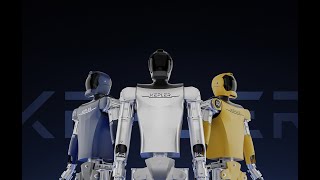
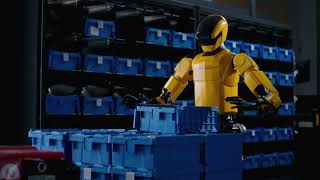
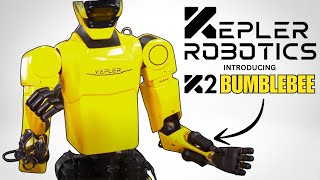
The Kepler Forerunner series, developed by Shanghai Kepler Exploration Robot Co., Ltd. (founded in 2023), represents a rapid advancement in Chinese humanoid robotics, positioning itself as a competitor to Tesla's Optimus. The series began with the Forerunner K1 prototype unveiled in late 2023, debuting at CES 2024, featuring a highly bionic structure with 40 degrees of freedom (DOF), 178 cm height, 85 kg weight, and 100 TOPS computing power via a self-developed Nebula system. This system integrates visual SLAM for 3D modeling, multimodal interaction (language, vision), hand-eye coordination, and dynamic sensing for environmental adaptation. Propulsion relies on proprietary KEPLERGEAR actuators: planetary roller screw actuators in limbs delivering up to 8,000 N thrust for high precision and power, paired with rotary actuators (peak 200 N.m torque, 0.01° accuracy) for shoulders and waist. Hands mimic human dexterity with 12 DOF, force sensing, and millimeter-level control. Evolving to Gen 5.0, the Forerunner K2 (2024) boosts to 52 DOF (including 2 head DOF for natural interaction, 11 DOF per hand), with rope-driven tactile manipulators (15 kg single-hand payload, 25 force touchpoints per finger, 96 contact points total per hand in some configs). It features a 2.33 kWh high-capacity battery enabling 8-hour continuous operation, validated in an industry-first 8-hour livestream at WAIC 2025 as 'Bumblebee' variant (175 cm, 75 kg, 30 kg payload). Architecture employs series-parallel actuators for energy efficiency (near-zero idle consumption), star-shaped wiring for maintenance ease, and tri-component motion system: embodied perception (multi-camera, sensor arrays), decision-making (cloud-based cognitive models), and execution. AI leverages imitation/reinforcement learning, micro-models distilled from large foundation models (partnered with Chinese LLMs) for real-time perception (auditory, tactile, force, positional), gait planning (improved stability/speed), task planning, and full-body coordination. Nebula evolves with cerebellar balance control mimicking human reflexes. Real-world deployments focus on blue-collar tasks: intelligent manufacturing (assembly, inspection), warehousing/logistics (sorting, handling deformable objects), high-risk operations, and education/research. K2 underwent customer trials for material handling, stamping, patrol, and quality checks; WAIC 2025 demos included logistics sorting, automotive manufacturing, interactive games. Commercialization progresses in phases: initial pilots, vertical generalization, universal apps, with small-batch production and pre-sales (starting ¥248,000 for developer configs). Emphasizing mass production over stunts, Kepler collaborates with 50+ customers, targeting high reliability, safety, and cost-effectiveness (~$30,000 est. for earlier models). Sensors include wide-angle binocular cameras, 4-mic arrays, accelerometers, AHRS, 6-axis force wrists, dynamic force/tactile arrays. No specific CPU models disclosed, but 100+ TOPS edge/cloud hybrid enables low-latency embodied intelligence. Challenges addressed: endurance, rigidity, interactivity via optimized algorithms. As of late 2025, Kepler accelerates toward industrial scalability, with Bumblebee proving shift-long viability.

Key Features

High Degrees of Freedom

52 DOF across body (11 per hand, 2 head), enabling fluid, human-like motions, precise manipulation, and natural interaction.

Advanced Actuators

Proprietary KEPLERGEAR planetary roller screw and rotary actuators (200 N.m peak, 8,000 N thrust) for high torque, precision (0.01° positioning), and energy efficiency.

Dexterous Hands

Rope-driven with 11 DOF, 15-30 kg payload, 25 force points/finger, flexible sensors for gentle grasp of diverse objects including deformable items.

Endurance Battery

2.33 kWh pack supports 8-hour operation, with direct/auto charging; proven in 8-hour WAIC 2025 livestream.

Nebula AI System

Cloud-edge embodied intelligence with visual SLAM, multimodal perception, reinforcement learning for autonomous navigation, task execution in complex environments.

Multi-Modal Perception

Binocular cameras, mic arrays, IMUs, 6-axis wrists, tactile arrays for real-time sensing, hand-eye coordination, and adaptive responses.

Specifications

AvailabilityPrototype
NationalityChina
Websitehttps://www.gotokepler.com/home
Degrees Of Freedom, Overall25
Height [Cm]170
Manipulation Performance2
Navigation Performance2
Max Speed (Km/H)5
Strength [Kg]15
Weight [Kg]88
Runtime Pr Charge (Hours)2
H.G Skill Score5
VerifiedNot verified
Walking Speed [Km/H]3.5
ManufacturerKepler Exploration Robot Co., Ltd.
Height Cm175-178
Weight Kg75-85
Dof Overall52
Dof Hands11 per hand (active/passive)
Max Payload Kg15-30
Battery Kwh2.33
Runtime Hours8
Computing Power100+ TOPS
ActuatorsKEPLERGEAR planetary roller screw (8,000 N thrust), rotary (200 N.m peak torque, 0.01° accuracy)
SensorsWide-angle binocular cameras, 4-mic far-field array, accelerometer, AHRS/IMU, 6-axis force/torque wrists, fingertip flexible sensors (25 touchpoints/finger, 96 contacts/hand), dynamic tactile/force arrays
ProcessorsSelf-developed high-computing motherboard (Nebula system), cloud-edge hybrid
MaterialsIntegrated rigid limb structures (aluminum alloys implied), industrial mech-style
Motor TechSeries-parallel planetary transmission + threaded engagement
Gear TechPlanetary roller screw, reducers with dual encoders/force feedback
CamerasHead-mounted wide-angle binocular, high-definition for SLAM/perception
ConnectivityWiFi/Ethernet for cloud AI, remote operation
OsProprietary Nebula with simulation/training platform
Max Speed KmhN/A (improved gait for stability)

Curated Videos

Video 1
Video 2
Video 3
Video 4
Video 5

Frequently Asked Questions

What are the main specifications of the Kepler Forerunner K2?

The K2 stands 175-178 cm tall, weighs 75-85 kg, features 52 DOF, 2.33 kWh battery for 8 hours runtime, 15-30 kg payload, planetary roller screw actuators, and 100+ TOPS computing for industrial tasks like manufacturing and logistics.

What AI technologies power the Kepler robot?

Nebula system integrates cloud-based cognitive models with edge control, using imitation/reinforcement learning and micro-models for perception (vision, tactile), gait planning, task autonomy, and human-robot interaction in real-time.

What are the real-world applications and deployments?

Deployed in pilots for warehousing (sorting/handling), manufacturing (assembly/inspection), high-risk ops, education. WAIC 2025 demos and customer trials validate 8-hour shifts; pre-sales for mass production ongoing.

How does the battery and charging work?

2.33 kWh high-capacity battery enables 8-hour continuous use matching industrial shifts. Supports direct manual charging or automatic docking, with efficient actuators minimizing idle power draw.

What makes the hands so capable?

11 DOF rope-driven design with 6-axis wrists, 25 force touchpoints per finger (up to 96 contacts/hand), enables millimeter precision, adaptive gripping for sharp/slippery/deformable objects, 15 kg per hand lift.

Is the Kepler robot ready for commercial use?

Yes, post-prototype; K2 in small-batch production, three-phase rollout: pilots, vertical industries, universal. Priced competitively (~¥248k developer), focused on reliability for blue-collar sectors.

×