Kangaroo
PAL Robotics

Kangaroo

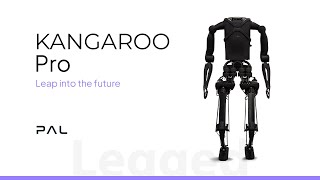
Kangaroo is a dynamic bipedal robot developed by PAL Robotics, featuring advanced actuators, lightweight construction, and energy-efficient design. It is engineered for high-speed, precise movements, making it a key tool for research in legged locomotion and biomechanics.

Description

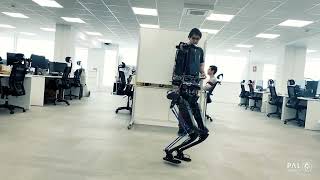
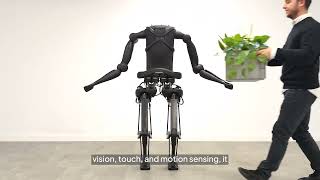
Kangaroo, developed by PAL Robotics, is a highly dynamic bipedal humanoid robot platform primarily engineered for advanced research in legged locomotion, biomechanics, and dynamic motion control. Evolving from an initial prototype showcased around 2022-2023 to a commercially available product by August 2024, Kangaroo represents a significant milestone in PAL Robotics' portfolio of research robots. Its architecture features a novel leg design utilizing custom high-performance linear ball screw actuators with integrated force sensors, arranged in closed kinematic chains. This configuration allows for proximal actuation—placing motors close to the hip joint—minimizing moving inertia, enhancing efficiency, and enabling agile maneuvers such as running, jumping, squatting under load, and impact recovery. Each leg provides 6 degrees of freedom (DoF): hip yaw, hip roll, hip pitch, leg length extension, ankle pitch, and ankle roll, with torque ranges up to 230 Nm at hip pitch and linear speeds up to 3 m/s for leg extension. The total actuated DoF reaches 28 in full configurations, including 12 for legs, 14 for dual 7-DoF arms (shoulder yaw/pitch/roll, elbow, wrist roll/pitch/yaw), and 2 for torso (pitch/yaw). The robot's control architecture leverages ROS 2 for modularity, with a high-frequency EtherCAT loop at 2 kHz (1 kHz in Lite version) for real-time performance. Key controllers include Whole Body Inverse Dynamics (WBID) for balancing and multi-contact scenarios, Zero Moment Point (ZMP)-based position control approximating a Linear Inverted Pendulum Model (LIPM) stabilized via Linear Quadratic Regulator (LQR), and closed-loop force/torque control at the joint level. Software supports non-linear transmissions and virtual constraints for handling closed chains. Decentralized electronics with individual actuator boards reduce cabling by 40%, improving robustness. Onboard computing comprises dual Intel i7 PCs (32GB RAM, 1TB SSD)—one for control, one for multimedia/perception—plus optional NVIDIA Jetson Orin AGX/NX for AI workloads like neural networks and reinforcement learning (RL), though no proprietary AI models are integrated; users can implement custom RL policies for locomotion via simulators like Isaac Lab, MuJoCo, or Gazebo. Perception in advanced versions includes 4x Intel RealSense D435i RGB-D cameras for navigation and footstep planning. Materials blend lightweight carbon-fiber tubes for structural elements with flexible/rigid composites for impact absorption, yielding weights from 35-56 kg across Lite, Standard, and Plus variants. Autonomy reaches 4 hours per charge via efficient power boards. Safety features encompass wireless e-stop, protective waist shielding, and force-limited interactions. Real-world deployments include the PRIMI EU project (2023-2027), where an upgraded Kangaroo integrates event-driven dynamical systems for cognitive control and neuromorphic rehabilitation robotics, and the first commercial unit delivered to TU Wien in 2024 for PhD-level locomotion research. Additional applications span healthcare rehab, industrial precision tasks, and academic AI-robotics experiments, with demos showing free-walking, heavy squats, and stable balancing. Kangaroo's energy-efficient design and custom actuators position it as a benchmark for next-gen bipedal platforms, fostering breakthroughs in torque-controlled locomotion amid unknown terrains.

Key Features

Novel Leg Architecture

Closed kinematic chains with linear ball screw actuators enable high-speed extension (3 m/s), large torques (up to 230 Nm), and low inertia for jumping and running.

Proximal Actuation

Motors positioned near hips reduce moving mass, improving efficiency, impact resilience, and smooth dynamic motions.

Whole Body Control

WBID and ZMP-LQR controllers support free-walking, balancing, multi-contact, and force-adaptive interactions at 2 kHz loop.

Modular Configurations

Lite/Standard/Plus versions with optional arms (7 DoF each), torso (2 DoF), Jetson AI kit, and RGB-D perception for customized research.

ROS 2 Integration

Full URDF models, simulators (Isaac Lab, Gazebo), and decentralized electronics for rapid prototyping and scalability.

Robust and Safe Design

Carbon-fiber structures, 40% reduced cabling, wireless e-stop, and force sensors ensure durability in harsh experiments.

Specifications

AvailabilityPrototype
NationalitySpain
Websitehttps://pal-robotics.com/robot/kangaroo/
Degrees Of Freedom, Overall28
Height [Cm]160
Manipulation Performance2
Navigation Performance2
Max Speed (Km/H)4.5
Strength [Kg]20
Weight [Kg]40
Runtime Pr Charge (Hours)6
Operating SystemLinux, Ubuntu, ROS, N/A
H.G Skill Score4
VerifiedNot verified
ManufacturerPAL Robotics
Height Cm160
Weight Kg35-56 (Lite to Plus)
Dof Total28
Dof Legs12 (6 per leg)
Dof ArmsUp to 14 (7 per arm)
Dof Torso2 (Standard/Plus)
ActuatorsCustom linear ball screw with integrated force sensors; cont. force 600-1450N, max 2-5kN, speeds 0.4-0.625 m/s, power 230-1600W
Control Loop1-2 kHz EtherCAT
ProcessorsControl PC: Intel i7 32GB RAM 1TB SSD; Multimedia PC: Intel i7 (Standard/Plus); AI: NVIDIA Jetson Orin NX/AGX
SensorsForce/torque per actuator (Plus), 4x Intel RealSense D435i RGB-D cameras, optional wrist/foot FT sensors
OsLinux Ubuntu ROS 2
BatteryUp to 4 hours autonomy (voltage/capacity unspecified)
ConnectivityWi-Fi 6 (x2-x4)
MaterialsCarbon-fiber tubes, flexible/rigid composites for impact absorption
Thermal ManagementN/A (efficient power boards implied)
Payload Arms3-5 kg
Max SpeedN/A (leg extension 3 m/s)
SimulatorsIsaac Lab, MuJoCo, Gazebo

Curated Videos

Video 1
Video 2
Video 3
Video 4

Frequently Asked Questions

What are the main versions of Kangaroo and their differences?

Kangaroo offers Lite (35kg, 1kHz, fixed torso, basic), Standard (38kg, 2kHz EtherCAT, 2-DoF torso, RGB-D cameras, Jetson Orin NX), and Plus (40kg, advanced sensors per actuator, Jetson Orin AGX, premium case) for tailored research needs from basic locomotion to AI-enhanced manipulation.

What computing hardware does Kangaroo use?

Dual Intel i7 PCs with 32GB RAM and 1TB SSD handle control and perception; Standard/Plus include NVIDIA Jetson Orin for AI/RL tasks, supporting Wi-Fi 6 connectivity and ROS 2 API for seamless integration.

What sensors are available on Kangaroo?

Integrated force sensors in linear actuators (Plus: one per leg), optional wrist/foot FT sensors, and 4x Intel RealSense D435i RGB-D cameras (Standard/Plus) for precise perception, navigation, and force-controlled interactions.

Can Kangaroo perform dynamic motions like jumping?

Yes, custom actuators deliver peak forces up to 5kN and speeds of 0.625 m/s, enabling jumping, running, impact recovery, and heavy squats via WBID and optimized transmissions for acrobatic research.

What is the battery life and materials used?

Up to 4 hours autonomy with efficient in-house power boards; constructed from lightweight carbon-fiber tubes and impact-absorbing composites for a 35-56kg frame resilient to falls and repetitive operations.

Is Kangaroo suitable for AI research?

Absolutely, with Jetson Orin kits for neural networks/RL, simulator compatibility, and ROS 2, it's ideal for training locomotion policies, though users implement custom models for cognitive tasks.

×