Jaka K1
JAKA Robotics

Jaka K1

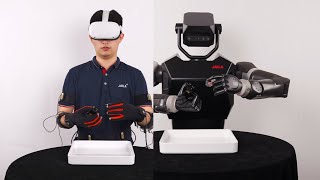
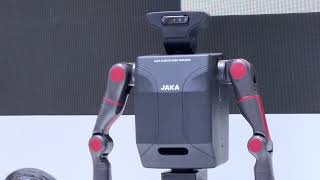
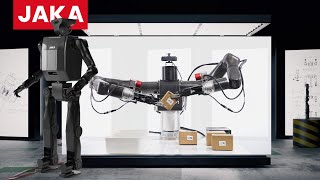
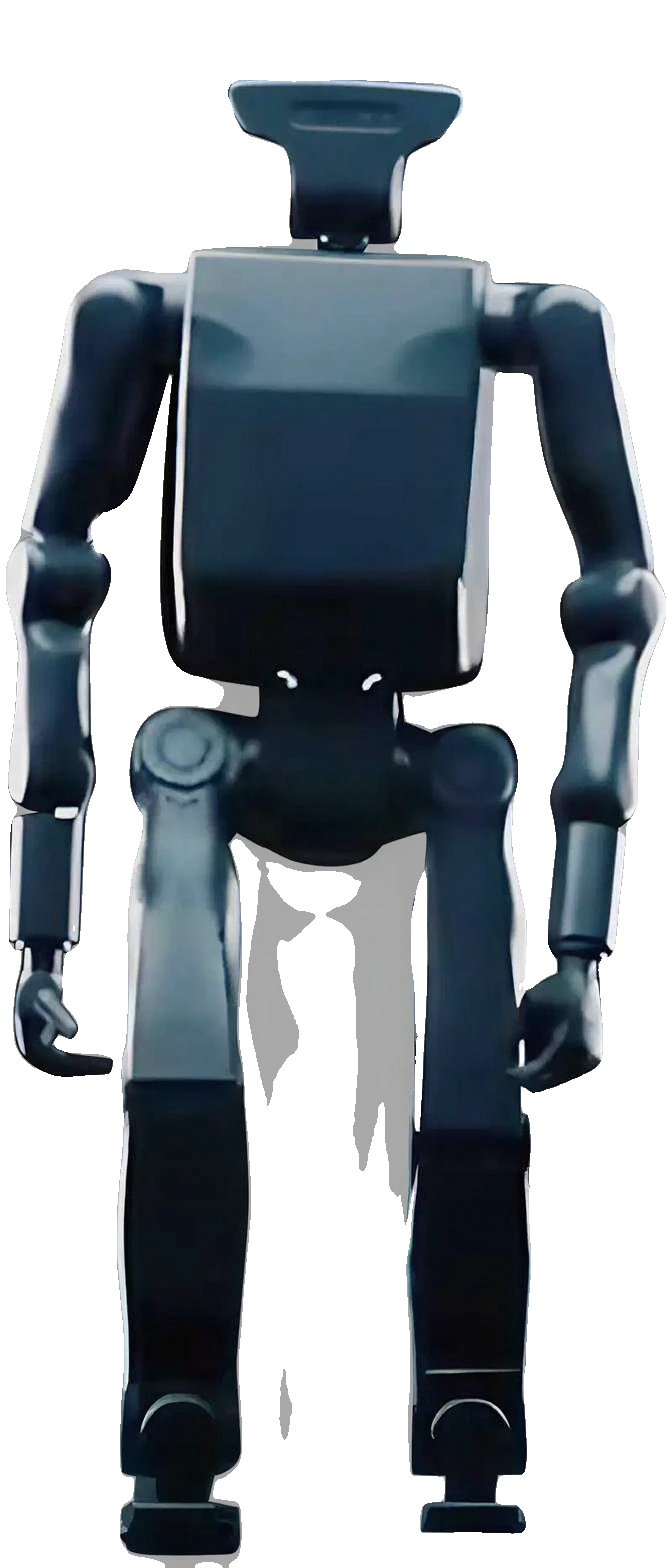
The JAKA K1 is a flexible humanoid robot from JAKA Robotics, designed for automation in industries like manufacturing, logistics, and customer service. With a compact, modular design and intelligent AI, it recognizes objects, interprets tasks, and safely interacts with humans. Equipped with depth cameras and motion sensors, it navigates dynamic environments, performing precise actions. Lightweight and energy-efficient, the K1 is built for long-term use. JAKA Robotics aims for it to enhance productivity and safety, bridging technology with human-centered applications.

Description

The JAKA K1 (also referred to as K-1) is a pioneering humanoid robot developed by JAKA Robotics, a Shanghai-based leader in collaborative robotics founded in 2014. Debuted at the 2024 China International Industry Fair (CIIF), the K1 represents a modular humanoid robot component system designed primarily for research institutes, AI development teams, and entrepreneurs building advanced embodied intelligence applications. Unlike fully integrated commercial humanoids, the K1 emphasizes interchangeable components such as dual arms, brain (control unit), force/vision sensors, and dexterous hands, allowing rapid prototyping of humanoid scenarios for data acquisition and training. Architecturally, the K1 features a human-sized frame standing approximately 1.8 meters tall, with conflicting reports from early sources citing 165 cm—likely referring to upper-body configurations. It boasts 29 movable joints overall, including 14 degrees of freedom (DOF) in the arms (7 DOF per arm), enabling exceptional flexibility for high-precision tasks. Each arm offers a 633 mm reach, 6 kg peak payload, and weighs just 5.5 kg, powered by ultra-precise 1 kHz CAN-FD control. The design incorporates JAKA's proven cobot technology, with six-dimensional force control for real-time response to external forces in multiple directions (forward, upward, downward, rotational), ensuring safe human collaboration. Sensors include depth cameras for environmental perception, touch sensors for tactile feedback, and motion detectors for dynamic navigation. The AI architecture leverages advanced machine learning capabilities for object recognition, task interpretation, and adaptive learning. While specific models like proprietary LLMs or vision transformers are not disclosed, the system supports AI-driven force control and vision integration, allowing the robot to learn from interactions, adapt to new tasks, and make real-time decisions in unstructured environments. It features intelligent control systems for precise manipulation (rated 2/10 on humanoid.guide scales) and basic navigation (2/10), with a top walking speed of 3.5 km/h and max speed of 4 km/h. The lightweight 40 kg structure (energy-efficient with 3-hour runtime per charge) uses undisclosed motors, gears, and materials optimized for long-term industrial use. Targeted for manufacturing, logistics, electronics assembly, surgical assistance, and customer service, the K1's modular nature facilitates quick deployment in dynamic settings like warehouses (e.g., smart parcel sorting demos) and factories. However, as a prototype (not verified, availability: prototype), it has no confirmed real-world deployments to date—demonstrations at CIIF 2024 were non-functional prototypes with screen simulations. JAKA envisions it enhancing productivity and safety, bridging cobot expertise with full humanoid potential. Future iterations may integrate LLM support, improved bipedal locomotion, and higher IP ratings, positioning the K1 as a cost-effective ($100,000 est.) platform in China's booming humanoid ecosystem.

Key Features

Modular Component System

Provides swappable brain, dual arms, force/vision sensors, and dexterous hands for rapid humanoid R&D and scenario building.

High-DOF Arms

14 DOF total (7 per arm) with 633 mm reach and 6 kg payload, enabling precise manipulation in complex tasks.

6D Force Control

Real-time sensing and reaction to multi-directional forces for safe human interaction and delicate handling.

Advanced Perception

Depth cameras, touch sensors, and motion detectors for object recognition and dynamic environment navigation.

AI Learning Capabilities

Adaptive AI for task interpretation, real-time decision-making, and continuous learning in unstructured settings.

Specifications

AvailabilityPrototype
NationalityChina
Websitehttp://N/A
Degrees Of Freedom, Overall18
Height [Cm]165
Manipulation Performance2
Navigation Performance2
Max Speed (Km/H)4
Strength [Kg]8
Weight [Kg]40
Runtime Pr Charge (Hours)3
H.G Skill Score4
VerifiedNot verified
Walking Speed [Km/H]3.5
ManufacturerJAKA Robotics
Height Cm180
Weight Kg40
Dof Overall29 joints (14 in arms)
Dof Arms14 (7 per arm)
Reach Mm633 per arm
Payload Kg6 peak per arm
Arm Weight Kg5.5 per arm
Walking Speed Kmh3.5
Max Speed Kmh4
Runtime Hours3
Strength Kg8
SensorsDepth cameras, touch sensors, motion sensors, 6D force control
Control1 kHz CAN-FD
Ai CapabilitiesObject recognition, adaptive learning, real-time force/vision integration
MaterialsLightweight modular frame (details N/A)
BatteryN/A kWh/voltage (3h runtime)

Curated Videos

Video 1
Video 2
Video 3
Video 4
Video 5

Frequently Asked Questions

What is the primary purpose of the JAKA K1?

The JAKA K1 is a modular humanoid robot system designed for AI research teams, providing key components like arms, brain, and sensors to quickly build and train humanoid operation scenarios in manufacturing, logistics, and beyond, accelerating embodied intelligence development.

What are the key specifications of the K1's arms?

Dual 7-DOF arms offer 633 mm reach, 6 kg peak payload per arm, 5.5 kg weight per arm, and 1 kHz CAN-FD control for ultra-precise, flexible movements suitable for electronics assembly and surgical tasks.

How does the K1 ensure safety around humans?

Equipped with six-dimensional force control and touch sensors, the K1 detects external forces in real-time across multiple axes, adjusting actions to prevent excessive pressure and enabling safe collaborative operation in shared spaces.

What is the current availability and deployment status?

As a prototype unveiled in 2024, the K1 is not yet commercially available; demos were simulations only. It targets industrial R&D with no verified deployments, focusing on high-precision tasks like parcel sorting and assembly.

What sensors and AI features does it have?

Includes depth cameras for vision, touch sensors for feedback, and an advanced AI system for object recognition, task adaptation, and real-time decisions, supporting learning in dynamic environments without specified LLM integration yet.

×