HMND 01 Alpha Bipedal
Humanoid (UK-based robotics company)

HMND 01 Alpha Bipedal

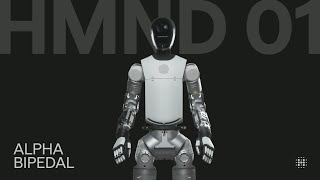
HMND 01 Alpha Bipedal is a UK-built humanoid robot designed for agile bipedal motion, intelligent perception, and versatile manipulation — built to operate in industrial, logistics, retail, or future service environments.

Description

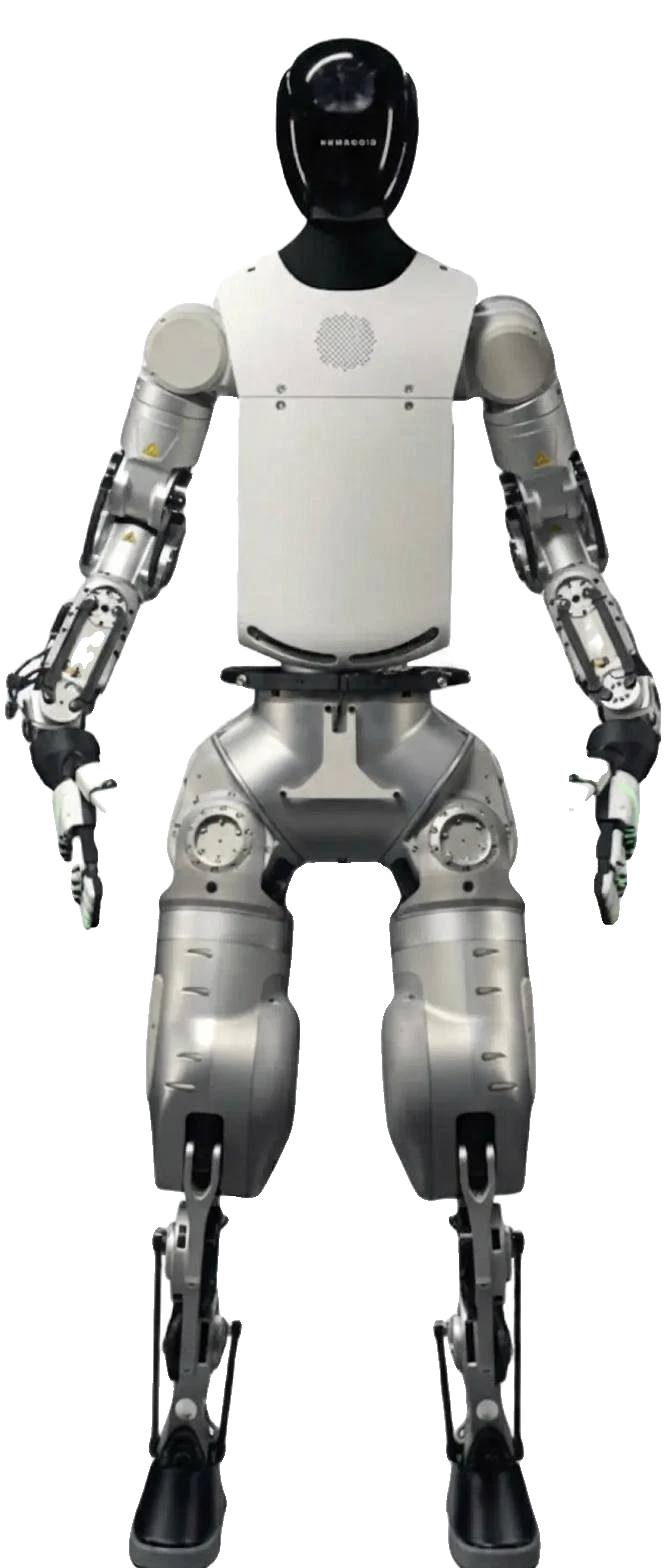
The HMND 01 Alpha Bipedal is a groundbreaking humanoid robot developed by UK-based Humanoid, unveiled on December 2, 2025. Standing at 179 cm tall and weighing 90 kg, it represents a leap in rapid development, going from initial design to a fully functional prototype in just five months—far surpassing the industry average of 18-24 months. Remarkably, it achieved stable bipedal walking a mere 48 hours after final assembly, thanks to an intensive reinforcement learning (RL) regimen in simulation using NVIDIA's Isaac Sim and Isaac Lab. This training encompassed over 52.5 million seconds of locomotion data, equivalent to nearly 19 months of traditional training, compressed into two days with minimal sim-to-real gap due to ultra-precise 3D modeling. Architecturally, the robot features 29 degrees of freedom (excluding end-effectors), balanced human-like proportions optimized for reliable bipedal motion, precision manipulation, and autonomous operation. Its locomotion capabilities are powered by an RL-trained Whole-Body Controller, enabling walking in straight and curved trajectories, turning in place, sidestepping, backwards walking, squatting, squat walking, hopping, running, and robust push recovery from omnidirectional interferences up to 350 Newtons. The modular design includes interchangeable end-effectors such as 12-DOF five-finger hands or 1-DOF parallel grippers, upper body upgrades, and protective garments, ensuring versatility and low total cost of ownership (TCO). Intelligence is driven by the VLM/VLA-based KinetIQ framework, integrating vision-language models (VLM) and vision-language-action models (VLA) for end-to-end reasoning, perception, and task execution. Powered by NVIDIA Jetson Orin AGX for GPU acceleration and Intel i9 for CPU processing, it supports low-latency, adaptive behaviors. Sensory suite includes a head with 360° vision via six RGB cameras and two depth sensors, a six-microphone array for audio, speakers, LEDs, and a head display for multimodal human-robot interaction. Body sensing incorporates 6D force/torque (F/T) sensors, wrist RGB cameras, end-effector F/T sensors, haptic feedback, and joint torque feedback, enabling precise environmental awareness and manipulation. Targeted for industrial, logistics, retail, warehouse, and emerging domestic/service environments, the HMND 01 addresses labor shortages (up to 27% in manufacturing) and unpaid care work burdens. While still in prototype stage, it builds on the wheeled Alpha variant's successful proofs-of-concept (POCs), such as bin-picking with Schaeffler. With 15 kg bimanual payload, 1.5 m/s max speed, and 3-hour swappable battery runtime, it excels in physically demanding, repetitive tasks like picking, palletizing, object handling, and human coordination. Future upgrades leverage modularity for rapid AI policy training and scalability, positioning it as a platform for real-world human-machine collaboration and quality-of-life enhancement.

Key Features

Rapid Bipedal Locomotion Learning

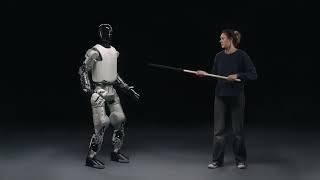
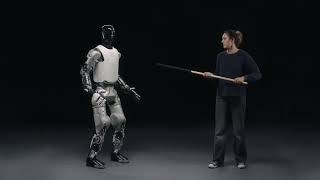
Achieves stable walking 48 hours post-assembly via RL in NVIDIA Isaac Sim/Lab, with 52.5M seconds of sim data for walking, hopping, squatting, and push recovery up to 350N.

Advanced Perception and Sensing

360° vision with 6 RGB cameras + 2 depth sensors, 6-mic array, 6D F/T sensors, haptic feedback, and wrist cameras for multimodal interaction and precise manipulation.

Modular End-Effectors

Swappable 12-DOF 5-finger hands or 1-DOF grippers, plus interchangeable garments and upper body, for versatile tasks and easy upgrades.

VLM/VLA KinetIQ Framework

End-to-end AI reasoning powered by NVIDIA Jetson Orin AGX and Intel i9, enabling autonomous adaptation in industrial, logistics, and domestic environments.

Human-Like Proportions and Strength

179 cm height, 90 kg weight, 29 DoF, 15 kg payload, designed for reliable motion and coordination with humans or other robots.

Specifications

AvailabilityPrototype
NationalityUK
Websitehttps://thehumanoid.ai/
Degrees Of Freedom, Overall29
Degrees Of Freedom, Hands12 per hand
Height [Cm]179
Manipulation Performance3
Navigation Performance3
Max Speed (Km/H)5.4
Strength [Kg]15
Weight [Kg]90
Runtime Pr Charge (Hours)3
Safe With HumansYes
Cpu/GpuPowered by NVIDIA processing (likely Jetson Orin AGX) and Intel i9
Camera ResolutionRGB cameras + depth sensors
ConnectivityEthernet, Wi‑Fi
Operating SystemVLM/VLA-based KinetIQ framework
Llm IntegrationYes
Motor TechActuators capable of full-body motion and push recovery
Number Of Fingers5 per hand
Main MarketIndustrial, logistics, retail restocking, Warehouse
VerifiedVerified
Walking Speed [Km/H]5.4
ColorWhite/grey (prototype)
ManufacturerHumanoid (UK-based robotics company)
Height Cm179
Weight Kg90
Dof Overall29
Dof Hands12 per hand
Max Speed Kmh5.4
Payload Kg15
Runtime Hours3
ProcessorsNVIDIA Jetson Orin AGX (GPU), Intel i9 (CPU)
Sensorsvision: 6x RGB cameras (head/wrist), 2x depth sensors, audio: 6-microphone array, force_torque: 6D F/T sensors (torso/end-effectors), joint torque feedback, other: Haptic feedback sensors
End EffectorsModular: 12-DOF 5-finger hand or 1-DOF parallel gripper
LocomotionRL Whole-Body Controller: walking (straight/curved), sidestepping, hopping, running, push recovery (350N)
BatterySwappable, 3 hours average runtime (kWh/voltage N/A)
ConnectivityEthernet, Wi-Fi
Os FrameworkVLM/VLA-based KinetIQ
MaterialsN/A (human-like proportions, modular garments)

Curated Videos

Video 1
Video 2
Video 3

Frequently Asked Questions

How quickly did the HMND 01 Alpha Bipedal learn to walk?

The robot achieved stable bipedal walking just 48 hours after final assembly, following 52.5 million seconds of reinforcement learning in NVIDIA Isaac Sim and Isaac Lab—equivalent to 19 months of traditional training compressed into two days with precise sim-to-real transfer.

What are the key hardware specifications?

It stands 179 cm tall, weighs 90 kg, has 29 DoF (excl. end-effectors), max speed of 1.5 m/s (5.4 km/h), 15 kg payload, and 3-hour battery runtime. Powered by NVIDIA Jetson Orin AGX and Intel i9, with modular 12-DOF hands.

What AI technologies power the robot?

The VLM/VLA-based KinetIQ framework drives end-to-end reasoning and action. Locomotion uses an RL-trained Whole-Body Controller, while perception integrates vision-language models for adaptive task execution in dynamic environments.

What applications is it designed for?

Primarily industrial/logistics (picking, palletizing, warehouse tasks), addressing 27% labor shortages, plus domestic support for elderly care, object handling, and service roles to reduce unpaid work burdens valued at over 40% of GDP in some regions.

Is it safe for human interaction?

Yes, featuring safe actuators, push recovery, multimodal interaction via head display/LEDs/speakers, force/torque sensing, and modular garments for protection, enabling collaborative human-robot environments.

×