G1
Unitree Robotics

G1

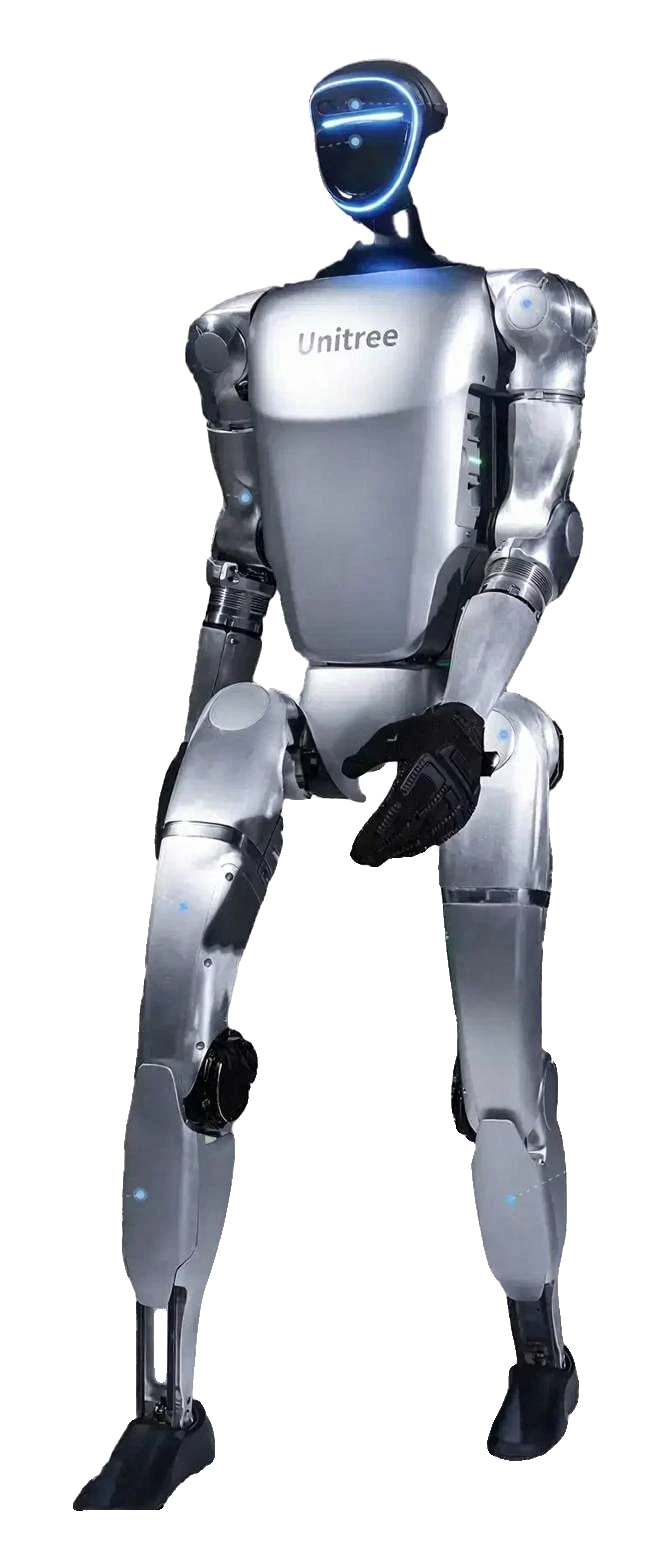
The G1 humanoid robot, developed by Unitree Robotics, represents a significant advancement in affordable and versatile robotics technology. Standing at approximately 1. 27meters tall and weighing around 35 kg, the G1 is designed to be both compact and highly functional.

Description

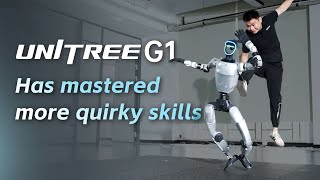
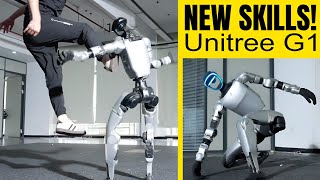
The Unitree G1 humanoid robot, developed by Unitree Robotics, is a compact, versatile platform standing 132 cm tall (folded to 69 cm) and weighing approximately 35 kg, designed for advanced mobility and manipulation. Its architecture features 23 degrees of freedom (DOF) in the standard model, expandable to 43 in the EDU version, including 6 DOF per leg, 1-3 DOF at the waist, 5 DOF per arm, and up to 9 DOF per hand with optional dexterous grippers like Dex3-1 (three-fingered with tactile sensors). Joints utilize low-inertia, high-speed permanent magnet synchronous motors (PMSM) with maximum knee torque of 120 N.m (EDU), dual encoders for precise position/velocity feedback, industrial-grade crossed roller bearings, full hollow electrical routing, and local air cooling for thermal management. Sensing is powered by a Livox MID-360 3D LiDAR (360° horizontal, 59° vertical FOV), Intel RealSense D435i depth camera, 4-microphone array, and 5W stereo speakers, enabling perception, voice interaction, and navigation. Compute includes an 8-core high-performance CPU standard, with NVIDIA Jetson Orin NX (8-core Arm Cortex-A78AE @2GHz, 16GB RAM, 1024 CUDA cores, 2TB storage) optional in EDU for secondary development. Power comes from a quick-release 9000 mAh, 54V (13S lithium-ion) smart battery, providing ~2 hours runtime, charged via 54V 5A adapter. Connectivity: WiFi 6, Bluetooth 5.2, Gigabit Ethernet. AI architecture centers on UnifoLM (Unified Robot Large Model), a proprietary world model integrating imitation learning, reinforcement learning (RL), and force-position hybrid control for dexterous manipulation simulating human hands. It supports OTA updates, SLAM/navigation via LiDAR/depth fusion, and SDK for ROS2/DDS interfaces, motion services, RL control, and high-level actions like arm control. No native LLM integration, but extensible for custom embodied AI. Real-world deployments include viral demos: world's first kip-up and side-flip (2025), martial arts/boxing tournaments with multiple G1s, live concert dances, CES 2025 hands-on, ETH Zurich behavior imitation training, NVIDIA Isaac Lab rough-terrain locomotion sim-to-real, CMU SPARK dexterity tasks, DoorMan door-opening outperforming teleop. Research highlights security vulnerabilities (e.g., Alias Robotics espionage risks) and sim benchmarks. Primarily research/education-focused, with emerging industrial potential in warehouses via G1-D variant. Continuous evolution via OTA positions G1 as an accessible humanoid for AI-robotics advancement.

Key Features

Ultra-Flexible Joints

Extra-large movement range (e.g., hip pitch ±154°, waist Z ±155°), enabling acrobatics like kip-ups, flips, and martial arts.

Dexterous Hands

Optional Dex3-1 three-finger gripper (7 DOF, tactile arrays), force-position hybrid control for precise object manipulation up to 3kg arm load.

Advanced Perception

Livox MID-360 LiDAR + RealSense D435i for SLAM/navigation, microphone array + speakers for voice interaction.

AI-Driven Control

UnifoLM world model with imitation/RL, supporting OTA upgrades and secondary development on Jetson Orin.

Compact & Safe Design

Foldable to 69cm, 35kg, quick-swap battery, safe human interaction with dual encoders and local cooling.

Specifications

AvailabilityIn production
NationalityChina
Websitehttps://www.unitree.com/g1/
Degrees Of Freedom, Overall23
Degrees Of Freedom, Hands14
Height [Cm]127
Manipulation Performance3
Navigation Performance3
Max Speed (Km/H)7.2
Strength [Kg]3
Weight [Kg]35
Runtime Pr Charge (Hours)2
Safe With HumansYes
Cpu/Gpu8-core high-performance CPU; EDU with Jetson Orin module as an additional option
Camera Resolution“Intel RealSense D435i depth camera and Livox MID360 3D LiDAR; microphone array and stereo speaker in EDU versions
ConnectivityWi-Fi 6 og Bluetooth 5.2
Operating SystemSupports OTA updates and secondary development (EDU versions)
Number Of Fingers10
H.G Skill Score6
VerifiedNot verified
Walking Speed [Km/H]4.5
ManufacturerUnitree Robotics
Height Stand132 cm
Height Fold69 cm
Weight35 kg
Dof Total23 (standard) / 23-43 (EDU)
Dof Legs6 each
Dof Waist1 (std) / 1+2 (opt)
Dof Arms5 each
Dof HandsUp to 9 each (Dex3-1: thumb 3DOF, index/middle 2 each + tactiles)
MotorsLow-inertia PMSM, dual encoders, max knee torque 120 Nm
BearingsIndustrial crossed roller
Sensorslidar: Livox MID-360 (360° H, 59° V FOV), depth_camera: Intel RealSense D435i, audio: 4-mic array, 5W speakers, encoders: Dual per joint (position/velocity)
Computestandard: 8-core high-perf CPU, edu: NVIDIA Jetson Orin NX (8x Cortex-A78AE @2GHz, 16GB RAM, 1024 Ampere GPUs w/32 Tensor, 2TB SSD)
Battery9000 mAh, 54V (13S Li-ion), ~2h runtime, quick-swap
Charger54V 5A
ConnectivityWiFi 6, BT 5.2, 2x GbE RJ45, USB3 Type-C
CoolingLocal air cooling
Max Speed2 m/s (7.2 km/h)
Arm Payload3 kg (EDU)
Os SdkOTA updates, G1 SDK (DDS/ROS2), secondary dev EDU only

Curated Videos

Video 1
Video 2
Video 3
Video 4
Video 5

Frequently Asked Questions

What is the difference between G1 and G1 EDU?

Standard G1 has 23 DOF, basic 8-core CPU, no secondary development. EDU adds up to 43 DOF (extra waist/hand), Jetson Orin NX for SDK/ROS2, high-motion services, extended warranty (18 months vs 8), priced via sales contact.

How long does the battery last and what are its specs?

9000 mAh, 54V (13S Li-ion) quick-release smart battery provides ~2 hours continuous operation. Charged with 54V 5A adapter; includes BMS for safety. Runtime varies by activity intensity.

What sensors does G1 use for perception?

Livox MID-360 3D LiDAR (360°x59° FOV), Intel RealSense D435i depth camera for fusion mapping/SLAM, 4-mic array for noise-cancelled voice, IMU in joints for odometry.

Is secondary development supported?

Yes on EDU via G1 SDK: DDS/ROS2 interfaces, motion/arm control, RL routines, LiDAR/depth APIs. Jetson Orin access (192.168.123.164/unitree:123), Ethernet debugging.

What is the top speed and payload?

Walking speed up to 2 m/s (7.2 km/h burst), arm payload ~3kg (EDU). Optimized for agility over heavy lifting; excels in dynamic tasks like flips.

Safety considerations for use?

Civilian robot: keep 1m+ distance, no mods/dangerous use. Powerful motors (120Nm); comply with laws. OTA updates enhance stability.

×