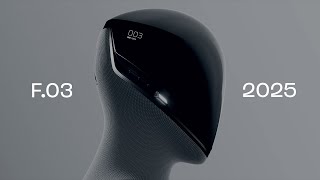
Figure 03
Figure AI

Figure 03

Figure 03 is Figure AI’s next‑step humanoid, signaling a shift from lab demos to useful teammates—built to work safely alongside people and adapt to real tasks. An exciting debut we’re eager to see unfold.Want to know more about the humanoid market? Download the Humanoid Robot Market Report 2026here

Description

Figure 03, unveiled by Figure AI on October 9, 2025, marks a pivotal advancement in humanoid robotics, transitioning from laboratory prototypes to scalable, general-purpose machines designed for homes and commercial environments. This third-generation robot is purpose-built around Helix, Figure's proprietary vision-language-action (VLA) AI model, which unifies perception, high-level reasoning, and low-level control into a single end-to-end system. Helix leverages an open-source, open-weight vision-language model (VLM) backbone, trained on vast datasets for semantic understanding and visuomotor control, running entirely on-board dual low-power embedded GPUs under Ubuntu Linux LTS with real-time kernel components. This architecture enables 200 Hz low-level control loops and glass-to-action latencies reduced by a factor of four compared to prior generations, facilitating fluid, adaptive behaviors in dynamic settings. Physically, Figure 03 stands 168 cm tall, weighs 60 kg (9% lighter than Figure 02), and supports a 20 kg payload with a top walking speed of 4.3 km/h. It boasts 30 degrees of freedom overall, including 20 in the highly dexterous hands with 10 fingers each. The propulsion system employs custom frameless brushless DC (BLDC) motors paired with strain-wave (harmonic) and cycloidal gearboxes for high torque density and 2x faster actuator speeds. Structural elements include stamped steel and die-cast aluminum for the battery enclosure, bonded with structural adhesives, while the exterior features washable soft textiles, multi-density foam padding to mitigate pinch hazards, and customizable clothing options for branding or durability. The sensory suite is state-of-the-art: a next-generation vision system with six RGB cameras (head, front/back torso) delivering 2x frame rates, 1/4 latency, 60% wider field-of-view (FoV) per camera, and expanded depth of field in a compact form factor. Each hand integrates a palm-mounted camera for low-latency, close-range visual feedback during manipulation in occluded spaces. First-generation in-house tactile sensors on fingertips detect forces as low as 3 grams—comparable to a paperclip—enabling precise, slip-resistant grasps on diverse objects. Upgraded audio hardware includes a speaker twice the size and 4x more powerful than predecessors, with repositioned microphones for superior speech-to-speech reasoning and natural interaction. Power management centers on the F.03 battery: 2.3 kWh capacity providing 5 hours of peak runtime, with 2 kW wireless inductive charging via foot coils and simultaneous mmWave data offload at 10 Gbps for fleet-wide learning. Safety is paramount, with multi-layer protections including custom BMS (overcharge/discharge/temperature/short-circuit safeguards), UN38.3/UL2271-certified cells, fusible interconnects, flame-arrestor vents, and potting compounds preventing thermal propagation or external flames during faults. Active cooling via integrated die-cast channels supports fast charging. Real-world deployment history builds on Figure 02's BMW factory pilots, where robots performed autonomous tasks like part handling. Figure 03 demos showcase long-horizon autonomy in homes—laundry, dishwashing, cleaning—without teleoperation, navigating stairs, tight spaces, and clutter. Production at the BotQ facility targets 12,000 units/year initially, scaling to 100,000 over four years via vertically integrated supply chains, die-casting, and AI-assisted assembly, slashing costs dramatically. This positions Figure 03 as a commercially viable teammate, adaptable via continuous data-driven Helix evolution for industries and households alike. (748 words)

Key Features

Helix VLA AI

Proprietary vision-language-action model enabling end-to-end pixels-to-action learning, high-level reasoning, and visuomotor control, running fully on-board for autonomous task execution.

Advanced Vision System

Six RGB cameras with 2x frame rate, 1/4 latency, +60% FoV, expanded depth; palm cameras per hand for precise manipulation in confined spaces.

Dexterous Hands

20 DoF hands with 10 fingers, adaptive soft fingertips, tactile sensors detecting 3g forces for stable grasps on varied objects.

F.03 Battery & Charging

2.3 kWh pack for 5-hour runtime; 2 kW wireless foot charging with multi-layer safety (UN38.3 certified, flame containment).

Human-Safe Design

Soft textiles, multi-density foam, pinch protection; washable covers for home use.

High-Volume Manufacturing

BotQ facility: 12k/year capacity; cost-reduced via die-casting, stamping, in-house critical components.

Specifications

AvailabilityPrototype
NationalityUS
Websitehttps://www.figure.ai/
Degrees Of Freedom, Overall30
Degrees Of Freedom, Hands20
Height [Cm]168
Manipulation Performance3
Navigation Performance3
Max Speed (Km/H)4.3
Strength [Kg]20
Weight [Kg]60
Runtime Pr Charge (Hours)5
Cpu/GpuHelix runs entirely on‑board on dual low‑power embedded GPUs
Camera Resolution03 introduces a new vision system with 2× frame rate, ¼ latency, and +60% FoV per camera, plus palm cameras in each hand.
Connectivity10 Gbps mmWave data offload; wireless inductive charging and data offload
Operating SystemUbuntu Linux (LTS) + RT‑komponenter
Llm IntegrationHelix uses an open‑source, open‑weight VLM for high‑level reasoning
Latency Glass To ActionNo numeric “glass‑to‑action” latency published. Site notes ¼ camera latency vs. prior architecture and 200 Hz low‑level control
Motor TechFrameless BLDC‑motors
Gear TechStrain‑wave (harmonic) and/or cycloidal
Main Structural MaterialBattery enclosure uses stamped steel, die‑cast aluminum, and structural adhesives
Number Of Fingers10
Main MarketHome service, Industries
VerifiedNot verified
Walking Speed [Km/H]4.3
ManufacturerFigure AI
Dimensionsheight: 168 cm, weight: 60 kg, payload: 20 kg
Mobilitydof_total: 30, dof_hands: 20 (10 fingers), max_speed: 4.3 km/h, motors: Frameless BLDC motors, gears: Strain-wave (harmonic) and/or cycloidal, actuators: 2x faster speeds, improved torque density (nm/kg)
Powerbattery: F.03, 2.3 kWh capacity, runtime: 5 hours, charging: 2 kW wireless inductive (foot coils), active cooling, safety: Multi-layer: BMS (overcharge/discharge/temp/short), cell fusing, flame arrestor vent, potting compound; UN38.3 certified
Computeprocessors: Dual low-power embedded GPUs (on-board for Helix), os: Ubuntu Linux LTS + RT components, control: 200 Hz low-level loops
Sensorsvision: 6x RGB cameras (head/torso), 2x frame rate, 1/4 latency, +60% FoV, expanded depth; palm cameras per hand, tactile: In-house fingertip sensors (3g force detection), audio: Upgraded speaker (2x size, 4x power), repositioned mic
Connectivity10 Gbps mmWave data offload; wireless charging/data
MaterialsStamped steel, die-cast aluminum, structural adhesives (battery); soft textiles, multi-density foam
OtherIngress protection: Not specified; thermal: Integrated die-cast cooling; screens: Side displays for ID/customization

Curated Videos

Video 1
Video 2
Video 3
Video 4

Frequently Asked Questions

What is Helix AI in Figure 03?

Helix is Figure's vision-language-action AI that integrates perception from cameras and tactile sensors, reasoning via open-weight VLM, and precise control for autonomous tasks. It runs on dual embedded GPUs, enabling long-horizon activities like household chores without human intervention, and supports continuous learning from fleet data offload.

How long does the battery last and how does it charge?

The 2.3 kWh F.03 battery provides 5 hours of runtime at peak performance. It charges wirelessly at 2 kW via inductive foot coils on a docking stand, with active cooling and full safety certifications (UN38.3, UL2271 pursuit) to prevent thermal issues.

What are the safety features for human interaction?

Figure 03 includes soft adaptive fingertips, multi-density foam padding against pinch points, washable textiles, and tactile sensors for gentle handling. The battery has flame containment and BMS protections, making it suitable for homes and shared workspaces.

What is the production status and scalability?

Currently prototype, manufactured at BotQ with initial 12,000 units/year capacity, targeting 100,000 over four years. Design uses scalable processes like die-casting and stamping for cost reduction and mass production readiness.

What tasks can Figure 03 perform autonomously?

Demos show laundry folding, dishwashing, cleaning, navigation of stairs/clutter. Helix enables general-purpose learning from human demos or data, supporting home service and industrial tasks with high dexterity and reasoning.

×