DR01
Deep Robotics

DR01

The DR01 humanoid robot by DEEP Robotics is designed to enhance AI through adaptive learning and complex data integration. It combines advanced mobility, environmental sensors, and lightweight joints to navigate challenging terrains autonomously. Built for flexibility, it adjusts and learns autonomously, making it ideal for cutting-edge robotics applications.

Description

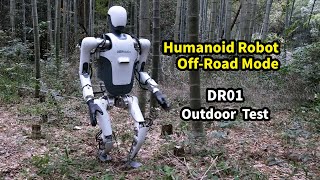
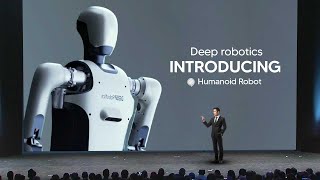
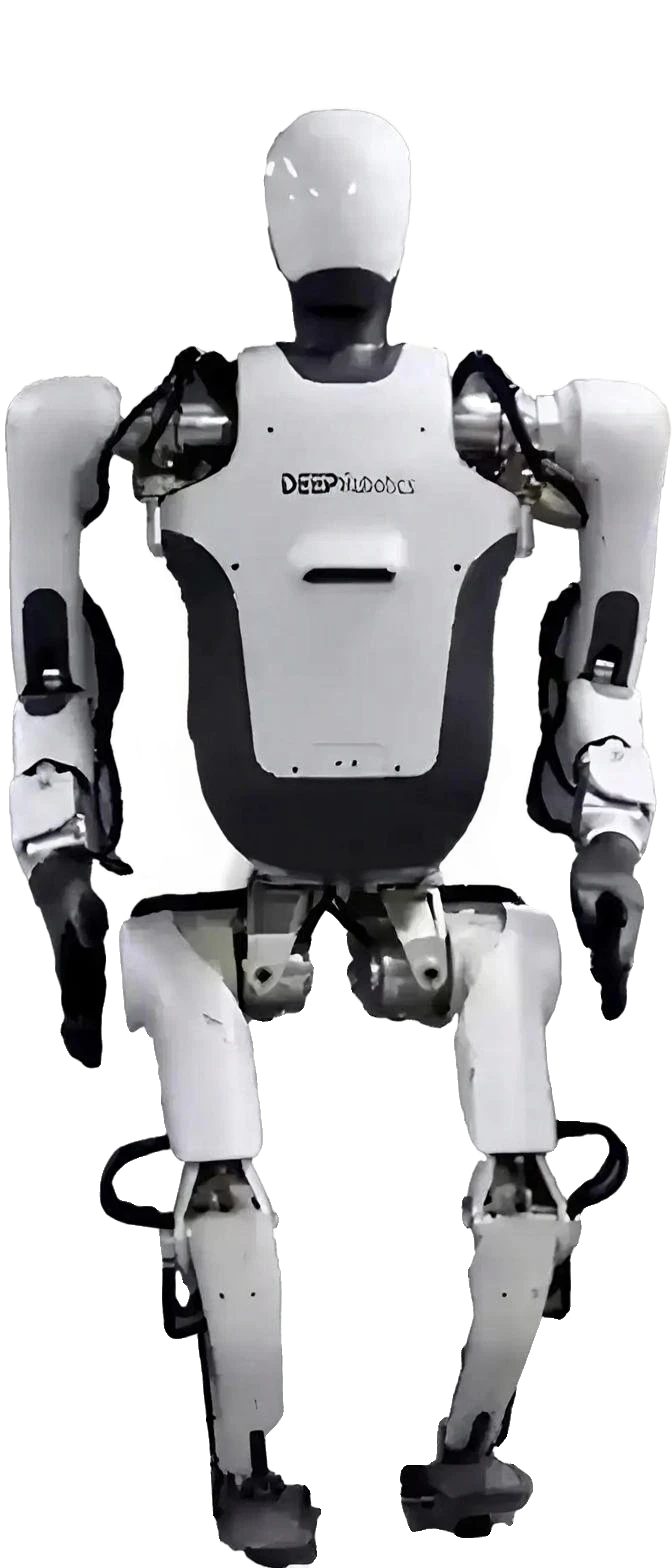
The DR01 humanoid robot, developed by Hangzhou-based Deep Robotics and unveiled at the 2024 World Robotics Conference in Beijing, represents a significant step in embodied intelligence exploration. Designed as an 'AI plus' intelligent physical agent, the DR01 serves primarily as a platform for advancing artificial intelligence through adaptive learning and big data integration. Standing at approximately 170 cm tall and weighing around 80 kg, it features 12 degrees of freedom overall, with a focus on bipedal locomotion rather than advanced manipulation (hands rated N/A). Its architecture emphasizes lightweight yet robust construction, incorporating proprietary J60 lightweight joints for agile movements and J100 high-torque joints for demanding tasks. The J60 joints, weighing just 480g each, deliver a peak torque of 19.94 Nm, a torque-weight ratio up to 56.48 Nm/kg, and peak speeds of 24.18 rad/s, integrated with frameless torque motors, servo drivers, absolute encoders (14-bit resolution), and CAN communication at 1 kHz control frequency. J100 joints provide ultra-high torque, with variants reaching 315 Nm peak and densities up to 107.5 Nm/kg, IP67 protection for outdoor use, EtherCAT communication for multi-joint coordination, and operation from 28-95V DC. The robot's core strength lies in its mobility and perception systems. Achieving a maximum walking speed of over 1.6 m/s (equivalent to 5.8 km/h), DR01 navigates challenging terrains including 18 cm steps, 25° slopes, and uneven surfaces. It demonstrates exceptional balance recovery, maintaining stable gait under disturbances like slippery conditions, pushes, pulls, or external forces, as shown in outdoor tests where it traverses rugged paths and recovers from stumbles on stairs. This is enabled by 'fusion perception capability,' which integrates the robot's proprioceptive sensors (joint encoders, IMUs implied) with environmental perception (likely depth cameras, LiDAR, or stereo vision, though specific models undisclosed), processed through learning algorithms that combine sensing, control, and prediction for real-time adaptation. AI architecture revolves around autonomous learning paradigms, leveraging reinforcement learning and imitation from big data to generate new behaviors. Deep Robotics plans extensive AI training sessions on DR01 to iterate embodied intelligence, focusing on end-to-end policies for locomotion and interaction. No specific LLMs or models like Transformer-based policies are named, but the system supports skill emergence in dynamic environments, positioning it for future industrial applications like repetitive tasks, hazardous inspections, and home assistance. Strength is rated at 15 kg payload, with 2-hour runtime per charge, though battery details (kWh/voltage) remain unspecified. Thermal management via joint-integrated temperature detection, and materials likely lightweight alloys/composites for 80 kg total weight. As a prototype (availability: prototype, price ~$200,000), DR01 has no widespread real-world deployments yet, but demonstrations include stair climbing, steel bar traversal, and off-road testing. It builds on Deep Robotics' quadruped expertise (Lite3, X30), extending to humanoids with shared joint tech. Future iterations like DR02 hint at progression. Challenges include limited DoF for manipulation (score 2/10), lack of verified human safety, and N/A ratings for CPU/GPU, OS, ingress protection, and LLM integration, indicating research-stage maturity. Overall, DR01 exemplifies China's push in humanoid robotics, rivaling efforts like Tesla Optimus through robust hardware and learning-focused software.

Key Features

Flexible Mobility

Walking speed exceeds 1.6 m/s; navigates 18 cm steps, 25° slopes, uneven terrain; swift balance recovery under disturbances like slips or pushes.

Fusion Perception

Integrates robot proprioception and environmental sensing for stable traversal of complex terrains via sensing-control learning algorithms.

Autonomous Learning

AI and big data training enable generation of new behavioral skills adapting to changing environments and tasks.

Proprietary Joints

J60 lightweight (480g, 20 Nm peak, 24 rad/s) for agility; J100 high-torque (up to 315 Nm, IP67) for power; EtherCAT/CAN control.

Embodied Intelligence Platform

Designed for AI training to advance humanoid tech, improving industrial productivity and home life.

Specifications

AvailabilityPrototype
NationalityChina
Websitehttps://www.deeprobotics.cn/en
Degrees Of Freedom, Overall12
Height [Cm]170
Manipulation Performance2
Navigation Performance2
Max Speed (Km/H)5.8
Strength [Kg]15
Weight [Kg]80
Runtime Pr Charge (Hours)2
H.G Skill Score5
VerifiedNot verified
Walking Speed [Km/H]5.8
ManufacturerDeep Robotics
Height Cm170
Weight Kg80
Dof Overall12
Max Speed Kmh5.8
Payload Kg15
Runtime Hours2
JointsJ60: {'weight_g': 480, 'peak_torque_Nm': 19.94, 'torque_weight_Nm_kg': 41.54, 'peak_speed_rad_s': 24.18, 'voltage_V': '18-36', 'encoder': '14-bit absolute', 'comm': 'CAN 1Mbps 1kHz'}, J100: {'peak_torque_Nm': 315, 'torque_density_Nm_kg': 107.5, 'voltage_V': '28-95', 'encoder': '17-bit single/16-bit multi-turn absolute', 'comm': 'EtherCAT', 'ip_rating': 'IP67'}
SensorsProprioceptive (encoders, implied IMUs); Environmental (fusion perception, unspecified cameras/LiDAR)
PerceptionFusion of self and env sensing for terrain traversal
MaterialsLightweight alloys/composites (inferred)
ThermalJoint temperature detection/protection
BatteryN/A (2h runtime)

Curated Videos

Video 1
Video 2
Video 3
Video 4
Video 5

Frequently Asked Questions

What is the DR01 humanoid robot?

DR01 is a prototype bipedal humanoid by Deep Robotics, debuted in 2024 as an embodied intelligence explorer for AI training, featuring advanced mobility, perception, and learning for complex terrains.

What are the key specifications of DR01?

Height: 170 cm; Weight: 80 kg; DoF: 12; Max speed: 5.8 km/h; Payload: 15 kg; Runtime: 2 hours; Joints: J60/J100; Navigates 18 cm steps, 25° slopes.

What joints does DR01 use?

Self-developed J60 lightweight joints (19.94 Nm peak, 480g) for flexibility and J100 high-torque (up to 315 Nm, IP67) for strength, enabling robust locomotion.

Is DR01 deployed in real-world applications?

Currently a prototype for AI research; no commercial deployments, but tested outdoors and at conferences for locomotion and stability.

How does DR01 handle balance and disturbances?

Fusion perception and learning algorithms allow quick recovery from slips, pushes, or uneven terrain, maintaining stable walking as shown in demos.

What is the availability and price of DR01?

Prototype stage, not commercially available; estimated price around $200,000 based on humanoid directories.

×