Digit
Agility Robotics

Digit

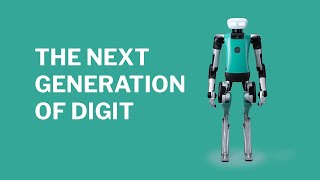
Digit is an advanced humanoid robot developed by Agility Robotics, a company based in the United States. Unveiled in 2019, Digit represents a significant leap forward in bipedal robotics, designed to navigate and operate in environments built for humans.

Description

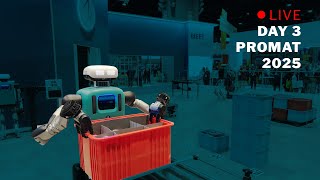
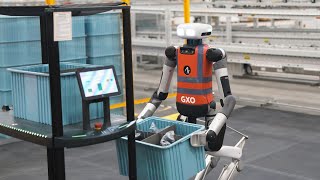
Digit, developed by Agility Robotics, is a bipedal humanoid robot unveiled in 2019 as an evolution from the company's Cassie platform introduced in 2016. Standing at approximately 175 cm (5'9") tall and weighing around 65-76 kg, Digit is engineered for real-world logistics and manufacturing environments built for humans. Its architecture centers on a sophisticated whole-body control hierarchy, powered by a foundation model resembling a 'motor cortex'—a lightweight LSTM neural network with under one million parameters trained via deep reinforcement learning (RL) in NVIDIA's Isaac Sim physics simulator. This model enables zero-shot sim-to-real transfer, allowing Digit to track end-effector positions and orientations in task space while autonomously managing balance, foot placement, obstacle avoidance, and reactions to disturbances without falling. Training involves billions of simulation steps across millions of parallel episodes in Isaac Lab, simulating decades of experience in days using NVIDIA GPUs and Omniverse for digital twins integrating customer CAD/BIM data. Perception fuses data from LIDAR, four Intel RealSense depth cameras, MEMS IMU, and encoders, processed on dual Intel i7 multi-core CPUs with a modular payload bay for NVIDIA Jetson or Intel NUC add-ons. High-level planning runs on Linux-based real-time OS. Arms (3 DoF each) aid manipulation and balance, with customizable end-effectors for tasks like tote handling. Overall DoF is 28, driven by brushless DC motors with custom transmissions. Power comes from a 1.2 kWh lithium-polymer battery, supporting 1-hour runtime and autonomous docking/charging. Digit excels in hybrid dynamics, handling contact modes (swinging vs. planted legs) unlike traditional IK/ID methods. AI integration includes prompting with open-vocabulary detectors (e.g., Gemini) for object detection and state-machine planning, enabling LLM-coordinated behaviors atop the foundation model. Real-world deployments began with Amazon pilots in 2023 at R&D facilities, expanding to commercial use. Historic milestone: October 2024 RAAS agreement with GXO Logistics deployed Digit at an Atlanta-area facility for tote sorting and inventory management alongside humans—first humanoid in production ops. By November 2025, Digit moved over 100,000 totes there. Schaeffler deployment handles precision automotive parts loading/unloading. Agility's Oregon RoboFab factory (2023) scales to 10,000 units/year. Focus: repetitive, strenuous tasks in warehouses (e.g., bulk handling, stairs, doors), bridging automation islands. Safety via e-stops, cloud security via Agility Arc platform integrating WMS/MES. Future: skill libraries, adaptive learning from demos. Digit addresses US labor shortages (>1M warehouse jobs unfilled), proving humanoids viable now.

Key Features

Whole-Body Control Foundation Model

LSTM-based neural network trained in simulation for zero-shot real-world transfer, enabling precise end-effector tracking, balance, and disturbance rejection without falls.

Advanced Perception Suite

LIDAR, four Intel RealSense depth cameras, MEMS IMU, and encoders for navigation in human environments, obstacle avoidance, and terrain mapping.

Bipedal Mobility

5 km/h walking speed, stair climbing, autonomous recovery from falls, dynamic leg design for rough terrain and human spaces.

Manipulation Capabilities

16-18 kg payload, customizable end-effectors for tote handling, picking/placing, door opening; arms aid balance and dexterity.

Autonomous Operations

Docking/charging without intervention, 1-hour runtime, integration with AMRs and workflows via Agility Arc cloud platform.

Embodied AI Integration

NVIDIA Isaac Sim/Lab for RL training, Omniverse digital twins, LLM prompting (e.g., Gemini) for task planning and adaptation.

Commercial Deployments

RAAS model at GXO (100k+ totes), Schaeffler manufacturing, Amazon pilots; scales via RoboFab factory.

Safety and Reliability

E-stop, cloud security, robust to perturbations; designed for safe human co-working.

Specifications

AvailabilityIn production
NationalityUS
Websitehttps://agilityrobotics.com/
Degrees Of Freedom, Overall28
Height [Cm]180
Manipulation Performance3
Navigation Performance3
Max Speed (Km/H)5.4
Strength [Kg]15.8
Weight [Kg]76
Runtime Pr Charge (Hours)1
H.G Skill Score5
VerifiedVerified
Walking Speed [Km/H]5.4
ManufacturerAgility Robotics
Height Cm175
Weight Kg65
Payload Kg16
Max Speed Kmh5
Runtime Hours1
Dof Overall28
Dof Arms3 per arm
SensorsLIDAR, 4x Intel RealSense depth cameras, MEMS IMU, absolute/incremental joint encoders
Processors2x Intel i7 multi-core CPUs, modular payload bay (e.g., NVIDIA Jetson, Intel NUC)
ActuatorsBrushless DC motors with custom transmissions
Battery1.2 kWh lithium-polymer, autonomous docking/charging
MaterialsAluminum frame, thermoformed polycarbonate, carbon fiber composites
OsLinux-based real-time OS
Ai ComputeNVIDIA Isaac Sim/Lab trained foundation model (LSTM <1M params), Omniverse digital twins
Thermal ManagementN/A (passive via design)
ConnectivityCloud via Agility Arc (WiFi/secure)

Curated Videos

Video 1
Video 2
Video 3
Video 4
Video 5

Frequently Asked Questions

What is Digit's payload capacity and how does it handle heavy loads?

Digit supports a payload of 16-18 kg (35 lbs), allowing it to lift and manipulate totes, boxes, and parts in warehouses. The whole-body control model dynamically adjusts posture, foot placement, and arm use for stability during heavy lifts, trained via RL simulations to handle perturbations without dropping loads or falling (40-50 words).

What sensors does Digit use for perception?

Equipped with LIDAR for mapping, four Intel RealSense depth cameras for stereo vision and obstacle detection, MEMS IMU for orientation, and absolute/incremental encoders for joint proprioception. These enable autonomous navigation, terrain adaptation, and precise manipulation in unstructured human environments (35 words).

How long does Digit operate per charge and how does it recharge?

Runtime is approximately 1 hour per 1.2 kWh lithium-polymer battery charge under typical loads. It features autonomous docking to chargers, eliminating manual swaps and enabling continuous fleet operations in 24/7 workflows (32 words).

What AI technologies power Digit's control?

A foundation LSTM model (<1M params) trained in NVIDIA Isaac Sim/Lab via RL for whole-body control. Prompted by vision-language models like Gemini for tasks; runs on dual Intel i7 CPUs with GPU bay for onboard inference and adaptation (38 words).

Where has Digit been deployed commercially?

First at GXO Logistics (Oct 2024 RAAS, 100k+ totes by 2025), Schaeffler for precision manufacturing, Amazon R&D pilots. Handles tote sorting, inventory, parts loading in real warehouses alongside humans (34 words).

Can Digit recover from falls or disturbances?

Yes, the motor cortex-like foundation model ensures robustness: it gets up independently, maintains balance during pushes/slips, and avoids falls via predictive control. Sim-trained for edge cases like uneven floors or collisions (33 words).

What is Agility Arc and how does it integrate with Digit?

Cloud platform for fleet management, workflow orchestration, WMS/MES integration. Enables rapid deployment (hours/days), real-time monitoring, skill updates, and security; builds app store for logistics tasks (31 words).

×