Apptronik Apollo
Apptronik

Apptronik Apollo

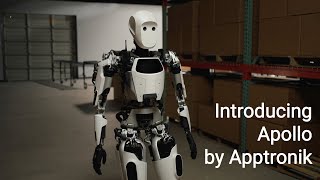
Apollo is an advanced humanoid robot developed by Apptronik, a robotics company based in Austin, Texas. Unveiled in 2023, Apollo represents a significant leap forward in the field of general-purpose humanoid robots designed for real-world applications.

Description

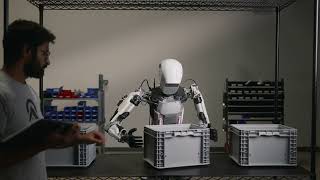
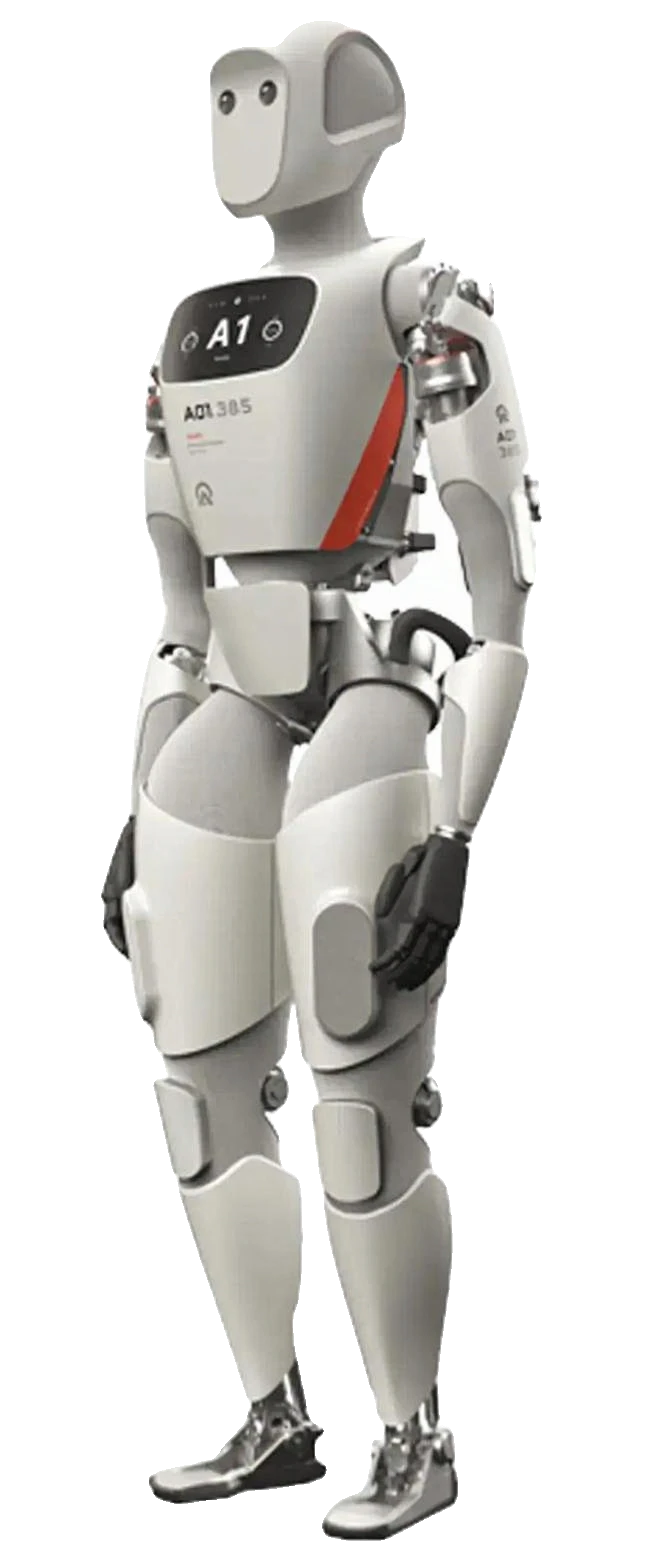
Apptronik Apollo represents a breakthrough in humanoid robotics, engineered by Apptronik in Austin, Texas, leveraging expertise from developing NASA's Valkyrie and over 15 prior systems. Unveiled in 2023, Apollo is optimized for commercial deployment in human-centric environments like warehouses, factories, and logistics hubs. At 173 cm tall and 72 kg, its human-scale form enables seamless integration into existing spaces, tool usage, and task performance without infrastructure changes. Architecturally, Apollo employs a modular platform with interchangeable mobility bases—bipedal legs for dynamic navigation (up to 3.4 km/h), wheeled for efficiency, or stationary. It features 71 degrees of freedom for fluid, dexterous motion. Custom electric linear and rotary actuators serve as 'muscles,' controlled by Texas Instruments microcontrollers, gate drivers, and analog components for precise, power-efficient synchronization. This electric design prioritizes safety over hydraulics, incorporating force/torque sensing for compliant interactions. Safety is core: perimeter zones adjust behavior on object detection, impact zones halt motion instantly, with TÜV SÜD certification. Perception comprises a head-mounted RGB camera for vision, torso-mounted sensors for 360° mapping, and joint-level force sensors. Compute leverages NVIDIA Jetson AGX Orin and Orin NX for onboard AI inference. AI architecture fuses Apptronik's force control with cutting-edge models. NVIDIA Project GR00T enables foundation-model learning from multimodal demos (video/text), fostering generalization—e.g., autonomous juicing from observation. Google DeepMind's Gemini Robotics (1.5/2.0) adds agentic reasoning for complex planning in unstructured settings, demonstrated in collaborative tasks. NVIDIA Omniverse supports simulation-to-real transfer. Deployment history validates readiness: March 2024 Mercedes-Benz pilot deploys Apollo for kitted parts/totes delivery in auto production, proving cobot viability. GXO Logistics tests warehouse ops; Jabil pilots self-replication. NASA partnership commercializes space-derived tech. February 2025's $350M Series A (B Capital, Google, etc.) funds scaling to thousands of units, targeting automotive/3PL/electronics. RaaS model accelerates ROI; 2025 upgrades enhance dexterity/AI. Apollo heralds scalable humanoids, addressing labor shortages while prioritizing safety and versatility. (612 words)

Key Features

Human-Sized Proportions

173 cm height, 72 kg weight for navigating human environments and using standard tools.

55 lb Payload Capacity

Lifts 25 kg with precise force control for safe handling of heavy loads.

Hot-Swappable Batteries

4-hour runtime per pack enables continuous operation via quick changes.

Advanced Force Control Safety

Perimeter/impact detection zones and compliant actuators for human-safe collaboration.

NVIDIA Jetson AI Compute

AGX Orin/NX modules power GR00T models for rapid task learning from demos.

Modular Mobility

Bipedal, wheeled, or fixed base options for task adaptability.

Gemini Robotics Integration

DeepMind AI for agentic reasoning and real-world physical intelligence.

Specifications

AvailabilityPrototype
NationalityUS
Websitehttps://apptronik.com/apollo
Degrees Of Freedom, Overall71
Height [Cm]173
Manipulation Performance3
Navigation Performance3
Max Speed (Km/H)3.4
Strength [Kg]24.9
Weight [Kg]72
Runtime Pr Charge (Hours)4
H.G Skill Score5
VerifiedNot verified
Walking Speed [Km/H]3.4
ManufacturerApptronik
Payload [Kg]25
Max Speed [Km/H]3.4
Runtime Per Charge [Hours]4
ComputeNVIDIA Jetson AGX Orin, Jetson Orin NX
Motor ControlTexas Instruments microcontrollers, gate drivers, analog
ActuatorsCustom electric linear and rotary (quasi-direct drive)
SensorsHead RGB perception camera, torso 360° mapping sensors, joint force/torque sensing
Safety CertificationTÜV SÜD functional safety
BatteryHot-swappable packs (capacity unspecified, electric)
ArchitectureModular (bipedal/wheeled/stationary), force control
Ai FrameworksNVIDIA GR00T, Google Gemini Robotics 1.5/2.0

Curated Videos

Video 1
Video 2
Video 3
Video 4
Video 5

Frequently Asked Questions

What are Apollo's key physical specifications?

Apollo measures 173 cm tall, weighs 72 kg, lifts 25 kg payloads, walks at 3.4 km/h, and runs 4 hours per swappable battery, matching human scale for real-world utility.

How does Apollo ensure safety with humans?

Featuring force/torque sensing, perimeter detection zones that slow/stop on approach, impact zones for immediate halts, TI-certified motor safety, and compliant electric actuators for collision resilience.

What AI technologies power Apollo?

NVIDIA Jetson compute runs Project GR00T for multimodal learning; Google Gemini Robotics enables reasoning/planning; supports Omniverse sims for dexterous, generalizable behaviors from few demos.

What real-world deployments has Apollo achieved?

Mercedes-Benz factory pilots for parts logistics since 2024; GXO warehouse trials; Jabil self-manufacturing tests; NASA tech transfer; expanding via 2025 funding to 3PL/automotive scales.

Is there detailed hardware info available?

Custom electric actuators, TI motor MCUs/gate drivers, NVIDIA Jetson AGX Orin/NX, head camera + torso 360 sensors, 71 DOF; modular for production scalability under $50k target.

How is Apollo available commercially?

Offered via Robots-as-a-Service (RaaS) for immediate ROI; pilots transitioning to fleets post-$350M funding; mass production ramping 2025-2026 for logistics/manufacturing.

×