Alice
AEI Robot

Alice

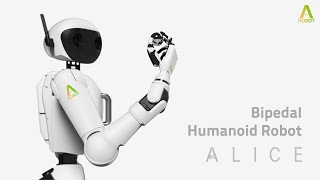
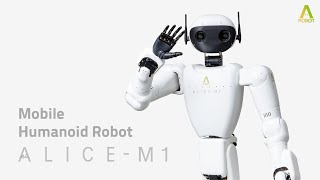
Alice is a humanoid robot by AEI Robot designed for human-robot interaction, research, and demonstrations, focusing on safe movement, intuitive behavior, and AI-assisted task execution.

Description

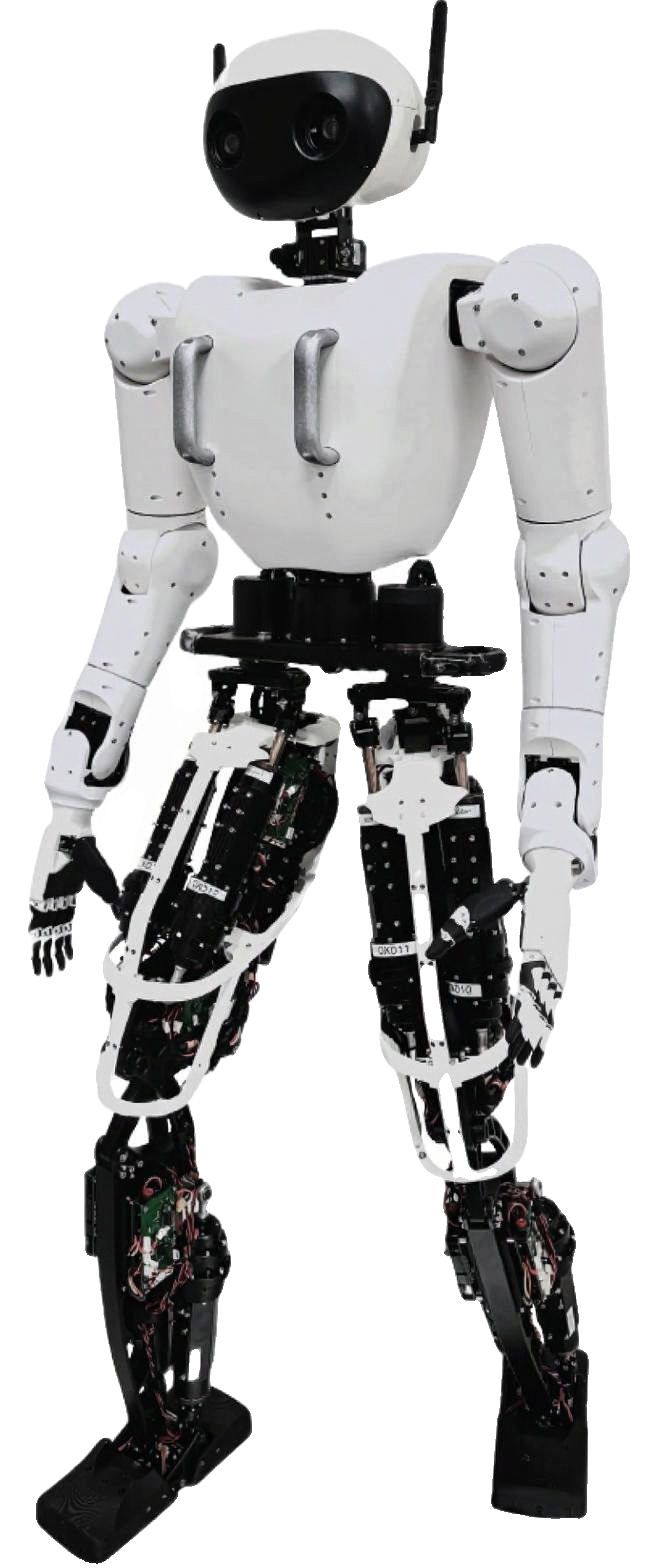
ALICE 4, developed by South Korean company AeiROBOT (also referred to as AEI Robot), represents a next-generation bipedal humanoid robot platform optimized for human-robot collaboration in diverse real-world environments. Standing at 160 cm tall and weighing approximately 45 kg, it features 41 degrees of freedom (DoF): 6 DoF per leg (12 total), 1 DoF waist, 7 DoF per arm (14 total), 2 DoF head, and 6 DoF per hand (12 total). The core innovation lies in its proprietary gearless linear actuators, which eliminate traditional reducers for superior precision, back-drivability, low inertia, and quiet operation. These actuators enable real-time Field-Oriented Control (FOC) via dedicated motor drivers, supporting multiple modes including position, velocity, torque, and impedance control with high bandwidth. This allows for natural force-based interactions, impedance compliance for safe human contact, and efficient energy use through parallel actuator configurations and integrated heatsink frames for advanced thermal management, minimizing heat buildup during prolonged operation. Architecturally, ALICE 4 separates computing responsibilities: an Intel Core i7-1370PE (6P+8E cores, 20 threads, 1.90 GHz base, 28W TDP) handles real-time control, while an NVIDIA Jetson Orin NX (via GENE-RAP6 module) powers perception and AI inference. Sensors include stereo depth cameras for 3D vision, 6-axis IMUs for balance, Force Sensing Resistors (FSR) and custom foot contact sensors for ground reaction feedback, enabling robust bipedal locomotion over stairs, uneven terrain, and narrow spaces. Hands offer dexterous 6 DoF manipulation for tasks from delicate assembly to complex pick-and-place. AI integration emphasizes embedded processing for low-latency stability, using low-power design, hardware optimization, and data compression to run vision pipelines, object detection, and decision-making onboard, with optional cloud connectivity. Demonstrations showcase NVIDIA Isaac GR00T foundation models for humanoid reasoning and Cosmos for simulation-to-real transfer, alongside natural language processing (NLP), gesture generation, and VR teleoperation for imitation learning. Operating on a ROS2-based Linux OS (inferred from prototypes), it achieves 250-450 ms end-to-end latency in AI-assisted actions. Real-world deployment history marks ALICE as Korea's first humanoid approved for shipbuilding and construction sites (October 2025), highlighting industrial viability. It has featured in high-profile events: MWC 2025 with LG U+'s 'ixi' AI for voice interaction, GTC 2025 earning innovation awards, Next Rise 2025 fair, GALAXY ROBOT NIGHT with G-DRAGON showcasing teleoperation bartending, and NVIDIA demos with GR00T/Cosmos. Additional pilots include manufacturing demos with officials like President Lee Jae-myung, underscoring safe collaboration. Priced around $50,000-$100,000 (estimates), ALICE targets research labs, service robotics, and early commercial automation, evolving from prototypes (31 DoF, 157 cm) to this production-ready platform.

Key Features

Gearless Linear Actuators

Proprietary in-house actuators without reducers provide precise force control, back-drivability, low noise, low inertia, and real-time FOC for natural human-like movements and safe impedance compliance.

41 Degrees of Freedom

Distributed as 12 leg DoF, 1 waist, 14 arm DoF, 2 head DoF, and 12 hand DoF, enabling dexterous manipulation, bipedal walking on uneven terrain, stair climbing, and complex tasks.

Dual Compute Architecture

Intel Core i7-1370PE for control and NVIDIA Jetson Orin NX for perception/AI, supporting embedded inference with low-power optimization and optional cloud integration.

Advanced Sensor Suite

Stereo depth cameras, 6-axis IMUs, FSR foot sensors for multi-modal perception, balance, tactile feedback, and environmental navigation.

Embedded AI with NVIDIA Tech

Onboard GR00T foundation models, Cosmos sim-to-real, NLP, object detection, and VR teleop for autonomous tasks, imitation learning, and low-latency human interaction.

Thermal and Energy Efficiency

Integrated heatsink frames, parallel actuators, and optimized design for durable, quiet operation in human environments like factories and homes.

Specifications

AvailabilityPrototype
NationalityChina
Websitehttps://eng.arobot4all.com/
Degrees Of Freedom, Overall31
Degrees Of Freedom, Hands7
Height [Cm]157
Manipulation Performance2
Navigation Performance2
Max Speed (Km/H)3
Strength [Kg]5–10 kg per arm
Weight [Kg]50
Runtime Pr Charge (Hours)1.5
Safe With HumansYes
Cpu/GpuNVIDIA Jetson Orin-class system
Ingress ProtectionIP20
Camera Resolution1080p RGB + depth camera
ConnectivityEthernet, Wi‑Fi
Operating SystemLinux (ROS2-based)
Llm IntegrationLikely via cloud API (OpenAI, Alibaba Qwen, Baidu, etc.)
Latency Glass To Action250–450 ms
Motor TechBrushless Motor
Gear TechHarmonic Drive
Main Structural MaterialAluminum + plastic composites
Number Of Fingers5 per hand
Main MarketResearch institutions, robotics labs, AI development, demonstrations
VerifiedNot verified
Walking Speed [Km/H]2
ColorWhite
ManufacturerAEI Robot
Height Cm160
Weight Kg45
Dof Total41
Dof Breakdownlegs: 6 per leg (12 total), waist: 1, arms: 7 per arm (14 total), head: 2, hands: 6 per hand (12 total)
Processorscontrol: Intel Core i7-1370PE (6P+8E/20T, 1.90 GHz, 28W), perception_ai: NVIDIA Jetson Orin NX (GENE-RAP6 module)
Sensors['Stereo Depth Camera', 'RGB + Depth Cameras (1080p inferred)', '6-Axis IMU', 'FSR Foot Contact Sensors', 'Custom Proprioceptive Sensors']
ActuatorsProprietary gearless linear actuators (brushless motors, no reducer, back-drivable, real-time FOC, position/velocity/torque/impedance modes)
MaterialsAluminum + plastic composites (inferred from prototypes), integrated heatsink frames
Thermal ManagementHeatsink-integrated actuator frames, heat dissipation tech to minimize motor heat impact
Battery5000mAh (estimated), runtime up to 8 hours per charge, 4-hour charging (estimates)
OsLinux (ROS2-based)
ConnectivityWi-Fi, Ethernet, 5G (estimated)
Ip RatingIP20 (prototype)
Max Speed Kmh3
Payload Per Arm Kg5-10
Walking Speed Kmh2.88

Curated Videos

Video 1
Video 2
Video 3
Video 4
Video 5

Frequently Asked Questions

What type of actuators does ALICE 4 use?

ALICE 4 employs proprietary gearless linear actuators developed in-house, eliminating reducers for high current sensitivity, back-drivability, low noise, and low inertia. They support real-time FOC with modes like torque and impedance, plus advanced thermal management via heatsinks for sustained performance.

What are the computing specifications?

Control uses Intel Core i7-1370PE (6P+8E cores, 20T, 1.90GHz, 28W). Perception and AI run on NVIDIA Jetson Orin NX via GENE-RAP6 module, enabling embedded vision, object detection, and GR00T model inference with low-latency stability.

What sensors are integrated?

Key sensors include stereo depth cameras for 3D mapping, 6-axis IMUs for balance/orientation, FSR and custom foot contact sensors for ground feedback, supporting robust navigation, manipulation, and human-safe interactions in dynamic environments.

What AI capabilities does it have?

Embedded AI on Jetson Orin NX handles vision pipelines, NLP, gesture generation, and task planning. Integrates NVIDIA GR00T for reasoning, Cosmos for training, with VR teleop and imitation learning; optional cloud LLMs for enhanced autonomy and low 250-450ms latency.

What are real-world applications and deployments?

Deployed as Korea's first humanoid in shipbuilding/construction sites. Demos include MWC 2025 (LG U+ AI), GTC 2025 awards, bartender teleop at events, manufacturing pilots; targets research, service, industry with safe bipedal mobility.

What is the battery life and power details?

Exact specs vary by config; estimates suggest 5000mAh battery for up to 8 hours runtime, 4-hour charge. Efficient parallel actuators and low-power AI design extend operation in practical deployments.

Is it safe for human interaction?

Yes, with impedance control, force sensing, back-drivable actuators, and compliant behaviors for natural physical interactions. Approved for industrial sites, emphasizing safe collaboration in shared spaces.

×