AgiBot X1
AgiBot

AgiBot X1

TheAgiBot X1 humanoid robotis a 130 cm, 33 kg open-source platform with 34 DOF, 0.5 kg arm payload and PowerFlow servo tech; it walks at 3.6 km h-¹, runs two hours per battery and costs under US $20 000—making advanced bipedal robotics attainable for research and maker communities.

Description

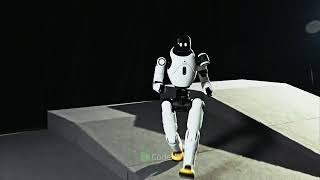
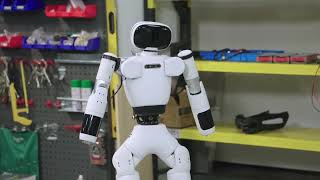
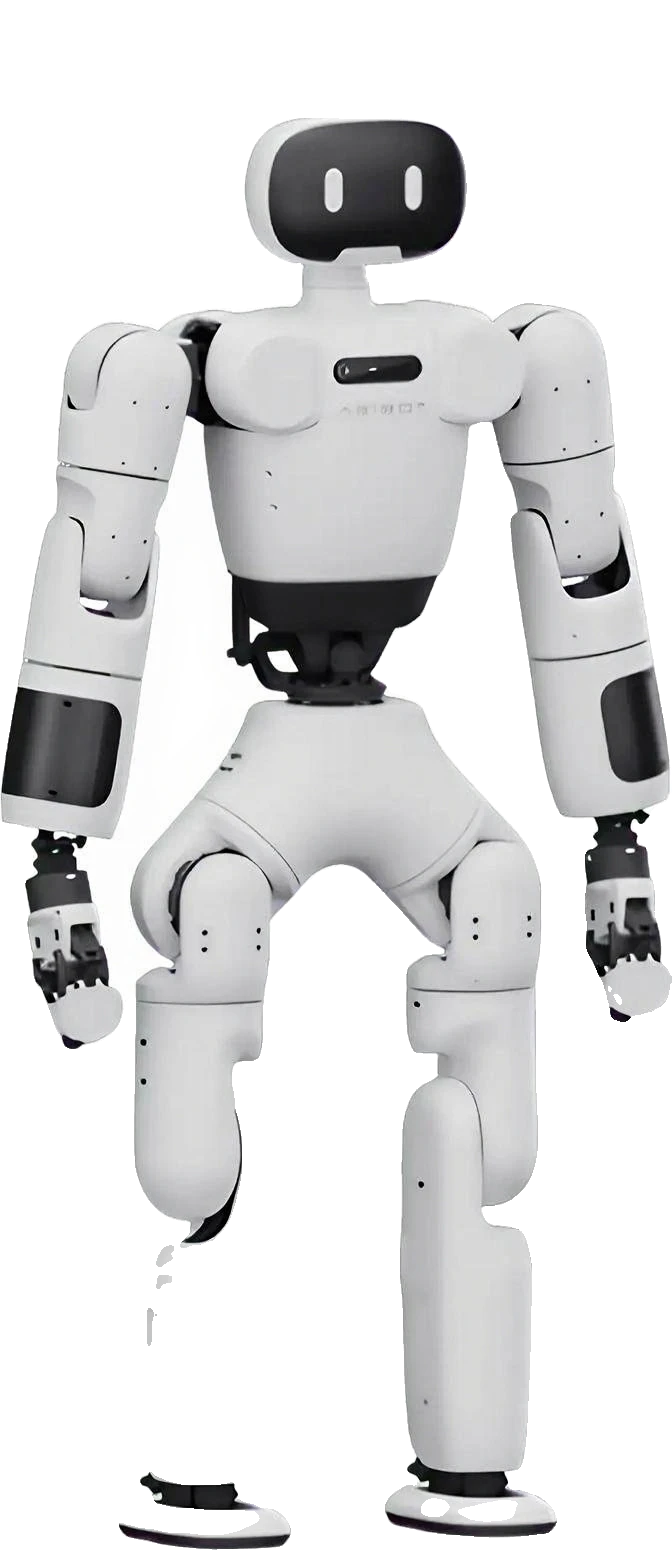
The AgiBot X1, developed by AGIBOT Innovation (Shanghai) Technology Co., Ltd.—a pioneering Chinese robotics company founded in 2023 by Peng Zhihui—is a full-stack open-source humanoid robot platform designed for research, education, and maker communities. Measuring 130 cm in height and weighing just 33 kg, it achieves 34 active degrees of freedom (DoF) across 29 body joints (expandable head), enabling smooth bipedal walking at 1 m/s (3.6 km/h), dynamic balancing, and dexterous manipulation with 0.5 kg per arm payload. Its architecture emphasizes modularity, safety, and scalability, featuring a CNC-machined aluminum frame clad in a lightweight composite shell for easy servicing and human-safe operation. At the core are PowerFlow quasi-direct-drive (QDD) servo modules: six flagship R86-3 actuators (200 N·m peak torque, 85 rpm peak speed, 1.28 kg, 48V) for hips/knees; nine R86-2 (80 N·m peak, 260 rpm no-load, 0.81 kg); ten R52 (19 N·m peak, 130 rpm, 0.45 kg); and four L28 linear actuators (110 N thrust, 50 mm/s, 200 g, 24V) for ankles. These integrate low-ratio (<10:1) planetary reducers, high-performance FOC drives, multi-turn absolute encoders, hollow wiring, and PF-Link intelligent interfaces for seamless daisy-chaining. Real-time control is handled by lightweight Domain Controllers (DCUs, 90 g each), supporting up to 16 in cascade with 1 kHz synchronized communication (100 Mbps EtherCAT-to-triple FDCAN at 5 Mbps), hardware IMU interfaces, SPI/UART/GPIO expansion, and OTA firmware updates. An YIS320 IMU (921600 baud serial) provides lower-limb odometry. Upper-level processing is user-supplied (x86 PC or NVIDIA Jetson on Ubuntu 22.04/Linux), connected via Ethernet/FDCAN/CAN-FD/GPIO/UART, with optional RGB-D cameras. AI integration leverages the open-source AimRT middleware for RL-based locomotion, ROS2 compatibility, and DIY LLM hooks—no bundled models, but full RL training pipelines via GitHub (legged_gym, rsl_rl, humanoid-gym on Isaac Gym). Policies train in simulation, export to PyTorch/JIT/ONNX, validate sim2sim in MuJoCo, and deploy zero-shot sim2real. Adaptive OmniPicker grippers (430 g, 30 N force, 120 mm stroke, 0.7 s cycle, CAN/RS485) enable versatile grasping with force control. Deployment history spans from 2024 prototypes to 2025 production: kits priced under $20,000 enable lab access. AGIBOT hit 5,000 humanoid units (X-series half-size like X1) by December 2025, with factory in Shanghai Lingang. Real-world uses include university RL experiments, maker projects, logistics demos; international adoption in South Africa, Singapore engagements. Open ecosystem—CAD/STEP/SolidWorks/BOM on GitHub/Baidu/Google Drive, inference/train repos—accelerates community innovation in embodied AI, positioning X1 as an attainable benchmark for bipedal robotics.

Key Features

Full-Stack Open-Source Platform

Comprehensive open-source hardware (CAD/BOM/STEP), firmware, AimRT middleware, RL training/inference code on GitHub for full customization.

Modular PowerFlow QDD Actuators

34 DoF driven by integrated servo modules (R86-3/2, R52, L28) with FOC drives, low-backlash gears, multi-turn encoders, and PF-Link for high torque density and compliance.

Distributed Real-Time Control

DCU boards enable 1 kHz EtherCAT-FDCAN bridging, hardware sync, OTA, expandable I/O; YIS320 IMU for precise odometry.

Adaptive OmniPicker Grippers

Lightweight (430g) universal end-effectors with 30N force, 120mm stroke, feedforward control, self-locking for diverse manipulation tasks.

Scalable Compute & AI Integration

User-supplied Jetson/x86 host; ROS2/AimRT for RL locomotion (sim2real), external LLM hooks; 2-hour swappable battery runtime.

Safe, Lightweight Design

33 kg total, aluminum-composite structure fits doors, chest-height for labs; human-safe speeds and payloads.

Specifications

AvailabilityPrototype
NationalityChina
Websitehttps://www.agibot.com
Degrees Of Freedom, Overall34
Height [Cm]130
Manipulation Performance2
Navigation Performance2
Max Speed (Km/H)3.6
Strength [Kg]0.5
Weight [Kg]33
Runtime Pr Charge (Hours)2
Safe With HumansYes
Cpu/GpuOpen architecture – user supplies host PC/Jetson; onboard DCU real-time controllers (1 kHz, 100 Mbps)
Camera ResolutionOptional RGB-D camera
ConnectivityEthernet, FDCAN/CAN-FD, GPIO, OTA firmware, UART
Operating SystemLinux
Llm IntegrationDIY: hooks for external LLMs via ROS2/AimRT; no bundled model
Motor TechPowerFlow quasi-direct-drive servo modules (R86/R52/L28 series)
Gear TechIntegrated low-ratio (<10 : 1) planetary reducers inside servos
Main Structural MaterialAluminium, composite shell over alloy frame
Number Of Fingers4
Main MarketResearch & education labs, maker spaces, developer communities
VerifiedNot verified
ManufacturerAgiBot
Height130 cm
Weight33 kg
Dof Overall34
Dof Body Joints29
Max Speed1 m/s (3.6 km/h)
Arm Payload0.5 kg
Runtime2 hours
MotorsR86-3: 6x, peak torque 200 N·m, peak speed 85 rpm, rated 60 N·m @ 30 rpm, 48V, 1.28 kg, Φ86x80.7 mm, R86-2: 9x, peak 80 N·m, no-load 260 rpm, rated 20 N·m @ 70 rpm, 48V, 0.81 kg, Φ86x58.1 mm, R52: 10x, peak 19 N·m, no-load 130 rpm, rated 6 N·m @ 50 rpm, 48V, 0.45 kg, Φ52x71.6 mm, L28: 4x linear, max thrust 110 N, 50 mm/s, 24V, 200 g
ControllersDCU (90 g): 1 kHz real-time, 100 Mbps EtherCAT to 3x FDCAN (5 Mbps), up to 16 cascade, IMU/SPI/UART/GPIO/OTA
ImuYIS320 (921600 baud serial, lower limbs)
GripperOmniPicker: 0.43 kg, 30 N force, 120 mm stroke, 0.7 s open/close, 12-30V, CAN/CANFD/RS485
ComputeUser x86/Jetson, Ubuntu 22.04/Linux, Ethernet/FDCAN/UART/GPIO
FrameworksAimRT (RL inference), ROS2 (LLM hooks)
CameraOptional RGB-D
MaterialsAluminum frame, composite shell
GearsIntegrated planetary <10:1 ratio in servos
ConnectivityPF-Link, FDCAN/CAN-FD, OTA

Curated Videos

Video 1
Video 2
Video 3
Video 4

Frequently Asked Questions

What is the AgiBot X1 and who manufactures it?

AgiBot X1 is a 130 cm, 33 kg open-source humanoid robot with 34 DoF for research and development. Manufactured by AGIBOT Innovation (Shanghai), founded 2023, specializing in embodied AI robots with mass production capabilities (5,000+ units by 2025).

What is the price range for AgiBot X1?

Entry-level kits are priced under US $20,000, accessible for universities, labs, and makers. Exact costs vary by configuration; contact distributors like American Satellite for quotes and availability.

Is the AgiBot X1 fully open-source?

Yes, full-stack open-source: hardware designs (CAD/BOM/STEP on GitHub/Baidu Drive), actuator firmware, AimRT middleware, RL training/inference code. Enables complete customization and community contributions.

What are the battery specs and runtime?

Swappable battery supports 2 hours of continuous operation. Servos rated at 48V (R86/R52) and 24V (L28); short-circuit tested for safety. No exact kWh specified, focused on untethered lab use.

What AI and software frameworks does it use?

AimRT for RL locomotion inference (sim2real via Isaac Gym/rsl_rl); ROS2 hooks for external LLMs. Ubuntu 22.04 on user PC/Jetson; DCU handles 1 kHz real-time control.

What are the key hardware specifications?

34 DoF (R86-3x6: 200Nm peak; R86-2x9: 80Nm; R52x10: 19Nm; L28x4); DCU controllers, YIS320 IMU, OmniPicker grippers (30N); aluminum/composite build, 1 m/s walk speed.

Where is AgiBot X1 deployed?

Primarily research labs, education, maker spaces. Production scaled to thousands in X-series; demos in South Africa, Singapore policy visits; suitable for RL training, manipulation experiments.

×