Adam Lite
PNDbotics

Adam Lite

PNDbotics Adam is a modular, stable, and AI-powered humanoid robot designed to set a universal standard for the robotics industry. Its open-source SDK and advanced AI algorithms enable developers to quickly build custom solutions while reducing costs. With powerful hardware and support for Nvidia’s DRL environment, Adam offers an efficient and flexible platform for both experts and newcomers in robotics development.

Description

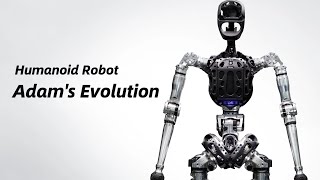
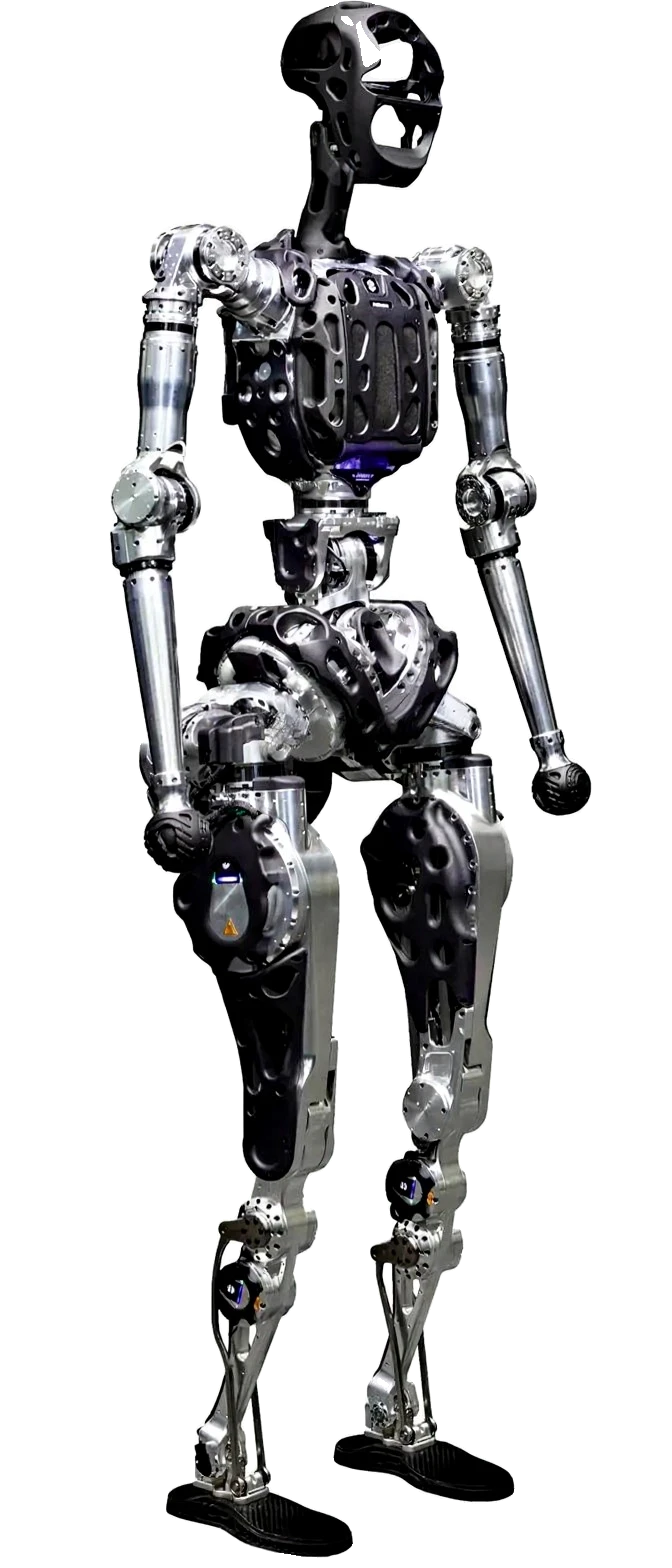
The Adam Lite humanoid robot, developed by PNDbotics, a Beijing-based company specializing in full-stack humanoid robotics, represents a significant advancement in affordable, modular humanoid platforms. Launched as a prototype around 2023-2024, Adam Lite stands at 160 cm tall and weighs 60 kg, featuring 25 degrees of freedom (DoF) distributed as 6 DoF per leg (3 hip, 1 knee, 2 ankle), 5 DoF per arm (3 shoulder, 2 elbow), and 3 DoF in the waist. Its core innovation lies in the use of 25 proprietary quasi-direct drive (QDD) force-controlled PND actuators, which provide high back-drivability, sensitivity, and up to 340 Nm torque in leg joints, enabling exceptional mobility and stability for dynamic tasks. The biomimetic design emulates human skeletal structure, with a serial hip joint configuration approximating ball-in-socket motion for natural range. Architecturally, Adam Lite employs a fully modular, reusable framework, integrating PND Smart Actuators (PSA series) that combine motors, reducers, encoders, drivers, and communication units. The PND Robot Control Unit (RCU) serves as the central hub, managing actuators, Battery Management System (BMS), power distribution, and a 16-port Gigabit Ethernet switch for real-time sensory data and control via the PND Network. Onboard computing is powered by a 12th-generation Intel i7 NUC processor, supporting low-latency execution of complex policies. Sensors include an Inertial Measurement Unit (IMU) for linear/angular velocities, gravity orientation, and base frame data, alongside actuator encoders for joint positions/velocities. Vision and dexterous hands are optional add-ons; the Lite variant uses wrist-mounted rubber balls for basic manipulation. AI integration is a cornerstone, leveraging PNDbotics' proprietary Deep Reinforcement Learning (DRL) stack with sim-to-real transfer. The system utilizes NVIDIA Isaac Gym for parallel training across 4096 environments, employing Proximal Policy Optimization (PPO) and Adversarial Motion Priors (AMP) for imitation learning from human mocap datasets (SFU, CMU, custom). Observations encompass 91 dimensions (IMU, joints, commands, phases), actions are 25D PD targets. Domain randomization (mass, CoM shifts, motor strength, forces, noise) bridges simulation gaps, yielding human-like gaits: straight-knee walking, heel-toe running, arm swinging, terrain adaptation, and disturbance recovery. Rewards emphasize commands, periodicity (von Mises for phases), symmetry, and regularization for safety/smoothness. Real-world deployments highlight its prowess. Early 2025 demos showcased blind locomotion over uneven terrain and RL policies for challenging environments. At WAIC 2025, Adam Lite evolved variants like Adam and Adam-U performed synced dances via motion capture. It debuted at VOYAGEX Music Festival (July 2025), playing keytar live. Competed in World Humanoid Robot Games (Aug 2025), completing 100m obstacle race—the only full-size humanoid to do so. Further showcases at IROS, CORL, WRC, and office assistant demos underscore versatility. Partnerships with Noitom Robotics and Tianyong Engineering accelerate commercialization. Despite prototype status, priced around $120,000, its open-source SDK, stability, and cost-efficiency position it for research, industry, and AGI integration, setting standards in embodied intelligence.665054

Key Features

Modular Biomimetic Architecture

Fully modular QDD actuators and components enable easy customization, repairs, and scalability from prototype to production.

Advanced DRL Locomotion

Proprietary sim-to-real RL with human mocap imitation achieves natural walking, running, and terrain navigation with robustness to disturbances.

Open-Source Developer Platform

Supports NVIDIA Isaac Gym, open SDK for rapid AI training, testing, and deployment, reducing development costs.

High-Performance Hardware

25 force-controlled actuators with 340 Nm torque, Intel i7 compute, real-time RCU for precise whole-body control.

Multi-Modal Perception Ready

IMU and encoders standard; extensible to vision, hands for complex tasks in dynamic environments.

Specifications

AvailabilityPrototype
NationalityChina
Websitehttp://N/A
Degrees Of Freedom, Overall25
Height [Cm]160
Manipulation Performance2
Navigation Performance2
Max Speed (Km/H)6
Strength [Kg]5
Weight [Kg]60
Runtime Pr Charge (Hours)3
H.G Skill Score4
VerifiedNot verified
Walking Speed [Km/H]4
ManufacturerPNDbotics
Height160 cm
Weight60 kg
Dof Overall25
Dof Legs6 per leg (3 hip, 1 knee, 2 ankle)
Dof Arms5 per arm (3 shoulder, 2 elbow)
Dof Waist3
Actuators25 QDD force-controlled PND actuators; legs: 4 high-torque (340 Nm max)
Compute12th gen Intel i7 NUC; PND RCU (integrates BMS, power mgmt, 16-port Gigabit Ethernet)
SensorsIMU (linear/angular vel, gravity); joint encoders (pos/vel)
Max Speed6 km/h (walking 4 km/h)
Payload Strength5 kg
Battery3 hours runtime per charge; managed by BMS (voltage/kWh unspecified)
MaterialsModular engineering plastics/metal alloys (biomimetic skeleton; specifics N/A)
Thermal ManagementN/A (actuator-integrated design for efficiency)
OsReal-time Linux variant for RL policies
ConnectivityGigabit Ethernet (PND Network); optional WiFi
Motor TechIntegrated brushless motors with reducers
Gear TechQuasi-direct drive with harmonic/planetary reducers

Curated Videos

Video 1
Video 2
Video 3
Video 4
Video 5

Frequently Asked Questions

What are the main specifications of Adam Lite?

Adam Lite measures 160 cm in height, weighs 60 kg, has 25 DoF with QDD PND actuators (up to 340 Nm leg torque), achieves 4-6 km/h speeds, and offers 3 hours runtime. It uses Intel i7 NUC and RCU for control.

What AI technologies power Adam Lite's motion?

Deep Reinforcement Learning (DRL) via PPO and AMP imitation from human data, trained in Isaac Gym with domain randomization for sim-to-real transfer, enabling human-like gaits and adaptability.

Is Adam Lite commercially available?

Currently a prototype, listed at around $120,000. PNDbotics plans commercialization through variants like Adam-U/SP, with manufacturing center for mass production.

What sensors does it have?

Standard IMU for velocities/orientation, joint encoders for positions/velocities. Optional cameras, force/torque sensors, and dexterous hands for advanced perception/manipulation.

What real-world demos has Adam Lite performed?

Music festival keytar performance, WAIC synced dance, World Humanoid Games obstacle race, terrain navigation, office assistance—demonstrating stability in public and competitive settings.

How does the modular design benefit developers?

Plug-and-play actuators, open SDK, and full-stack platform lower costs/barriers, allowing quick prototyping, training, and deployment for research or industry applications.

×